Vietnam, IAEA Reaffirm Importance of Nuclear Science and Technology Cooperation
Infrastructure
2026年7月17日
5
Bao Chinh Phu

General articles are free for 24 hours after publish.

Vietnam, IAEA Reaffirm Importance of Nuclear Science and Technology Cooperation

Share
AI Summary

Vietnam is implementing 19 cooperation projects with the IAEA, benefiting from nuclear science and technology in areas including agriculture and healthcare. Both sides plan to further strengthen cooperation for the development and application of peaceful nuclear energy.

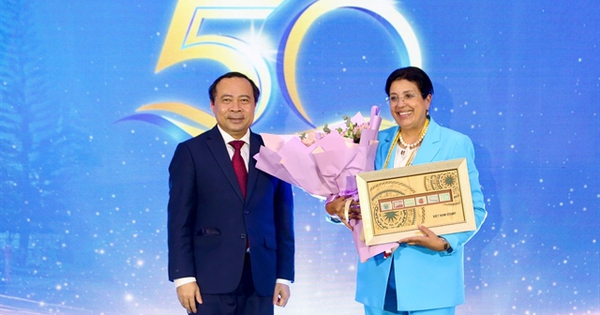
SOCIALIST REPUBLIC OF VIET NAM Government News Kim Loan Minister of Science and Technology Vu Hai Quan presents a commemorative gift to IAEA Deputy Director General Najat Mokhtar at the 50th anniversary celebration of the Viet Nam Atomic Energy Institute (VINATOM). Viet Nam is currently implementing 19 cooperation projects with the IAEA in areas including agriculture, healthcare, nuclear safety and security, physics, and chemistry. These projects have demonstrated the significant benefits of nuclear science and technology in everyday life, ranging from protecting water resources and strengthening food security to establishing standards for industry and healthcare. Viet Nam has been an official member of the IAEA since 1957 and actively participated in most international conventions under the Agency's auspices. According to Najat Mokhtar, IAEA Deputy Director General and Head of the Department of Nuclear Sciences and Applications, cooperation between Viet Nam and the IAEA reflects the sustained efforts of generations of Vietnamese scientists to harness nuclear science and technology for national development. She reaffirmed the IAEA's commitment to supporting Viet Nam in ensuring the safety and security of the peaceful uses of nuclear energy and encouraged the country to participate more actively in the Agency's initiatives. Mokhtar noted that during the 2018–2023 period, the IAEA directly supported 17 national projects in Viet Nam, while the country also participated in 67 regional (RCA and non-RCA) and interregional projects. These initiatives have helped strengthen the country's human resources, enhance its nuclear safety and security infrastructure, and promote the application of nuclear techniques for socio-economic development. One notable area of cooperation is water resource management. Since 2023, the IAEA and the Viet Nam Atomic Energy Institute (VINATOM) have jointly implemented projects to assess and monitor marine pollution and the impacts of climate change along Viet Nam's coastline. The collaboration has directly supported efforts to protect fisheries resources, safeguard coastal livelihoods, and enable the early detection of pollution risks. Minister of Science and Technology Vu Hai Quan said Viet Nam attaches great importance to developing nuclear science and technology, considering it one of the key pillars of the country's energy sector. He noted that nuclear science and technology has delivered tangible benefits across multiple sectors, including agriculture, water resource monitoring, industry, healthcare, and the standardization of measurement systems in line with international standards. According to Tran Chi Thanh, President of VINATOM, Viet Nam is promoting the application of radiation technologies in healthcare, particularly for cancer diagnosis and treatment, as well as in agriculture through mutation breeding, food irradiation, and pest control using the sterile insect technique for crops such as lychee and dragon fruit. The institute is also expanding research cooperation and the application of nuclear technologies across various sectors to support socio-economic development. VINATOM has long been a member of ALMERA, the IAEA's global network of analytical laboratories for measuring environmental radioactivity. In 2026, the Da Lat Nuclear Research Institute, under VINATOM, assumed a new role in a regional project to train laboratories across the Asia-Pacific region in applying harmonized advanced techniques for measuring radioactivity in seawater. The initiative aims to strengthen confidence in marine environmental monitoring. When one country reports that its marine environment is safe, neighboring countries can rely on those findings because all participating laboratories use harmonized measurement methods. If contamination is detected, countries across the region can coordinate more effectively using standardized methodologies. The Da Lat Nuclear Research Institute has also participated in projects assessing the carbon sequestration capacity of mangrove forests and seagrass ecosystems, contributing to climate resilience efforts that directly benefit communities in the Red River Delta and the Mekong Delta. Nguyen Hoang Linh, Director General of the Agency for Radiation and Nuclear Safety under the Ministry of Science and Technology, said that as Viet Nam implements its Strategy for the Development and Application of Atomic Energy for Peaceful Purposes to 2035, with a vision to 2050, alongside the Ninh Thuan 1 and Ninh Thuan 2 nuclear power projects and the construction of the Nuclear Science and Technology Research Center, continued support from the IAEA will be crucial for strengthening the country's regulatory capacity, developing human resources, and ensuring nuclear safety and security. Viet Nam and the IAEA have signed the Country Program Framework (CPF) for Technical Cooperation in the Development and Application of Atomic Energy for the 2022–2027 period. Looking ahead, the two sides will continue to formulate the next CPF, focusing on priority areas that are practical, feasible, and capable of delivering tangible benefits./. ONLINE NEWSPAPER OF THE GOVERNMENT OF THE SOCIALIST REPUBLIC OF VIET NAM Editor-in-chief: Nguyen Hong Sam License: No. 102/GP-BTTTT dated on April 15, 2024. Head office: No. 16, Le Hong Phong - Ba Dinh - Ha Noi Tel: 080 43162 – 080 48440; Fax: 080 48924 Email: [email protected]

0

Original source

Bao Chinh Phu

原文を読む