Vietnam: DNA Identification Offers Hope to Families of Fallen Soldiers
Politics
2026年7月2日
3
Nhan Dan

Vietnam: DNA Identification Offers Hope to Families of Fallen Soldiers

AI サマリー

Campaigns to identify the remains of fallen soldiers from conflicts like the Vietnam War through DNA testing are underway across Vietnam. Families in Hanoi are providing DNA samples, hoping to identify their fathers, bringing hope to many.

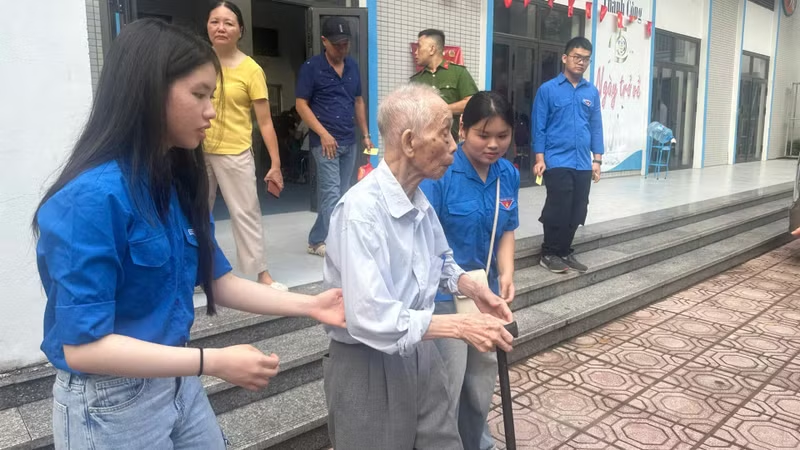
Efforts to identify the remains of soldiers (liet si) who died in past wars, including the Vietnam War, are intensifying across Vietnam. In particular, a campaign dubbed the "500-Day Operation" is bringing profound hope to bereaved families. Ms. Tran Thanh Huong, residing in Lang ward, Hanoi, visited to provide DNA samples along with her brothers, as her father was a fallen soldier. "Even if just one person is identified, it is a great thing. If even one family can find their relative, it is a joy," Ms. Huong said emotionally. This initiative symbolizes the hope that the remains of many soldiers who have not yet returned will have their identities revealed through DNA analysis. This campaign for the collection and identification of remains is being carried out intensively under government leadership in various provinces nationwide, including Khanh Hoa and An Giang. This can be seen as a strong manifestation of the Vietnamese Communist Party's will to heal the scars of war and accurately convey the nation's historical memory to the next generation. Under the one-party system, such activities, which serve as symbols of national historical recognition and public cohesion, play a crucial role in strengthening social unity. While Vietnam continues to experience economic growth, its approach to the legacy of past wars also influences the formation of national identity.

多角的分析

経済的影響

DNA鑑定技術への投資は、長期的な社会的・文化的プロジェクトの一環と位置づけられます。直接的な経済効果は限定的ですが、国民の精神的充足感や国家への帰属意識を高めることで、間接的に社会の安定に寄与し、それが経済活動の基盤となります。また、関連技術の発展や専門人材の育成にも繋がる可能性があります。

投資家心理

このニュース自体は、直接的な投資機会を示すものではありません。しかし、ベトナム政府が過去の遺産や国民の感情に配慮した政策を継続していることは、政治的安定性を示す指標となり得ます。投資家は、このような社会政策が経済政策とどのように連携していくかを注視する必要があります。

社会的影響

ハノイのフオンさんのように、多くの遺族が長年、行方不明の家族の帰還を待ち望んでいます。DNA鑑定による身元特定は、彼らにとって長年の悲願達成の糸口となります。この取り組みは、戦争の悲劇を風化させず、国家として過去と向き合う姿勢を示すものであり、国民の連帯感を醸成する側面があります。

市民の声

フオンさんのように、多くの国民、特に高齢世代は、戦争で失われた家族の消息を知りたいと強く願っています。DNAサンプルの提供は、彼らにとって希望であり、同時に過去の悲劇を再認識する機会でもあります。この活動は、国民一人ひとりの人生に深く関わる問題であり、政府の取り組みへの期待感と、さらなる進展への願いが込められています。

背景・歴史的文脈

ベトナム戦争(1955年〜1975年)では、数百万人の兵士と民間人が犠牲となりました。多くの兵士の遺骨は未だ特定されておらず、遺族にとっては長年の悲しみとなっています。ベトナム政府は、戦没者の遺骨収集と身元特定を長年にわたり行っていますが、近年、DNA鑑定技術の進歩により、その精度と効率が向上しています。特に「500日作戦」のような集中的なキャンペーンは、国民の関心を高め、社会的な結束を促す狙いもあります。これは、戦争の記憶を管理し、国家の歴史的叙事を形成する上で、ベトナム共産党にとって重要な政策の一つです。

原文ソース

Nhan Dan

原文を読む