General articles are free for 24 hours after publish.
Hanoi's Inner-City Real Estate Shows Positive Development Cycle
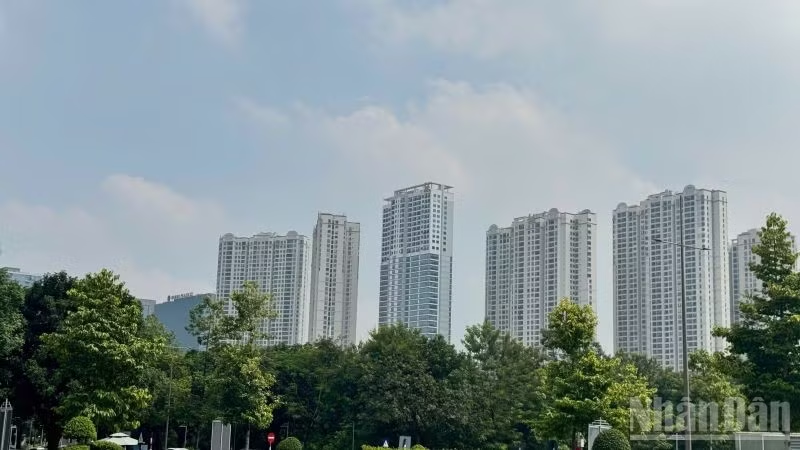
Hanoi's inner-city real estate market is entering a more positive development cycle, driven by strong demand for actual living spaces and a more selective supply. The central districts are leading the market, with Ho Chi Minh City also showing vibrancy in its expansion areas.
Hanoi's inner-city real estate market is showing significant signs of recovery. This market is entering a more positive development cycle, driven by strong demand for actual living spaces and a more selective supply. The market is being led by Hanoi's central districts, while Ho Chi Minh City is also experiencing vibrancy in its expanding suburban areas. Analysis indicates that Hanoi's central areas are spearheading the real estate market. This suggests that the continuous influx of population into urban centers and infrastructure development are consistently supporting the demand for living in central districts. In recent years, Vietnam's real estate market has undergone a period of adjustment due to speculative activities and oversupply. However, the current trend in Hanoi's inner city suggests a shift towards sustainable growth based on actual demand. Developers also appear to be increasingly focusing on high-quality properties that meet market requirements. Under its one-party system, Vietnam continues to pursue economic growth, and the advancement of urbanization is a fundamental factor supporting the real estate market. Particularly in capitals like Hanoi, government urban development plans and infrastructure investments contribute to market revitalization. Meanwhile, as Vietnam's economy, which has strong economic ties with China, is also influenced by global economic trends and geopolitical risks, continued attention is needed for the future development of the real estate market.
Original source
Nhan Dan