General articles are free for 24 hours after publish.
Singer Phuong My Chi Apologizes After Backlash Over 'Misuse' of Ethnic Costume
Vietnamese singer Phuong My Chi has apologized after facing criticism for misusing the ethnic costume 'khan Piêu' as a fashion accessory. Her team removed related images, with critics citing a lack of respect for the culture.
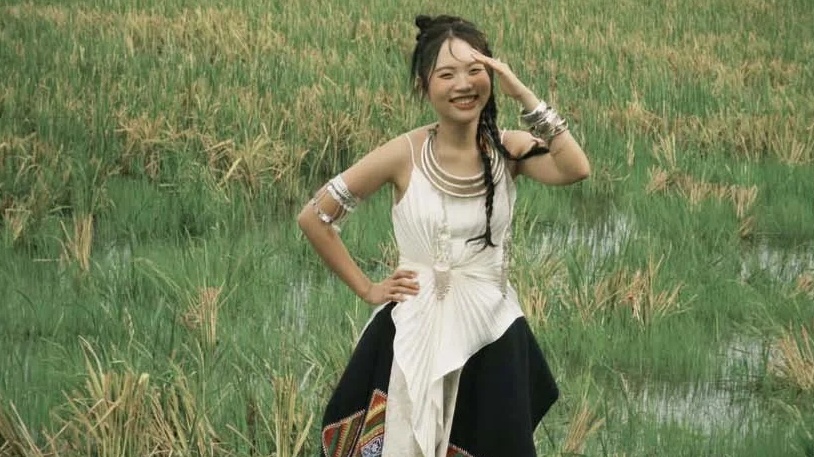
Vietnamese singer Phuong My Chi is facing cultural backlash for her recent promotional photos, which featured the 'khan Piêu,' a traditional headscarf of the Thái ethnic group, used in a manner deemed inappropriate. The costume was incorporated as a decorative element on a skirt in images promoting her song 'Chọn mặt gửi vàng,' released on August 27. Across social media and cultural forums, many expressed that this usage of the khan Piêu showed a lack of respect for Thái ethnic traditions. Residents from the northwestern region, where the Thái people live, pointed out that the khan Piêu is deeply tied to their spiritual life and is typically worn on the head or around the neck, not as a skirt. Experts have described this specific application as "almost taboo." In response to the widespread criticism, Phuong My Chi's team has removed the images from all digital platforms. The singer stated, "I want to listen to all public feedback, especially from the Thái ethnic community, with a humble spirit." She apologized and assured that her team would learn from this experience for future endeavors. She reiterated that the project's goal was to promote cultural beauty and preserve traditional music values, a path she has pursued for years. Master Ha Trung, Deputy Head of the Faculty of Culture and Arts at Lao Cai College, commented that the controversy arose because the team's use of the khan Piêu deviates from the customs of the Thái people, who are a significant community in provinces like Lai Châu, Lào Cai, Sơn La, and Điện Biên. According to experts, the khan Piêu is a cultural symbol of the Black Thái people, not merely a beauty accessory. It is traditionally worn by women on their heads, serving both to protect from the elements and to enhance their grace. Furthermore, the scarf is linked to many customs, serving as a token of affection, a dowry, or a gift from a bride to her husband's family. In funeral rites, it also carries emotional significance, symbolizing the connection between the living and the deceased. The khan Piêu is woven from cotton threads, dyed indigo, and then embroidered with colorful patterns. Completing a khan Piêu with all its intricate motifs can take a Thái woman between two to four weeks. The scarves are typically about 140-150 cm long, roughly the span of a grown girl's arms. "While the singer's team intended creativity, this usage can easily create a repulsive impression, making the Thái community feel disrespected," Ha Trung noted. He advised that when artists draw upon traditional elements, they should prioritize three key aspects: "understanding correctly before creating, respecting the cultural context, and consulting with those who are knowledgeable or directly involved with the community." Earlier, at a press conference on August 25 to introduce the project, Phuong My Chi had spoken about combining contemporary music with traditional elements to spark curiosity and encourage young people to actively explore their culture. She acknowledged that innovation must be accompanied by caution and a readiness to accept dissenting opinions when experimenting. Phuong My Chi, 23, from Ho Chi Minh City, rose to fame at the age of 10 after becoming the runner-up in the 2013 "The Voice Kids Vietnam." She has since released numerous successful MVs and albums. In 2025, she has been actively participating in various competitions, including placing third in the regional music competition "Sing! Asia" and winning "Em xinh say hi" in August. Beyond singing, she has also acted in film projects like "Hai lúa" (2014) and "Nhà gia tiên" (2025), and the web-drama "Tiệm hoa dì ghẻ."
Original source
VnExpress