General articles are free for 24 hours after publish.
Cambodia: Military Positions Cannot Establish Sovereignty in Border Dispute
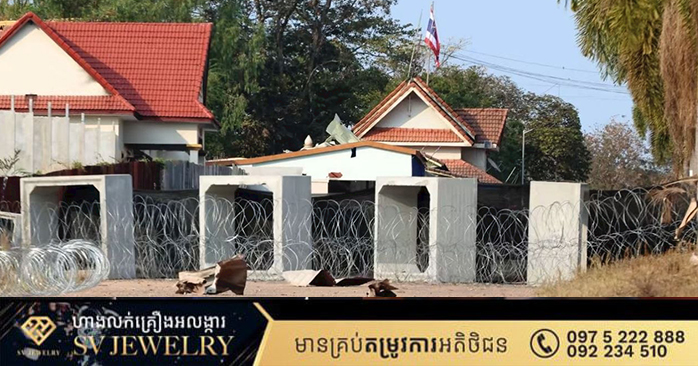
Cambodian Information Minister Net Pheaktra stated that if Thailand's assertion that 'military positions do not define borders' is accepted, then fences, containers, and trenches also cannot establish sovereignty. He emphasized that border demarcation should be left to the Joint Border Committee (JBC) and that military faits accomplis are unacceptable.
Cambodian Minister of Information, Net Pheaktra, stated that if Thailand's assertion that 'military positions do not define borders' is accepted, then similarly, fences, barbed wire, containers, and trenches in border areas cannot establish sovereignty. He emphasized that these structures are temporary installations resulting from military presence and cannot replace the international border demarcation process. According to an interpretation by the Chairman of the Joint Border Committee (JBC) of Cambodia, as reported by Thai media 'Thaiger' on September 13th, the ceasefire agreement ends hostilities but does not create new borders. The lines where troops are stationed should not be considered new border lines. Based on this principle, unilateral actions arising from military presence, such as the placement of containers, fences, trenches, roads, infrastructure development, and the prevention of residents from returning, cannot serve as a basis for asserting sovereignty or forming new border lines. Minister Pheaktra particularly stressed the importance of this principle in areas where the Thai army has installed containers, fences, trenches, and other infrastructure after the ceasefire. He noted that placing objects on land does not make that land the property of the placer. Similarly, temporary occupation or de facto control by military forces should not substitute the legal border demarcation process. He referred to Article 3 of the Joint Declaration dated December 27, 2025, which states that both parties agree to entrust the border demarcation work to the JBC and that this process should be expedited. The minister also pointed out that the declaration confirms the security of the joint survey teams on the ground and the prioritization of border demarcation in affected areas with civilian populations. Minister Pheaktra asserted that if Thailand sincerely adheres to this principle, the most rational path is to enable the JBC and related technical teams to effectively conduct survey and demarcation work on the ground. The situation created by the military on the ground should not precede the JBC's border demarcation process. He questioned, 'If military positions cannot establish new borders, why are fences, containers, trenches, roads, and outposts created by the military after the ceasefire allowed to become permanent situations or used to claim territorial rights?' He concluded that if a ceasefire does not create new borders, then military faits accomplis should not be allowed to obstruct the border demarcation process. Source: CEN Cambodia
Original source
CEN Cambodia