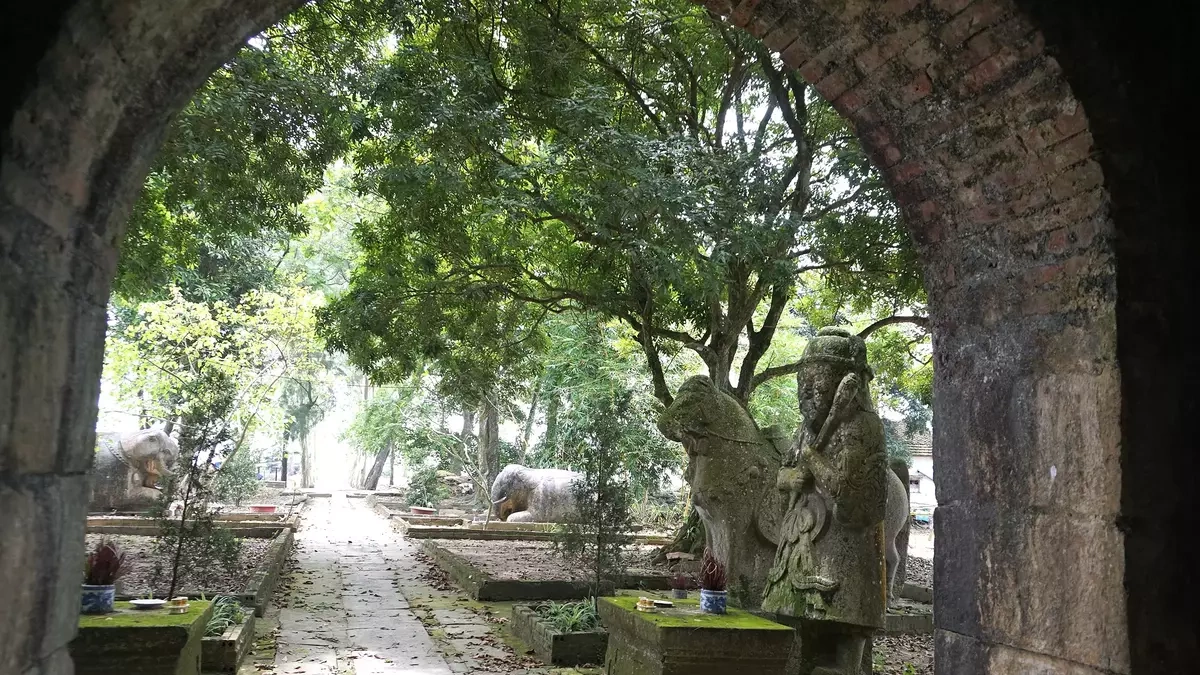
Thanh Hoa Province Begins Excavation of Ancient Temple Dedicated to Nguyen Van Nghi
Thanh Hoa Province has launched an archaeological excavation project for the Nguyen Van Nghi Temple, an ancient site over 400 years old. With a budget of nearly VND 9 billion and a planned completion by 2027, the project aims to uncover the temple's precise scale and structure, providing scientific data for its preservation and restoration.
Thanh Hoa Province has approved an archaeological excavation project for the Nguyen Van Nghi Temple, an ancient site with over 400 years of history. The project, with a budget of nearly VND 9 billion and scheduled for completion by 2027, aims to strengthen the scientific foundation for the preservation and restoration of the temple. The Nguyen Van Nghi Temple, dedicated to a high-ranking official who served as tutor to two kings of the Later Le Dynasty, shares architectural similarities with the UNESCO World Heritage site of Ho Citadel (Thanh nhà Hồ), earning it the nickname "miniature Ho Citadel." Spanning a vast area, the site is characterized by its stone ramparts, arched gates, and a grand architectural space described as a "miniature capital." The excavation will take place in a 1,800 square meter area in Dong Tien ward, aiming to clarify the scope, scale, structure, and related architectural elements of the relic. The resulting archaeological findings will serve as a crucial basis for the temple's repair and restoration plans. Historical records indicate the temple was built in 1617 and has undergone multiple renovations and expansions by descendants. The site is designed with the principle of "inner Cong, outer Quoc" (inner structure like 'Cong', outer like 'Quoc'), surrounded by an outer earthen rampart and an inner stone citadel. Notably, its gate, constructed from large stacked stones, shows many similarities with the citadel gates of Ho Citadel. However, after more than four centuries, many parts of the relic have deteriorated. The stone-paved paths are displaced, stone statues are cracked and moss-covered, and the once grand halls for worship are now reduced to foundations. The main sanctuary's pillars and beams are aged, and its tiled roof shows signs of damage, raising safety concerns. The Nguyen Van Nghi Temple was designated a national historical and cultural relic by the Ministry of Culture and Information in 1990. In 2014, a project worth nearly VND 53 billion for the restoration and valorization of the relic was approved, but it has not been completed due to funding difficulties and issues related to archaeological work. Leaders in Dong Tien ward stated that the Nguyen Van Nghi Temple is a relic of exceptional historical and architectural value, attracting many researchers and tourists. This excavation project is expected to be a significant step in preserving this precious cultural heritage for future generations. Source: VnExpress
多角的分析
このニュースは直接的な経済活動を示すものではないが、文化遺産保護への投資は長期的な観光収入や地域経済の活性化につながる可能性がある。約90億ベトナムドンの初期投資は、地域における文化観光産業の潜在的可能性への期待を示唆している。過去の530億ベトナムドンのプロジェクトが中断した経緯は、文化遺産保護における資金調達の課題を示しており、今後のプロジェクトの持続可能性には財政的な裏付けが不可欠となる。
このニュースは直接的な投資機会を示すものではない。しかし、文化遺産保護への関心は、ベトナムにおける観光産業の成長ポテンシャルを示唆する。阮文儀祠のような歴史的価値の高い遺跡の修復・保存が進めば、国内外からの観光客誘致につながり、関連産業への間接的な投資機会を生み出す可能性がある。ただし、過去のプロジェクト中断の事例から、投資家はプロジェクトの進捗と資金調達の安定性を慎重に見極める必要がある。
阮文儀祠の修復・保存は、地域住民にとって誇りの源泉となる。特に、阮文儀が地域出身の著名な人物であることは、地元コミュニティのアイデンティティを強化する。また、遺跡の老朽化は、地域住民の安全や生活環境に影響を与える可能性があり、修復はこれらの懸念を払拭する。さらに、文化遺産の保護は、次世代への教育的価値も高く、地域社会全体の文化意識の向上に寄与する。
阮文儀祠の修復・保存は、地域住民にとって、自分たちのルーツや歴史への誇りを再確認する機会となる。かつて「ミニチュア版ホー城」と称された壮麗な姿が失われつつある現状は、地域住民にとって残念なことであり、今回の発掘調査とそれに続く修復への期待は大きい。また、遺跡の老朽化による安全性の懸念が解消されることは、地域住民にとって安心材料となる。さらに、文化遺産が保存・活用されることで、地域への観光客増加が期待され、それが経済的な恩恵につながる可能性もある。
背景・歴史的文脈
阮文儀祠は、17世紀初頭に創建された後黎朝時代の高官、阮文儀を祀る寺院である。阮文儀は、後黎朝の二人の皇帝に仕え、その功績から厚く敬われた人物であり、彼の功績を称えるために故郷に寺院が建立された。この寺院は、その建築様式、特に石造りの城壁や門の構造が、ベトナムの歴史的建造物として重要なホー城と類似していることから、「ミニチュア版ホー城」と呼ばれるようになった。ホー城は、14世紀に陳朝によって築かれた要塞都市であり、そのユニークな建築技術と規模からユネスコ世界遺産に登録されている。阮文儀祠もまた、その建築的特徴から歴史的・文化的に高い価値を持つと評価され、1990年には国家歴史文化遺跡に指定された。しかし、長年の歳月と資金不足により、遺跡の保存状態は悪化しており、大規模な修復プロジェクトも過去に中断されている。
原文ソース
VnExpress