Harvard Scholars Appeal to Thai Court for Conscientious Objector Netiwit
Health
2026年7月20日
4
Thai Enquirer

General articles are free for 24 hours after publish.

Harvard Scholars Appeal to Thai Court for Conscientious Objector Netiwit

Share
AI Summary

Scholars affiliated with Harvard Divinity School have appealed to a Thai court, requesting that activist Netiwit Chotiphatphaisal be allowed to return to Harvard to complete his studies. The appeal is supported by a separate international statement from 56 academics and activists backing his right to refuse conscription.

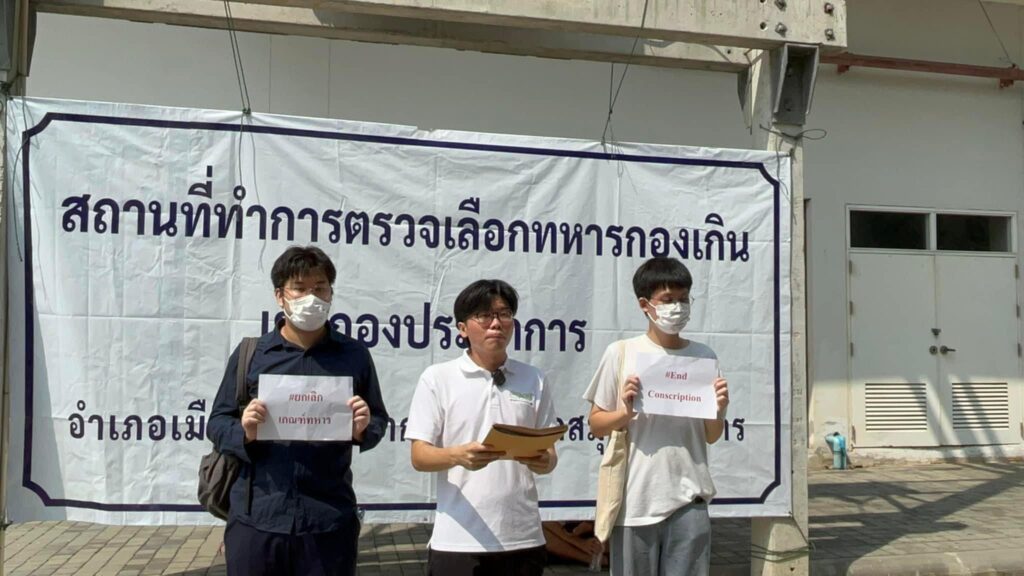
Five scholars affiliated with Harvard Divinity School have asked the Samut Prakan Kwaeng Court to allow Thai activist and conscientious objector Netiwit Chotiphatphaisal to return to Harvard to complete his studies. The appeal comes alongside a separate international statement organised by a Harvard Divinity School postdoctoral fellow and signed by 56 academics, students and activists from at least 13 countries. Netiwit faces criminal proceedings arising from his refusal to comply with Thailand’s compulsory military service system. He has argued that military conscription conflicts with his Buddhist, ethical and political convictions. The letter to the court, dated July 14, 2026, was signed by Chris Berlin, Janet Gyatso, Charles Hallisey, Teddy Hickman-Maynard and Monica Sanford, all professors or lecturers affiliated with Harvard Divinity School. “We write to express support for Mr. Netiwit Chotiphatphaisal and to respectfully request that the Court consider allowing him to continue and complete his studies at Harvard Divinity School,” the letter states. Netiwit attended Harvard Divinity School during the 2025–26 academic year as a Buddhist Ministry Initiative International Fellow. The programme brings people involved in Buddhist communities to Harvard for coursework in Buddhist ministry and promotes academic and religious exchange between Asia and the United States. The scholars described Netiwit as an exemplary student who excelled academically and contributed to the intellectual life of the school. “Throughout his fellowship, Mr. Chotiphatphaisal distinguished himself as an exemplary student, excelling in his coursework while enriching the intellectual life of our community through thoughtful engagement with faculty and students,” they wrote. Netiwit was subsequently admitted to Harvard Divinity School’s Master of Theological Studies programme for the 2026–27 academic year. The signatories clarified that they were writing in their individual capacities rather than on behalf of Harvard Divinity School. They also said they were not commenting on the legal merits of the case. Their request focused instead on the consequences that imprisonment or travel restrictions could have for Netiwit’s education. “We believe that allowing him to continue his education will enhance his capacity to contribute to the study and practice of Thai Buddhism in ways that will serve his country and the broader international academic community,” the letter states. A second statement, titled “Stand with Netiwit Chotiphatphaisal Against Forced Military Conscription,” was organised by Dr. Anushka Kahandagamage, a Sri Lankan scholar and Postdoctoral Fellow at Harvard Divinity School. Kahandagamage specialises in Buddhist studies, sociology and religion. She completed her PhD at the University of Otago. The statement has been signed by 56 people from at least 13 countries. Signatories include academics, graduate students, researchers, religious scholars and professionals affiliated with Harvard University, Harvard Divinity School, Harvard Law School, Harvard Kennedy School, Thammasat University, the University of Wisconsin–Madison, King’s College London, Trinity College Dublin and the University of Melbourne. Prominent signatories include Harvard Professor James Robson, Jonathan Makransky of Harvard’s Multireligious Ministry Initiatives, University of Wisconsin–Madison Professor Tyrell Haberkorn, Eckerd College Professor Amy Langenberg, Thammasat University scholar Prakirati Satasut and Harvard Law School Senior Fellow Stephanie Tabashneck. The statement argues that the human-rights violation lies in the compulsory nature of service, rather than in the refusal of individuals to participate. “The human rights violation is the mandate of service itself, not the individual’s refusal to comply,” it says. It describes forced conscription as structural violence and argues that national security should not be used to override freedom of thought, conscience and religion. The signatories maintain that Thailand’s failure to recognise conscientious objection has turned Netiwit’s case into a wider test of the country’s human-rights commitments. “His act of civil disobedience is not a breach of duty, but a courageous defence of the fundamental right to conscientious objection,” the statement says. It calls on Thailand to recognise conscientious objection and establish a civilian alternative to military service. “By respecting the right to conscientious objection, Thailand has the unique opportunity to lead Southeast Asia in progressive human rights reforms,” it states. Netiwit is the founder of Sam Yan Press, an independent publishing house in Bangkok, and has publicly opposed compulsory military service since his youth. He has written, translated and published extensively on conscientious objection, nonviolence and military reform. His earlier declaration of conscientious objection and published writings have formed part of the evidence in his legal case. The two statements represent different forms of international support. The Harvard scholars emphasise Netiwit’s academic record and the importance of allowing him to complete his education. The wider international statement directly challenges compulsory military service and presents his case as a test of Thailand’s recognition of freedom of conscience. Together, they increase international attention on a case whose outcome could affect not only Netiwit’s future but also the treatment of conscientious objectors in Thailand.

0

Original source

Thai Enquirer

原文を読む