General articles are free for 24 hours after publish.
Rare Otter Civet in Indonesia Captured on Drone for First Time
Indonesia's elusive otter civet (Musang Air) has been successfully captured on camera trap and drone footage for the first time, offering new hope for understanding the species. Researchers from IPB University are optimistic about the insights this will provide into the semi-aquatic viverrid.
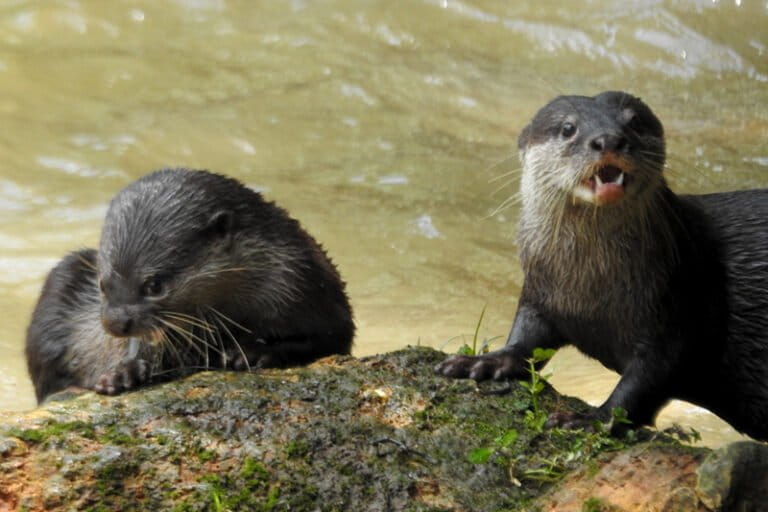
The elusive otter civet (Musang Air), a rare inhabitant of Indonesia's rainforests, has been captured on camera for the first time using advanced technology. Researchers from IPB University have made a significant step forward in understanding the ecology of this species, which has been extremely difficult to find, by employing drones and camera traps. The otter civet (scientific name: Cynogale bennettii) is a viverrid adapted to life near water, often mistaken for true otters (family Lutrinae) due to its appearance and habits. While believed to be distributed across Malaysia, Sumatra, Kalimantan, and Southern Thailand, its population is very small, and sightings are rare. Recently, a research team from IPB University managed to capture traces of this animal in the Sebangau peat swamp forest in 2009 and in the Rungan Kahayan landscape in 2023. The use of drones for capture is particularly significant, greatly advancing the detection and monitoring process, which was previously challenging due to the animal's camouflaged morphology and shy, sensitive nature towards human presence. Dede Aulia Rahman, a lecturer at IPB University, stated, "Technology simplifies the detection and monitoring process for animals that were previously difficult to find. These animals have camouflaged morphology in their habitat and tend to be shy and sensitive to human presence." Unlike many other civets that primarily inhabit land or trees, the otter civet is adept at both terrestrial and aquatic environments. Its partially webbed feet and broad snout with long sensory whiskers contribute to its otter-like resemblance. They are skilled swimmers and divers, foraging in rivers, swamps, and flooded forests, primarily at night. They also possess climbing abilities and may utilize tree hollows for nesting. Source: Mongabay Indonesia
Original source
Mongabay Indonesia