General articles are free for 24 hours after publish.
Vietnamese President Addresses Canadian Parliament, Emphasizing Deeper Bilateral Ties and International Cooperation
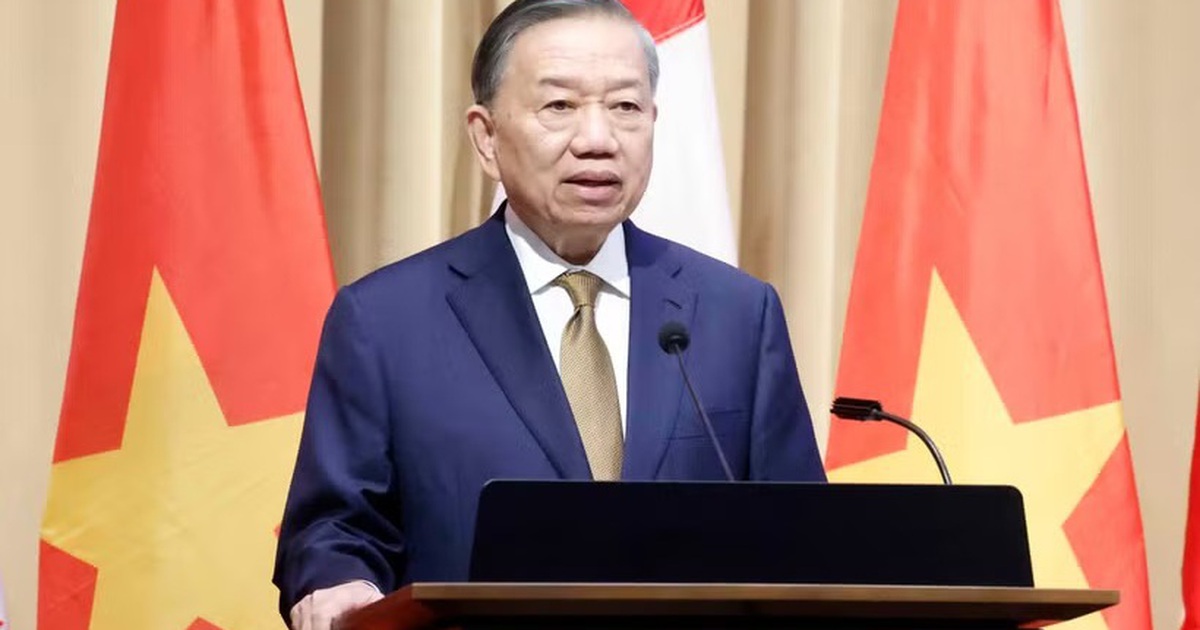
Vietnamese President To Lam addressed the Canadian Parliament, acknowledging progress in the Comprehensive Partnership and expressing intent to strengthen cooperation in diverse fields including economy, science-technology, and peacekeeping. He also advocated for peace and stability in the international community.
SOCIALIST REPUBLIC OF VIET NAM Government News Honourable Members of the Parliament of Canada, Distinguished ladies and gentlemen, dear friends, I am very pleased to visit the beautiful, vast, and vibrant country of Canada. From the moment I saw the rows of maple trees, I felt the warmth of the Canadian people, along with the spirit of strength and freedom in each maple leaf, so richly reflected in Canada's national anthem. I am deeply honoured to address the Parliament of Canada, which represents the will and aspirations of the Canadian people. I warmly convey to the people of Canada the friendship of the country and people of Viet Nam, with the wish to further develop the relationship between the National Assembly of Viet Nam and the Parliament of Canada in an increasingly close manner, contributing to deepening bilateral relations and continuously nurturing and consolidating them through political will, a legal foundation, and the support of our peoples. In her inaugural address in June, Governor General Louise Arbour shared the thought that "the richness of the bonds that can form between people who once believed they had nothing in common." Sincere encounters bring people closer, help nations understand one another better, and enable us to realize that, amid differences, there are always goals we can pursue together. In that spirit, today I would like to exchange views with you on the foundations of Viet Nam–Canada relations, Viet Nam's development path and opportunities for cooperation, as well as what our two countries can do to deliver tangible benefits to our peoples. Distinguished ladies and gentlemen, Every nation is shaped through its own historical journey. Understanding history is one way for nations to understand and trust one another more. Canada is a country that faces the Atlantic, the Pacific, and the Arctic Oceans, a place where communities of different languages, cultures, and origins live together. Diversity, along with a spirit of harmony and mutual respect, has become Canada's enduring value and a source of strength today. Canada has also left many marks on international life. The initiative of Foreign Minister Lester B. Pearson during the 1956 Suez Crisis contributed to the formation of the United Nations' first armed peacekeeping force. The jurist John Peters Humphrey was tasked with preparing the preliminary draft of the Universal Declaration of Human Rights. Ottawa is associated with the Convention banning anti-personnel mines; Montreal is associated with the protocol on protecting the ozone layer. These contributions show that nations can help shape shared norms, safeguard peace, and work together to address global challenges. Viet Nam's history is a journey of nation-building and national defense, struggles for independence and reunification, healing the wounds of war, and pursuing Renovation and opening up to the world. We understand deeply the sacred value of independence, self-reliance, and resilience. We understand and cherish peace, uphold dialogue, and believe that trust is durable only when words are matched by deeds, commitments are implemented seriously, and cooperation is mutually beneficial. From the earliest days of our independence, our President Ho Chi Minh set forth an open foreign policy spirit: "With regard to democratic countries, Viet Nam is ready to pursue a policy of openness and cooperation in all fields." Over decades, that spirit has been inherited and developed into a foreign policy of independence, self-reliance, and resilience; peace, friendship, cooperation, and development; diversification and multilateralization of external relations; proactive international integration; and being a friend, a reliable partner, and a responsible member of the international community. Viet Nam and Canada established diplomatic relations on 21 August 1973. Canada has accompanied Viet Nam on our path toward peace and reunification, supporting Viet Nam in agriculture, education, gender equality, and climate change response, among other areas. We have always appreciated that precious support. Since the establishment of the Comprehensive Partnership in 2017, bilateral cooperation has continued to expand in the economy, science and technology, defense, peacekeeping, and people-to-people exchanges, achieving many positive results, including effective contributions from the Vietnamese community in Canada and Canadian friends who love Viet Nam. We share with Prime Minister Mark Carney the view on the need to build strength from within and diversify external relations. From different circumstances and development paths, both Viet Nam and Canada share an interest in enhancing self-reliance, strengthening trusted relations, and safeguarding a peaceful and stable international environment. In an uncertain world, a relationship built on trust, responsibility, and shared long-term interests is itself a strategic value. For Canada, Viet Nam is a market of more than 100 million people, a dynamic economy connected to important maritime routes and supply chains, and an active and proactive member of ASEAN. Cooperating with Viet Nam opens additional opportunities for Canadian businesses to diversify markets and connect with Southeast Asia. For Viet Nam, Canada possesses knowledge, technology, a strong education system, strengths in energy and agriculture, and long-term capital. Viet Nam appreciates Canada's attention to Southeast Asia, its regard for ASEAN's central role, and its desire to make a long-term contribution to the region. Amid the currents of our times, every country seeks to enhance adaptability and protect its development achievements. For Viet Nam, the answer is distilled from our national history and the practical experience of Renovation. As a country that has paid in blood for peace, Viet Nam remains steadfast in its policy of independence, self-reliance, and resilience; cooperation and shared development; upholding righteousness, justice, and what is right on the basis of international law and the Charter of the United Nations. After more than 80 years since the founding of the nation and 40 years of Renovation, under the leadership of the Communist Party of Viet Nam, through the efforts of the entire nation and the valuable support of international friends, Viet Nam has become a middle-income developing country with a dynamic economy, among the world's 32 largest economies and one of the 15 countries with the leading trade scale. In the journey to realize the goal of "a prosperous people, a strong country, democracy, equity, and civilization," the National Assembly of Viet Nam bears a special responsibility as the highest representative body of the people and the highest organ of state power. Over 80 years since the first general election on January 6, 1946, the National Assembly has always accompanied the nation in safeguarding independence and reunification, pursuing Renovation, integration, and d
Original source
Bao Chinh Phu