General articles are free for 24 hours after publish.
Geothermal Development Cuts Into World Heritage Candidate Forests
Extensive deforestation is occurring within Indonesia's Bukit Barisan Selatan National Park (TNBBS) for geothermal power development. While new laws enacted in 2024 permit such development in conservation areas within national parks, environmental impacts are a growing concern.
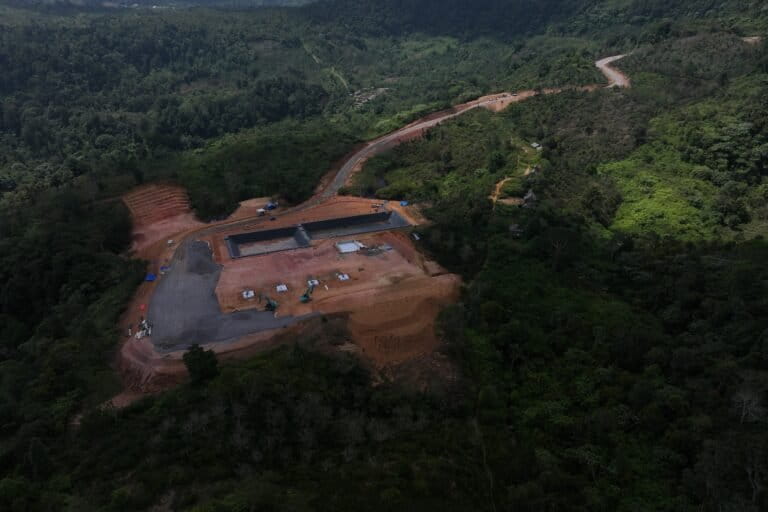
Extensive deforestation is underway in Indonesia's Bukit Barisan Selatan National Park (TNBBS) in southern Sumatra, driven by geothermal power development. The park, also a candidate for UNESCO World Heritage status, faces growing concerns over the environmental impact of these projects. A joint investigation by Mongabay Indonesia and Betahita revealed the construction of an industrial road, approximately 16 meters wide, within the park's conservation zones. This road stretches about 10 kilometers from the park's edge in Sekincau Village, West Lampung Regency, cutting through the forest. As of early August, felled trees along the road were still visibly fresh, indicating recent clearing. The road navigates the park's hilly terrain, appearing as a winding serpent from aerial views. At its end, two large, currently empty ponds are under construction, with two excavators on standby. According to a 2021 TNBBS zoning map, the road and facilities are located within a "rehabilitation zone." Experts have pointed out that the government is using legislation to facilitate geothermal development within national parks. Suprinti Yohar, Director of Forests at the Auriga Nusantara Foundation, questioned the environmental impact assessments for the road and construction, noting that they alter the landscape. This development is enabled by the "Conservation of Biological Natural Resources and Ecosystems Law (KSDAHE Law)" enacted in 2024, which effectively permits geothermal development in conservation areas within national parks. While the law promotes geothermal energy as a renewable source, it has drawn strong criticism from environmental groups concerned about development in protected areas like national parks. TNBBS is a biodiversity hotspot, home to endangered species such as the Sumatran rhinoceros and Sumatran tiger. Habitat fragmentation and destruction caused by the development pose significant threats to these rare wildlife populations. Information Source: Mongabay Indonesia
Original source
Mongabay Indonesia