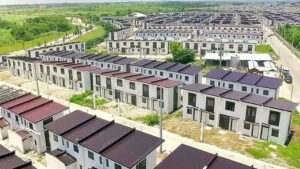
DBM Proposes P5.5 Billion Housing Budget, Far Below Agency Needs
The Department of Human Settlements and Urban Development (DHSUD) requested P60 billion for its 2027 budget, but the Department of Budget and Management (DBM) recommended only P5.5 billion. This significant shortfall could severely impact the government's housing program initiatives.
The Department of Budget and Management (DBM) has recommended a budget of P5.498 billion for housing agencies in 2027, a figure significantly lower than the P60 billion sought by the Department of Human Settlements and Urban Development (DHSUD) and its attached bureaus. This substantial gap raises concerns about the future funding and implementation of crucial housing programs in the Philippines. The DHSUD and its affiliated agencies had requested a combined P60 billion for the upcoming fiscal year, with the National Housing Authority (NHA) slated to receive the largest portion to expand government housing initiatives. Specifically, the NHA was to be allocated P44.732 billion, while the DHSUD itself was to receive P4.962 billion. The Social Housing Finance Corp. (SHFC) proposed P4.666 billion, the National Home Mortgage Finance Corp. (NHMFC) sought P4.750 billion, and the Human Settlements Adjudication Commission (HSAC) requested P890 million. In contrast, the DBM's proposed budget allocates P2.274 billion to the NHA, P2.492 billion to the DHSUD, P166 million to the SHFC, a mere P450,000 to the NHMFC, and P566 million to the HSAC. These figures represent a drastic reduction from the agencies' stated needs. During a hearing before the House Committee on Housing and Urban Development, Housing Undersecretary Henry L. Yap highlighted the administration's progress, stating that 1.133 million housing units have been assisted to date, with an expectation of an additional 557,000 units being delivered over the remaining two years of the current term. He noted that the Pambansang Pabahay para sa Pilipino Program has broadened its scope beyond vertical housing to encompass horizontal housing, rental units, temporary shelters, and various financing schemes, including low-interest housing loan programs and the revitalized Community Mortgage Program. Despite these efforts, the proposed budget cut by the DBM could impede the government's ability to address the persistent housing deficit in the Philippines, potentially impacting millions of Filipinos in need of affordable and safe housing. The significant disparity in funding proposals underscores a potential disconnect in priorities between the DBM and the housing sector's development goals.
多角的分析
DBMのP55億ペソという予算案は、DHSUDが要求する600億ペソと比較して約9割減であり、経済的な現実との乖離が大きい。これは、政府の財政状況が逼迫している可能性を示唆する。過去数年間、フィリピン経済はインフレ圧力やグローバルな経済減速の影響を受けており、政府は財政規律を重視せざるを得ない状況にある。住宅セクターへの投資が大幅に抑制されることは、建設業や関連産業の雇用、および国民の購買力に間接的な影響を与えるだろう。特に、住宅ローン金利の動向や、民間セクターの投資意欲にも影響を及ぼす可能性がある。
この予算案の乖離は、住宅セクターへの投資家にとって不確実性を高める要因となる。政府の住宅プログラムは、民間開発業者や金融機関にとって重要な事業機会を提供してきた。DBMの提案通り予算が削減されれば、政府主導の住宅供給が鈍化し、民間セクターの参入を促すインセンティブが低下する可能性がある。NHAやSHFCといった公的機関の活動縮小は、特に低所得者層向けの住宅開発プロジェクトへの投資リスクを増加させる。投資家は、政府の長期的な住宅政策の方向性について、より慎重な判断を迫られるだろう。
フィリピンでは、都市部を中心に深刻な住宅不足が長年の課題となっている。DBMの予算案は、ホームレス問題や劣悪な居住環境に置かれている多くの国民に直接的な影響を与える。特に、Pambansang Pabahay para sa Pilipino Programのような、低所得者層を対象とした支援策の縮小は、貧困層の生活水準向上を妨げる可能性がある。住宅不足は、教育機会、健康、そして社会全体の安定にも影響を及ぼすため、この予算案の行方は、フィリピン社会の格差是正に向けた取り組みの成否を左右する重要な要素となる。NHMFCへの予算が著しく少ない点は、住宅ローンへのアクセスがさらに困難になることを示唆している。
国民、特に低所得者層や若年層は、住宅へのアクセスがさらに困難になることに直面する可能性がある。政府の住宅プログラムの縮小は、マイホームを持つという夢を遠ざけ、賃貸住宅への依存度を高めることになる。また、住宅不足は、都市部での過密化やインフラへの負荷増大につながり、日常生活の質を低下させる。SNS上では、政府の住宅政策に対する不満や、より現実的な住宅供給策を求める声が上がるだろう。特に、海外で働くフィリピン人労働者(OFW)が、故郷に家を建てるという目標を達成することが難しくなる可能性も懸念される。
背景・歴史的文脈
フィリピンにおける住宅問題は、都市部への人口集中と経済格差の拡大により、数十年来の課題となっている。特にマニラ首都圏では、低所得者層向けの住宅が著しく不足しており、スラム化やホームレス問題が深刻化している。過去の政権も住宅供給プログラムを推進してきたが、資金不足や計画の非効率性により、期待された成果を上げてこなかった。2016年に発足した現政権は、「Pambansang Pabahay para sa Pilipino Program」を掲げ、年間100万戸の住宅供給を目指す野心的な計画を打ち出したが、その実現には巨額の予算が必要となる。今回DBMが提示した大幅な予算減額案は、この野心的な計画の実現性に疑問を投げかけるものと言える。
原文ソース
BusinessWorld Nation