Vietnam Shifts FDI Attraction Focus to Quality, Ho Chi Minh City Unveils New Strategy
Economy
2026年7月13日
5
Nhan Dan
Relations
🇻🇳Vietnam🇨🇳China

Vietnam Shifts FDI Attraction Focus to Quality, Ho Chi Minh City Unveils New Strategy

AI サマリー

Vietnam, particularly Ho Chi Minh City, is shifting its strategy from attracting projects to luring 'new-generation FDI' focused on innovation, technology transfer, and competitiveness. The city is accelerating investment in high-value industries and green production to achieve sustainable economic growth.

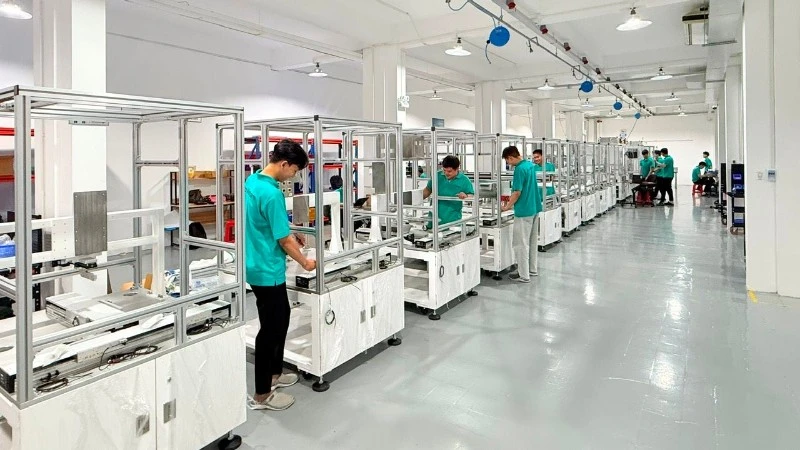
Ho Chi Minh City is spearheading Vietnam's strategic shift in attracting foreign direct investment (FDI), moving from a focus on "attracting projects" to "building an ecosystem" for high-quality capital. This new approach prioritizes innovation, technology transfer, and national competitiveness as key metrics, aligning with the Politburo's Resolution No. 10-NQ/TW on transforming FDI attraction and utilization. Recently, the Ho Chi Minh City Export Processing and Industrial Zones Authority (Hepza) granted an investment license to Automation Technologies Vietnam, a subsidiary of Singapore's Ito Group. With an investment of approximately $8 million, the company will establish a new factory in Linh Trung 1 Export Processing Zone, specializing in automated machinery, robotics, and production data management. This facility is slated for construction starting in August 2026 and operational by January 2027. Nguyen Huy Hoang, General Director of Ito Vietnam, highlighted the importance of "greening" production lines for investment efficiency. He noted that their existing 2,600m² facility has generated an average annual revenue of $4-5 million with just 120 engineers, underscoring Vietnam's significance as a global production hub for Ito Group. Hepza's investment department views Ito Vietnam as a model for new-generation FDI, requiring high technical content and prioritizing "brains" over labor intensity. The company's project benefited from Hepza's "green lane" fast-track procedures for FDI enterprises. Similarly, Worldon Vietnam, part of China's Shenzhou Group, has invested $12.6 million in a smart, closed-loop production model at the Dong Nam Industrial Park. The garment manufacturer partnered with Nike in 2022 to build a Flyknit shoe design center within its premises, aiming to enhance its position in the partner's supply chain and optimize material usage. As of now, Ho Chi Minh City hosts 20,259 FDI projects totaling nearly $142 billion from 152 countries and territories. In the first half of 2026 alone, the city attracted over $6.8 billion in FDI, meeting 62% of its annual plan. FDI accounts for approximately 20% of the city's total social investment and over 50% of its export turnover, serving as a crucial driver for economic restructuring, labor productivity enhancement, and international integration. However, challenges persist. A significant bottleneck is the domestic supply chain's inability to meet FDI enterprises' demands in terms of quantity, quality, and technical standards, forcing many to import raw materials and components. THACO (Truong Hai Auto Corporation) emphasizes the need for Vietnamese enterprises to absorb technology and integrate deeper into FDI supply chains. Furthermore, limited industrial land availability and underdeveloped infrastructure in some industrial zones hinder the reception of large-scale, high-tech projects. The city needs to accelerate the attraction of strategic projects in sectors like electronics-semiconductors, AI, big data, biotechnology, new materials, and renewable energy, while also upgrading existing industrial parks and fostering stronger linkages between domestic and FDI firms. Nguyen Van Duoc, Chairman of the Ho Chi Minh City People's Committee, stressed the city's responsibility to lead in implementing Resolution No. 10-NQ/TW by building a new model for attracting new-generation FDI. This includes leveraging the Vietnam International Financial Center to absorb FDI's "intangible value," such as fintech, advanced management capabilities, international transparency standards, data systems, and global network access. "New-generation FDI is not just seeking low costs or tax incentives," Duoc stated. "Strategic investors are now more concerned with institutional stability, infrastructure quality, access to capital, ESG standards, human resource quality, innovation capacity, technology ecosystems, modern financial services, and regional/global market connectivity."

多角的分析

経済的影響

ベトナム政府は、FDI誘致の質を重視する方針を明確にしており、ホーチミン市はその最前線に立っている。これは、単なる資本流入から、技術移転、高付加価値化、そして国内産業の高度化に繋がる「質的」な FDI を求めるベトナム経済の構造変化を反映している。特に、グリーンエネルギー、デジタル技術、自動化といった先端分野への投資は、ベトナムの産業構造の高度化と国際競争力強化に不可欠であり、今後の経済成長のドライバーとなり得る。しかし、国内サプライチェーンの未熟さやインフラの課題は、この質の高い FDI を最大限に活かす上での制約となる。これらの課題克服が、ベトナム経済の持続的な発展の鍵となるだろう。

投資家心理

投資家にとって、ベトナム、特にホーチミン市の FDI 戦略転換は、より高度で持続可能な投資機会の出現を示唆している。従来の低コスト労働力や税制優遇に依存する投資モデルから、イノベーション、技術、ESG(環境・社会・ガバナンス)基準を重視する投資家にとって、魅力的な市場となりつつある。イトーベトナムやワールドン・ベトナムの事例は、高付加価値製造業やスマート生産への投資が、高い収益性と成長性をもたらす可能性を示している。ただし、国内サプライチェーンの強化やインフラ整備の遅れは、投資リスクとなり得るため、これらの改善動向を注視する必要がある。ベトナム国際金融センターの設立は、金融サービスへのアクセス向上や、より洗練された投資環境の整備に繋がる可能性がある。

社会的影響

ホーチミン市が「新世代FDI」を誘致する動きは、労働市場に新たな影響を与える。高度技術・知的集約型産業への投資増加は、熟練したエンジニアや研究開発職の需要を高める一方で、従来の労働集約型産業の雇用機会を減少させる可能性がある。イトーベトナムの例のように、少数のエンジニアで高い収益を上げるモデルは、労働分配率や雇用創ちに対する懸念を生むかもしれない。また、グリーン生産やESG基準の導入は、労働者の安全衛生環境の改善や、より持続可能な労働慣行の確立に繋がる可能性があるが、その実施には企業側の積極的な取り組みと、政府による監督が不可欠となる。工業団地のインフラ未整備は、周辺地域の生活環境や交通インフラにも影響を与える可能性がある。

市民の声

ホーチミン市におけるFDI誘致戦略の転換は、市民の生活に間接的かつ長期的な影響を与える。高度技術産業への投資増加は、将来的に高収入の雇用機会を創出する可能性があるが、同時に、既存の労働集約型産業からの転職やスキルアップの必要性を生じさせる。例えば、ITエンジニアやデータサイエンティストといった職種への需要が高まる一方で、縫製業などの伝統的な産業に従事する人々は、新たなスキル習得を迫られるかもしれない。また、グリーン生産への移行は、大気汚染や水質汚染の削減に繋がり、市民の健康と生活環境の改善に寄与する可能性がある。しかし、工業団地の開発やインフラ整備の遅れは、通勤時間の増加や生活コストの上昇といった、地域住民の日常生活に直接的な影響を及ぼすことも考えられる。

背景・歴史的文脈

ベトナムのFDI政策は、1986年のドイモイ(刷新)政策以降、経済成長の原動力として位置づけられてきた。当初は、安価な労働力と土地を活かした裾野産業や製造業の誘致に重点が置かれていた。しかし、近年の経済発展と国際情勢の変化に伴い、FDIの質が問われるようになった。特に、中国のサプライチェーン再編の動きや、地政学的なリスクの高まりを受け、ベトナムはより先端技術、高付加価値、そして持続可能性を重視する「新世代FDI」へのシフトを加速させている。2021年の第13回党大会で採択された経済社会開発戦略では、イノベーション、デジタル経済、グリーン経済への投資が強調されており、今回のホーチミン市の戦略は、その具体化の一環と言える。

原文ソース

Nhan Dan

原文を読む