Surigao town torn between jobs, mining crackdown
Security
2026年7月4日
5
Inquirer NewsInfo

Surigao town torn between jobs, mining crackdown

AI サマリー

A crackdown on illegal gold mining in Barobo, Surigao del Sur, Caraga region, Philippines, has created tension between residents and authorities. While some residents rely on mining for their livelihood, measures against large-scale operations causing environmental damage are being called for.

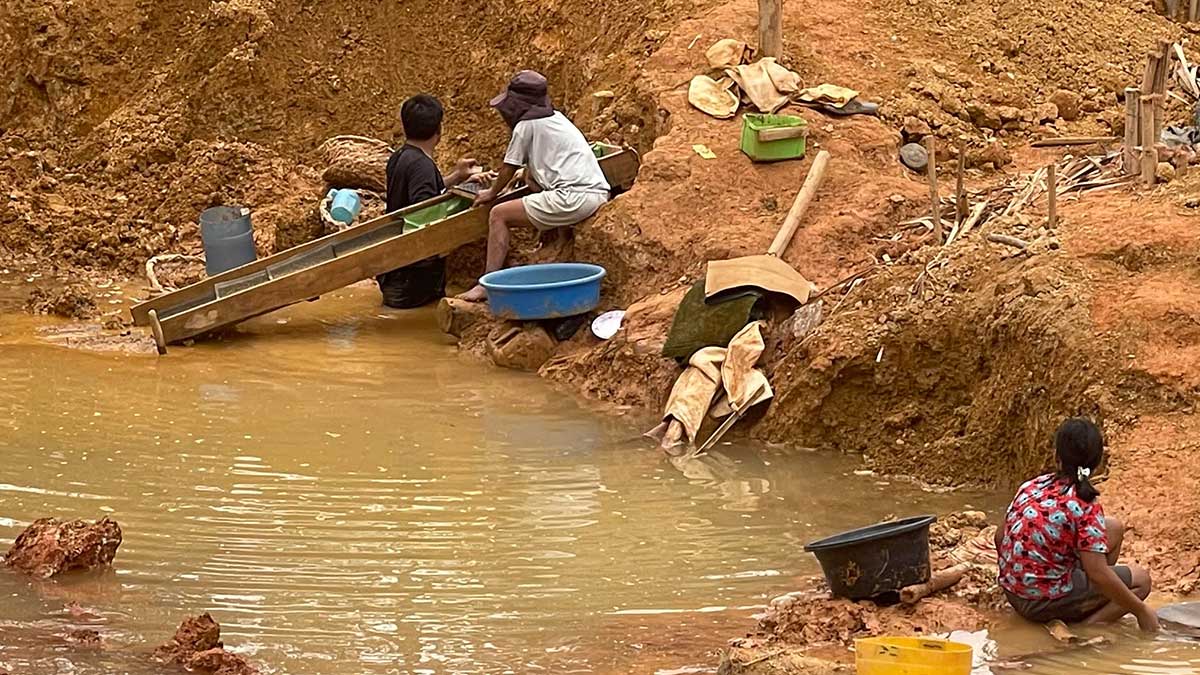
In Barobo, Surigao del Sur, Caraga region, small-scale gold mining has long been a means of survival for many families where jobs are scarce and farming alone often cannot provide enough to support a household. But as manual gold panning has gradually given way to mechanized extraction using heavy equipment, the line between subsistence mining and illegal commercial operations has become increasingly blurred, placing local officials and law enforcement agencies at odds over how the problem should be addressed. That tension came into focus on June 27 and June 28 when personnel from the Department of Environment and Natural Resources (DENR)-13, its attached agencies, and the Police Regional Office-13 raided suspected illegal mining sites in the villages of Bahi and Mamis. Three people were arrested and authorities seized an estimated P7.1 million worth of equipment, including a backhoe, water pumps, chainsaws, hoses, and other mining tools. Authorities said the operation was based on verified reports that mining activities had expanded beyond manual extraction into organized, mechanized operations allegedly backed by financiers. Barobo Mayor Ronnie Martizano, however, questioned the operation over the alleged lack of prior coordination with the municipal government. Regional authorities disputed the claim, saying the raid was part of an ongoing campaign against illegal mining across the Caraga region. Martizano has repeatedly opposed large-scale illegal mining, particularly the use of backhoes near riverbanks, and survived an ambush in February that was believed to be linked to his anti-illegal mining campaign. At the same time, he has supported allowing limited manual gold panning and sluicing in several villages while Barobo awaits approval of its proposed Minahang Bayan (people’s mining area), recognizing that many families rely on mining to make ends meet. Environment authorities, meanwhile, said the recent operation showed that some activities had gone well beyond subsistence mining, with heavy equipment accelerating extraction and increasing damage to riverbanks, farmlands, and water systems. Illegal mining has long challenged Barobo. Earlier operations in Barangay Tambis left open pits and damaged farms and roads, while officials from neighboring Hinatuan warned that sedimentation and mining waste could eventually affect downstream communities and the Hinatuan Enchanted River. According to Brig. Gen. Marcial Mariano Magistrado IV, Police Regional Office-13 director, the crackdown is part of continuing efforts to stop illegal mining and protect critical watersheds. For many residents, however, the issue goes beyond law enforcement. While some welcome stronger action against destructive mining, others said small-scale mining remains one of the few ways to feed their families. Residents Shan Alvizo Zarate and Ergie Macheca Ontua also urged authorities to target financiers and operators of large-scale illegal mining rather than poor miners trying to earn a living. INQ

多角的分析

経済的影響

フィリピンの地方部、特に資源が豊富な地域では、正規雇用の機会が限られているため、小規模採掘は依然として重要な収入源となっています。今回の摘発は、違法な商業的採掘活動への移行が、地域経済の構造的な脆弱性を浮き彫りにしたことを示唆しています。重機を使用した採掘は生産性を向上させる可能性がありますが、環境への影響と違法行為の境界線が曖昧になることで、当局は経済的必要性と環境保護のバランスを取るという難しい課題に直面しています。これは、フィリピンの多くの地方経済が、資源抽出と持続可能な開発の間でどのように苦悩しているかを示しています。

投資家心理

フィリピンにおける鉱業への投資は、その潜在的な利益と並行して、規制の不確実性と環境リスクを伴います。今回の違法採掘摘発は、特に小規模採掘セクターにおける監督と執行の課題を浮き彫りにしています。投資家は、法規制の遵守、環境社会ガバナンス(ESG)基準、および地域社会との関係を慎重に評価する必要があります。地元当局との連携不足や、違法行為の資金提供者への潜在的な関与は、投資リスクを高める要因となり得ます。長期的な投資には、透明性の高い規制環境と、持続可能な採掘慣行へのコミットメントが不可欠です。

社会的影響

バロボ町における違法採掘を巡る緊張は、経済的必要性と環境保護という、フィリピンの多くの地方社会が直面する根本的な対立を浮き彫りにしています。住民の一部が、生計を立てるために採掘に依存している現実がある一方で、バックホーのような重機の使用は、農地、水源、そして隣接するヒナツアン・エンチャンテッド・リバーのような地域にとって深刻な環境破壊をもたらしています。町長が襲撃事件を生き延びたという事実は、違法採掘を巡る利害関係の複雑さと、それに伴う危険性を示唆しています。住民が「貧しい鉱夫」ではなく「資金提供者と運営者」を標的にするよう求める声は、社会的不平等の問題と、資源の搾取における権力構造への不満を反映しています。

市民の声

バロボ町の住民にとって、採掘は単なる仕事ではなく、家族を養うための生命線です。仕事が少なく、農業だけでは十分な収入が得られない状況では、小規模な金採掘が頼りです。しかし、重機を使った大規模な採掘は、川や農地を汚染し、私たちの生活環境を破壊しています。私たちは、貧しい鉱夫ではなく、この破壊的な採掘を指示している人たちを取り締まってほしいと願っています。町長が襲われたと聞いて、私たちは不安を感じています。私たちの安全と、この土地を守るために、当局には公正な対応を求めています。

背景・歴史的文脈

フィリピンでは、多くの地方部で雇用機会が限られており、小規模金採掘は長年にわたり地域住民の重要な収入源となってきました。特にミンダナオ島やカラガ地方では、この傾向が顕著です。しかし、採掘技術の進歩と、より大規模な商業的採掘への移行は、環境破壊(森林伐採、河川の堆積物増加、水質汚染など)という深刻な問題を引き起こしてきました。過去にも、違法採掘に対する摘発は行われてきましたが、しばしば地元住民の生活手段との間で軋轢が生じ、資金提供者や運営者への追及が不十分であるとの批判も出ています。2024年2月の町長襲撃未遂事件は、違法採掘を巡る利害関係の複雑さと、それに伴う暴力のリスクを示唆しています。

原文ソース

Inquirer NewsInfo

原文を読む
Surigao town torn between jobs, mining crackdown | NEWS-BRAIN