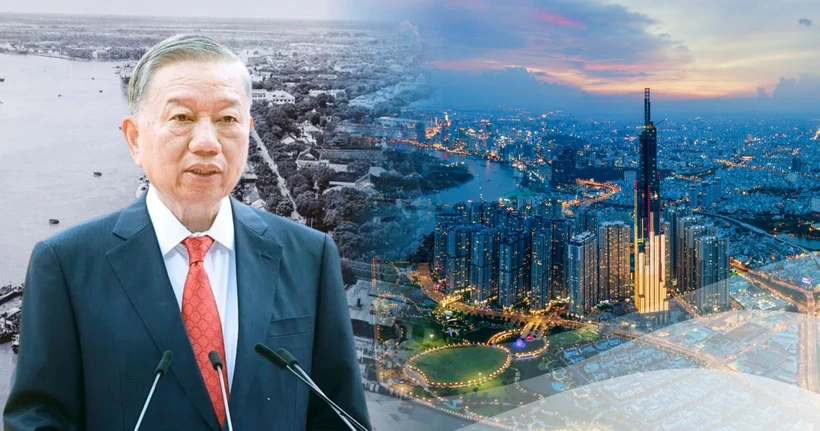
Ho Chi Minh City Celebrates 50 Years Under Its Name, President To Lam Delivers Keynote Address
Ho Chi Minh City marked the 50th anniversary of its renaming to Ho Chi Minh City. General Secretary and President To Lam delivered a speech at the commemoration ceremony, highlighting the city's illustrious history and future aspirations, while stressing the importance of economic development and addressing social issues.
On July 2, Ho Chi Minh City celebrated the 50th anniversary of Saigon-Gia Dinh City being officially named Ho Chi Minh City. General Secretary and President To Lam attended and delivered a significant speech at the commemoration ceremony. General Secretary and President To Lam stated that this 50th anniversary is not merely an administrative event but a crystallization of the profound gratitude of the Vietnamese people towards President Ho Chi Minh and a recognition of the immense contributions of Saigon-Gia Dinh to national liberation and reunification. He emphasized that this name represents a demand for the present and future, serving as a standard for the city to constantly self-reflect and strive for improvement. In his address, To Lam highlighted that Ho Chi Minh City is a city that inherits the spirit of the nation's father, President Ho Chi Minh. He recalled that 115 years ago, the young Nguyen Tat Thanh (later Ho Chi Minh) departed from this very place, Ben Nha Rong, to find the path to national salvation, marking the starting point of a great journey for Vietnam's independence and freedom. He praised the remarkable achievements of Ho Chi Minh City over the past half-century, particularly in the 40 years since the Doi Moi (Renovation) policy. He acknowledged the city's recovery from the post-war difficulties, its success in restoring production, stabilizing people's lives, and laying the foundation for economic development. The city has established itself as an economic engine and a major center for finance, trade, services, science-technology, education-training, healthcare, culture, foreign affairs, and international integration. He noted that state revenue is projected to exceed 800 trillion VND in 2025, attributing this success to the hard work and dedication of the people, businesses, officials, and laborers. Regarding urban development, To Lam pointed out that new urban areas, high-tech parks, export processing zones, industrial parks, commercial centers, hospitals, schools, cultural facilities, and inter-regional transportation networks have fundamentally transformed the city's landscape. He specifically highlighted the operation of Metro Line 1, Ben Thanh-Suoi Tien, as a crucial milestone for the development of public transportation, smart cities, green cities, and connected cities. Furthermore, he spoke about Ho Chi Minh City's unique cultural identity – characterized by openness, tolerance, generosity, humanity, and creativity. He lauded the city's solidarity and resilience in the face of difficulties. He also mentioned the city's humanitarian efforts, such as caring for the poor, war invalids, migrant workers, children, and vulnerable individuals, underscoring the compassionate spirit that defines the city. To Lam concluded by expressing his expectations that Ho Chi Minh City, as a city bearing the name of President Ho Chi Minh, will always be at the forefront of innovation and creativity, dynamic yet disciplined, modern yet humane, prosperous yet compassionate, deeply integrated into the global community while preserving national interests and identity, and striving for sustainable and inclusive development for the happiness of its citizens. Source: Nhan Dan
多角的分析
ホーチミン市の経済的牽引役としての役割は、国家歳入の800兆ドン超という数字に表れている。これは、近年のベトナム経済成長を支える同市の重要性を示唆する。しかし、この成長は都市部への人口集中、インフラへの負荷増大、そして地域間格差の拡大といった課題とも隣り合わせである。持続可能な成長のためには、イノベーション促進に加え、環境問題や社会福祉への投資が不可欠となる。
ホーチミン市は、ベトナム経済の中心地として、国内外からの投資を惹きつける主要なハブであり続けている。インフラ整備、特に地下鉄1号線の開通は、都市のコネクティビティを高め、不動産や物流分野への投資機会を創出する可能性がある。しかし、経済成長に伴うインフレ圧力や、国際情勢の変動リスクも考慮する必要がある。透明性の高い規制と、予測可能なビジネス環境の維持が、更なる投資を呼び込む鍵となる。
ホーチミン市が「ホー・チ・ミン主席の名を冠する都市」として、革新と創造の最前線に立つべきというトー・ラム氏の演説は、都市のアイデンティティと将来像を強く意識させた。一方で、都市化の進展は、ベンタイン市場周辺のような伝統的な商業エリアと、新規開発されるスマートシティエリアとの間で、地域社会の分断や文化の変容を招く可能性も孕んでいる。また、貧困者や移民労働者への支援は、都市の包摂性を高める上で重要だが、その恩恵が全ての市民に行き渡っているか、継続的な検証が求められる。
ホーチミン市民にとって、サイゴン・ザーディン市がホー・チ・ミン市と改称されて50周年を迎えたことは、歴史的な節目であると同時に、都市の発展と将来への期待を再確認する機会となった。トー・ラム最高指導者兼国家主席の演説は、経済成長の成果を称賛する一方で、革新、規律、人間性、そして包摂的な発展を求めるメッセージを発した。これは、市民生活における物価の安定、雇用機会の創出、そして教育や医療といった公共サービスの質の向上への期待につながるだろう。地下鉄1号線の開通は、通勤時間の短縮など、日常生活の利便性向上に貢献すると期待される。
背景・歴史的文脈
サイゴン・ザーディン市がホー・チ・ミン市と改称されたのは、1976年7月2日、ベトナム戦争終結と南北統一から約1年後のことである。この改称は、ベトナム共産党による統一国家の象徴的な一歩であり、建国の父であるホー・チ・ミン主席への敬意を表すものであった。サイゴンは、フランス植民地時代から南ベトナムの経済・政治の中心地として栄え、ベトナム戦争中は南ベトナム政府の首都であった。この改称は、過去の体制との決別と、社会主義国家としての新たな出発を意味した。以来、ホーチミン市はベトナム経済の最前線として、特に1986年のドイモイ(刷新)政策以降、目覚ましい経済成長を遂げ、国内外からの投資を吸収してきた。
原文ソース
Nhan Dan