General articles are free for 24 hours after publish.
Thai Govt Expands Cross-Border E-Waste Crackdown from 'Container Inspection' to 'Network Pursuit'
The Thai government is intensifying its crackdown on cross-border electronic waste by moving from container inspections to a comprehensive pursuit of the entire supply chain. An initial investigation covers 825 containers, with a focus on evidence-based legal proceedings.
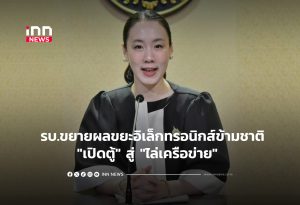
The Thai government is intensifying its efforts to prevent Thailand from becoming a transit or final destination for electronic waste and hazardous waste from abroad. The strategy has been elevated from inspecting individual containers to a comprehensive pursuit along the entire supply chain, encompassing foreign exporters, bills of lading, importers, waste recipients, and financial flows, to ensure legal proceedings reach the truly involved parties based on evidence. This progress follows a recent inspection of suspicious containers at Laem Chabang Port on September 14, 2024, chaired by Mr. Suchart Chomklin, Minister of Natural Resources and Environment. The Department of Special Investigation (DSI), in collaboration with 18 agencies and organizations including the Customs Department, Pollution Control Department, Department of Industrial Works, Chonburi Provincial Administration, law enforcement agencies, international organizations, and relevant partners, investigated the potential illegal importation of electronic waste. Ms. Lalida Phetwuttanana, Deputy Government Spokesperson, stated that a key principle of the recent inspection was that "seizure for inspection does not imply guilt." Out of the targeted 10 containers, 9 were inspected (one lacked a company representative). The results showed that 3 containers from Poland, the UK, and New Zealand were declared correctly and found to be free of contamination. However, 6 containers from the United States, declared as aluminum scrap and unusable items, were found to contain mixed electronic waste, necessitating legal action and further investigation. "The government will not stop at just opening containers and finding violations; it must pursue who exported, who imported, where the goods went, and how the money flowed to reach the network's origin. Meanwhile, evidence is paramount. Containers on the inspection list or seized do not automatically mean they have been proven to have committed an offense," Ms. Lalida emphasized. Regarding the 50 containers that the DSI requested the Customs Department to additionally seize, these are for inspection and further investigation, not a conclusion of guilt for all. Preliminary information indicates that 19 containers have already been found to have violations and are being processed. Fourteen containers have no record of import into the Kingdom, while the remaining ones have different statuses requiring case-by-case factual verification. Furthermore, the DSI is expanding its investigation based on an initial list of approximately 825 containers believed to have been imported into Thailand. To date, investigations and verifications of suspicious containers have identified 151 violations. Preliminary information links these to 7 exporting companies from the United States and 16 importing companies in Thailand. However, the figure of 825 containers and the listed companies represent the scope of the investigation and are not a definitive conclusion of guilt for all containers or companies. Ms. Lalida added that during the first 11 months of the 2024 fiscal year, the Customs Department seized a total of 187 environmental-related cases, with confiscated goods weighing 9.67 million kilograms and valued at over 234.4 million baht. This included approximately 2.7 million kilograms of electronic waste, 6.6 million kilograms of hazardous waste, and 300,000 kilograms of plastic waste. This represents cumulative performance over 11 months, not solely the outcome of the recent container inspections. "The goal is to prevent Thailand from becoming anyone's dumping ground for hazardous waste. Inspections must extend to the origin, destination, and financial flows, but all steps must be based on evidence, without generalization or accusation before investigation results are obtained. This ensures that environmental protection, public health, and law enforcement proceed simultaneously," Ms. Lalida concluded. Source: INN News
Original source
INN News