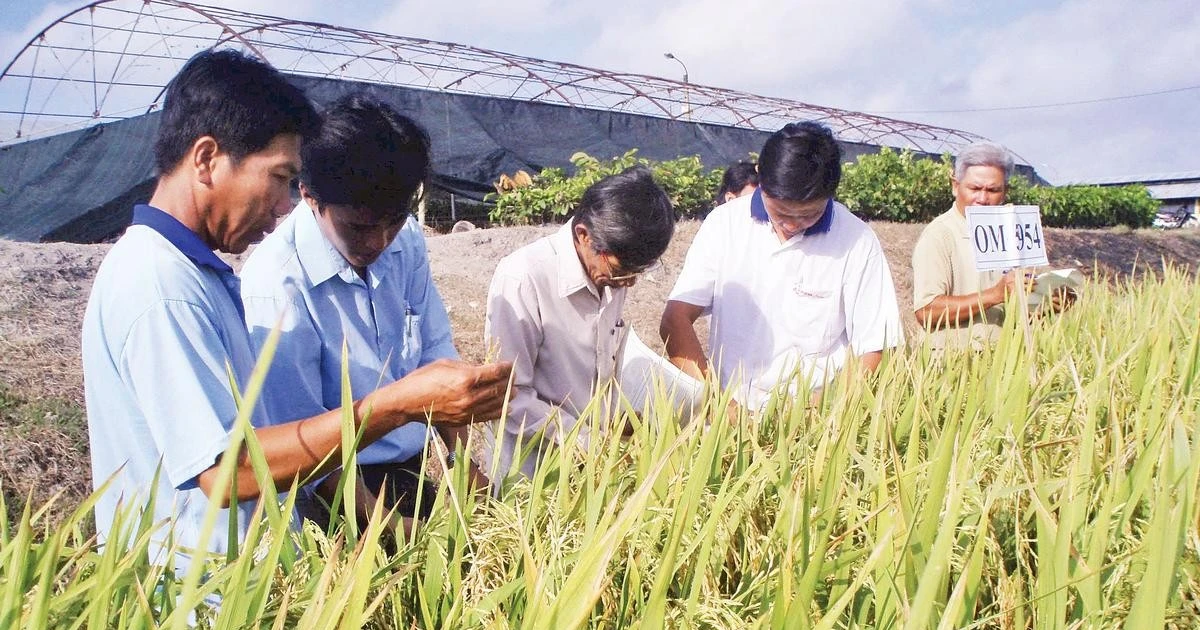
Vietnam Deploys Agricultural Experts to Rural Areas to Boost Production
Vietnam is deploying agricultural extension officers with specialized knowledge to rural areas, guiding farmers in adopting scientific and technological advancements. This initiative is contributing to increased farmer incomes and poverty reduction, with a particular focus on overcoming challenges in ethnic minority regions.
In Can Tho City, located in Vietnam's Mekong Delta, the Center for Agricultural Extension and Services is strengthening its initiative to deploy extension officers with specialized knowledge to rural areas, aiming to enhance agricultural productivity. This activity encourages farmers to apply scientific and technological advancements in their production, thereby improving economic efficiency and assisting many households in escaping poverty and building wealth. The role of extension officers is particularly crucial in areas with limited access to science and technology and lingering traditional farming practices, such as regions with a significant Khmer ethnic population. Extension officers provide guidance on the latest agricultural techniques, including selecting high-yield varieties, proper fertilization, and pest control. Although initial efforts faced challenges due to language barriers and a lack of understanding of technical terms, dispatching extension officers fluent in ethnic languages and providing more practical guidance has enabled farmers to adopt new production models. These include cultivating high-yield and high-quality rice, using organic fertilizers, and implementing Integrated Pest Management (IPM). As a result, some farmers have achieved annual profits exceeding 180 million VND (approximately $7,300 USD). From 2021 to 2025, Can Tho City has organized 955 training sessions, with over 27,715 participants. The training covers a wide range of topics, including low-emission, high-quality rice production, cultivation of fruits, vegetables, flowers, mushrooms, biosecure livestock farming, sustainable aquaculture, mechanization, and the application of advanced technologies. Furthermore, 34 model projects incorporating advanced technologies such as automated irrigation systems and biosecure livestock farming have been implemented. However, the number of extension officers remains insufficient, and working conditions are challenging. Technology transfer often remains limited to demonstrations or pilot models in a few favorable areas, failing to fully meet farmers' needs. The adoption of advanced technologies and digital transformation in agriculture varies by region, with small-scale production being prevalent. Challenges also include an unstable market for high-value agricultural products and limited investment in extension activities. Therefore, strengthening the rural extension network and leveraging the roles of community extension organizations and collaborators are urgent priorities. According to Mr. Nguyen Minh Duc, Director of the Can Tho City Center for Agricultural Extension and Services, the city currently has 503 grassroots extension officers. The plan is to deploy these officers to each commune (administrative unit) to enhance agricultural support capabilities and assist farmers in their production development. In the future, the focus will shift from agricultural production to agricultural economics, emphasizing ecological agriculture, organic farming, the application of advanced and digital technologies, a circular economy, and value chain linkages. Source: Nhan Dan
多角的分析
ベトナム政府は、農業分野における技術移転と生産性向上を国家戦略として位置づけている。カントー市の事例は、この戦略が地方レベルで具体化されていることを示している。高付加価値農産物の開発と輸出拡大は、ベトナムの経済成長の重要な柱であり、特にメコンデルタ地域は米や水産物の主要生産地であるため、この取り組みの成功は国家経済に直接的な影響を与える。有機肥料やIPMの導入は、環境負荷低減と持続可能な農業への転換という、国際的な要請にも合致する。
このニュースは、ベトナムの農業セクターへの投資機会を示唆している。特に、先端技術(自動灌漑、デジタル化)や持続可能な農業(有機、低排出)に関心を持つ投資家にとって、カントー市のような先進的な取り組みを行っている地域は注目に値する。ただし、市場の不安定さや小規模生産の多さはリスク要因であり、投資判断には詳細な市場調査とリスク評価が必要となる。政府の農業近代化へのコミットメントは、長期的な投資環境の安定化に寄与すると考えられる。
少数民族地域における普及員の言語対応の改善は、社会的な包摂性を高める上で重要な一歩である。これにより、これまで技術革新から取り残されがちだった層も恩恵を受け、貧困削減と生活水準の向上に繋がる。また、有機肥料の使用や環境保全型の農業は、農村部の環境衛生改善にも寄与し、住民の健康増進にも繋がる可能性がある。一方で、普及員の不足や労働条件の課題は、サービス提供の均質性や地域間の格差を生む可能性も示唆している。
カントー市の農家、特にクメール民族の農家にとって、この普及員の派遣は生活改善の大きな機会となっている。以前は貧困にあえいでいた Lý Song氏のような事例は、新しい技術や栽培方法を学ぶことで、家族の生活が劇的に改善される可能性を示している。高収量米や高品質米、さらには果物や野菜、養殖などを組み合わせることで、収入源が多様化し、経済的な安定が得られる。しかし、全ての農家が同様の恩恵を受けられるわけではなく、情報へのアクセスや学習意欲、土地の条件など、依然として格差が存在する可能性がある。
背景・歴史的文脈
ベトナムの農業は、長らく国の経済を支える基幹産業であった。1986年のドイモイ政策以降、集団農場から家族経営へと移行し、生産性が向上した。しかし、特にメコンデルタ地域では、伝統的な耕作方法や、科学技術へのアクセスが限られる少数民族地域における課題が残っていた。近年、ベトナム政府は農業の近代化、高付加価値化、持続可能性の向上を国家戦略として推進しており、その一環として、専門知識を持つ普及員を地方に派遣し、農家への技術指導を強化する政策が取られている。これは、経済成長の持続と農村部の貧困削減を目指す、ドイモイ政策の継続的な展開と位置づけられる。
原文ソース
Nhan Dan