General articles are free for 24 hours after publish.
SCO at 25: Internal Rivalries Cloud Organization's Future
The Shanghai Cooperation Organization (SCO) marks its 25th anniversary facing deep mistrust and rivalries among its members. Geopolitical tensions, particularly between China, India, and Russia, severely undermine its security effectiveness. While trade shows promise economically, concerns persist over China-led economic architecture.
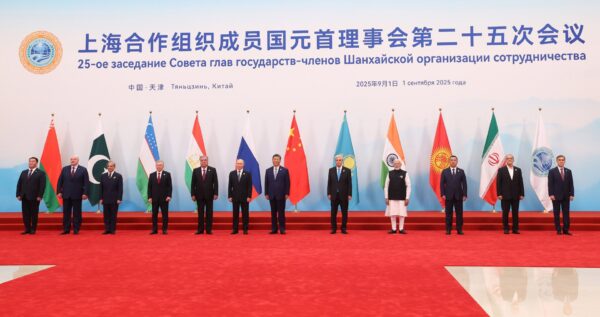
Twenty-five years after its inception, the Shanghai Cooperation Organization (SCO) finds itself at a crossroads, grappling with deep-seated mistrust and rivalries among its key members, casting a shadow over its future. While China and Russia seek to promote the SCO as an alternative to Western-led international institutions, internal tensions are increasingly difficult to overlook. The organization, despite its Regional Anti-Terrorist Structure (RATS) and joint military exercises like 'Peace Mission,' has shown limited tangible results in the security domain, with its geopolitical symbolism often overshadowing genuine relevance. Its effectiveness in diluting political and military tensions between major players remains weak. A prime example of this tension is the Sino-Indian border conflict, a long-standing dispute predating the SCO. The most recent violent clashes in 2020, which resulted in casualties for the first time in decades, have significantly strained relations. While recent talks have made some progress, the fundamental issues of the border conflict are likely to persist. The agreement to establish two additional military hotlines aims to manage border issues and prevent incidents, but it does not address the underlying absence of conflict resolution mechanisms. Furthermore, China's growing power presents new security complications for countries like India. New Delhi is navigating a delicate diplomatic balancing act, engaging with the SCO while managing its relationship with Washington. India's 'multi-directional foreign policy' is evident in its participation in the SCO, the Quad, and other groupings. However, as long as China remains India's primary national security threat, the utility of such partnerships within the SCO framework will be limited. Over its 25-year history, the SCO has evolved from a narrow focus on Central Asian border security to a broader regional institution. Beijing and Moscow's narrative of 'multipolarity' has found some resonance among Global South countries seeking alternatives to Western architectures. However, repeated violations of the UN Charter by both nations through unilateral actions against their neighbors undermine the legitimacy of this message. Many in the Global South may overlook these transgressions, but the accumulation of hypocrisy erodes the credibility of their discourse. India, for one, does not wish for the SCO to become an overtly anti-Western bloc. On the economic front, intra-group trade within the SCO has shown progress, with estimates suggesting it reached $725 billion in 2024, up from $463 billion in 2021. The initiative to establish an SCO Development Bank, agreed in principle at the 2025 Summit, could further bolster Beijing's efforts to shape a new economic architecture, potentially as an 'answer to Western financial hegemony.' China has been pushing this agenda since 2010, aiming to expand the global footprint of the Chinese yuan and offer an alternative to post-Bretton Woods institutions. However, this economic initiative is not without its frictions and fears. Russia remains a reluctant supporter, wary of Chinese economic dominance in Central Asia, traditionally its sphere of influence. India, too, is skeptical of the bank, as it would enhance China's regional dominance. This reflects an ongoing tension since the SCO's inception, where China pushed for an economic grouping while Russia, fearing Chinese influence, advocated for a security bloc. The SCO faces an uncertain future. Its key members harbor as much fear of each other as they do need, and the reasons for their interdependence are varied. The organization lacks an acknowledged leader, despite China's material dominance. This is not a solid foundation for ambitious structures, yet the SCO may survive because none of its major partners can afford to abandon it. This article was originally published in ASPI’s The Strategist.
Original source
The Diplomat Indonesia