The Myitsone Dam Project: Development Project or Strategy for Territorial Control?
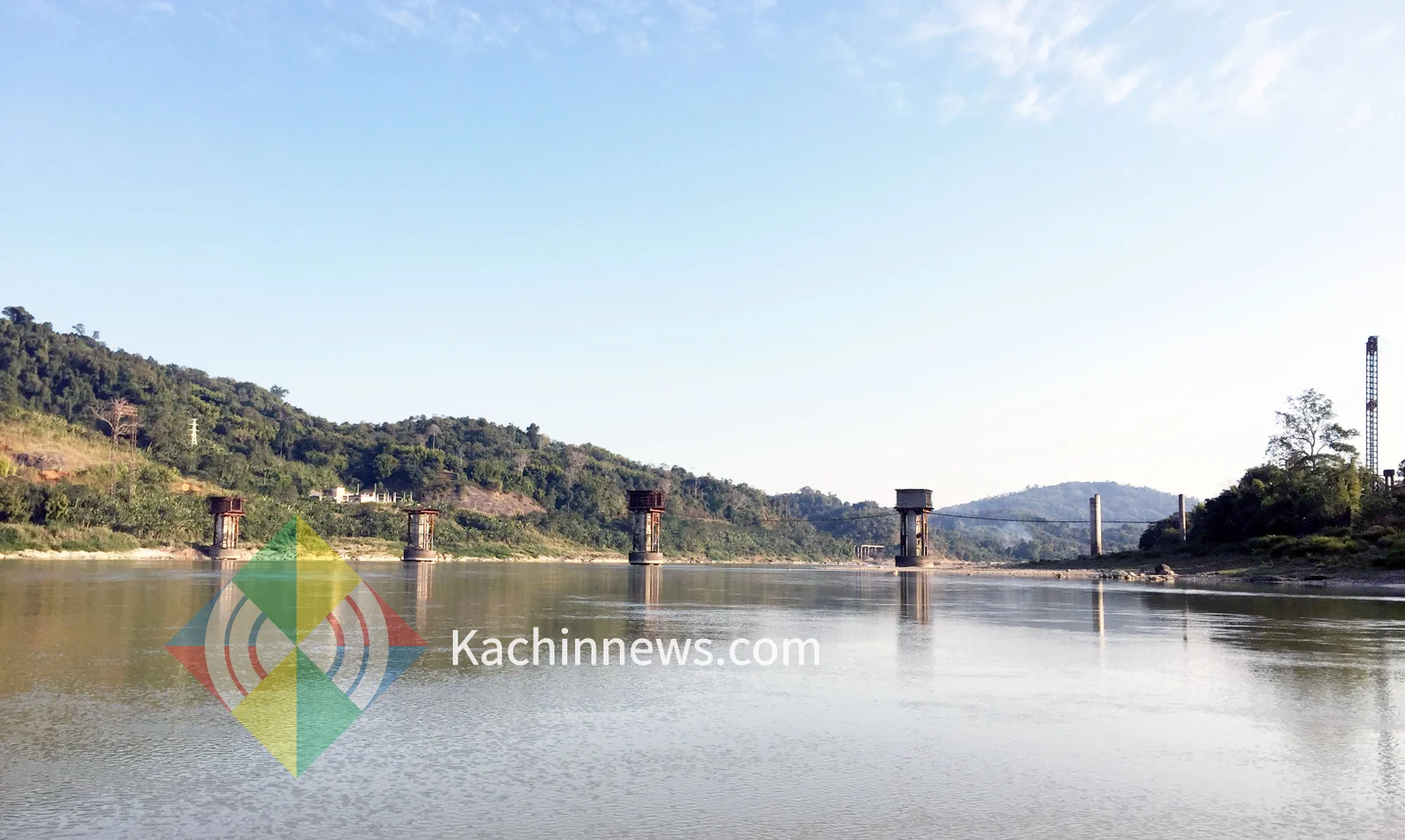
At first glance, the Myitsone Project appears to be a development project designed to generate electricity. But in today’s Myanmar, it is becoming increasingly difficult to view the controversial hydropower project simply as an energy or infrastructure project. The timing of the Myanmar military government’s renewed efforts to restart the project, along with the country’s rapidly changing political and military landscape, raises a much broader question: is Myitsone really about development, or is it also becoming a strategy to reassert political and territorial control? China Power Investment (CPI) began implementing the project in 2006 with the approval of the Myanmar military government. The project was primarily intended to generate electricity, much of which was expected to be exported to China. But widespread opposition from the Myanmar people and civil society organizations, including those in Kachin State, eventually led President U Thein Sein to suspend the project in 2011 (BBC, 2025). Fourteen years later, the project is once again being pushed forward. However, this time, the political situation in Myanmar is quite different. . Since the military coup in 2021, armed conflict between the Myanmar military and resistance forces has intensified across the country. The conflict has also transformed the balance of territorial and political power. International actors, particularly China, have played an increasingly important role in shaping this changing environment (Seng Li and Johanna, 2026). Developments in northern Shan State provide an important example of these changes. Following Operation 1027, launched by the Three Brotherhood Alliance, the Myanmar military lost territorial control of large areas of strategic importance. China’s involvement in the political developments surrounding the conflict has also demonstrated the importance of Beijing’s position in determining the political and military environment along Myanmar’s northern border. When China’s position toward the Myanmar military changed after 2024, the political and military situation in northern Shan State also changed significantly (Seng Li and Johanna, 2026). A similar transformation has taken place in Kachin State. Alongside Myanmar’s broader Spring Revolution, the Kachin Independence Army (KIA) has expanded its control over towns and villages in eastern Kachin State and gained control over important China–Myanmar border trade gates (Ta-Wei Chu.et.al, 2026). As a result, the Myanmar military and the Kachin Independence Organization (KIO) are increasingly competing not only militarily, but also over territory, administration, border trade, and political authority. In this context, the renewed push for the Myitsone Project needs to be understood as more than a development project. In 2025, after losing significant territory in Kachin State, the Myanmar military government began renewed efforts to restart the Myitsone hydropower project. This timing is significant and warrants attention. The project is located in an area of considerable strategic importance to the KIO/KIA. As such, its revival could have severe consequences that extend well beyond electricity generation. One possible interpretation is that the project could become a tool for increasing political and economic pressure on the KIO and other revolutionary forces. By using the project to strengthen its relationship with China, the Myanmar military could seek to influence the political and military balance in Kachin State. In this sense, the Myitsone Project could become part of a broader strategy through which the military government attempts to regain political leverage and weaken the position of the KIO and other resistance forces. Therefore, the project may be presented as “development” while simultaneously producing serious political, military, and territorial consequences. A Strategic Dilemma for the KIO The strategic implications become even clearer when the project’s logistical requirements are examined. The Myitsone Project is backed by Chinese investment, particularly the China Power Investment Corporation (SPIC). If construction resumes, workers, heavy machinery, and other equipment would need to be transported to Kachin State from China. Currently, the main obstacle is that important border crossings are under KIO control, creating a difficult political dilemma for the KIO. If the KIO allows project-related personnel and materials to pass through border crossings under its control, it could face criticism from local Kachin communities and people across Myanmar who have historically opposed the Myitsone Project. However, if it refuses to allow the movement of materials, it could face political and economic pressure from China. Either decision carries significant political consequences. The Myitsone Project could place the KIO in a difficult position, forcing it to navigate between its relationships with China and the communities and political forces that oppose the project, respectively. In this way, the project could become a source of political pressure on the KIO. The Territorial Consequences of the Dam The geographical location of the proposed dam is equally important. If the Myitsone Project is implemented, approximately 65 villages, including 2,600 households and around 12,000 people would reportedly have to be relocated (Kaiwen Yao and Aung Tun Lin, 2024). The area upstream of Myitsone, locally known as the Triangle Area, is largely controlled by KIO/A Brigade 1. Accordingly, the construction of the dam would not simply transform the physical landscape, but it could also transform the political geography of an area under KIO/A control. If large numbers of villages are inundated and communities are relocated, then KIO/A forces and their local social base could also be affected. This could produce a new intensive military and political confrontation. If the KIO/A opposes the relocation of its forces and communities, the project could become another source of direct conflict between KIO/A and the Myanmar military. But there is another possibility that should be taken into account. Through Chinese political pressure, or the presence of Chinese security forces, such as in Kyaukphyu in Rakhine State (BBC Burmese News, 2025), or the physical consequences of the project, the Myanmar military could potentially alter the territorial situation without having to remove KIA forces through direct military confrontation. In other words, the co
Read up to 3 eligible full articles per Japan day (JST) for free
Create a free account to open up to 3 eligible full articles per Japan calendar day (JST). Headlines and summaries remain available across ASEAN 7.