General articles are free for 24 hours after publish.
Cojuangco Urges Marcos to Revive Mothballed Bataan Nuclear Plant
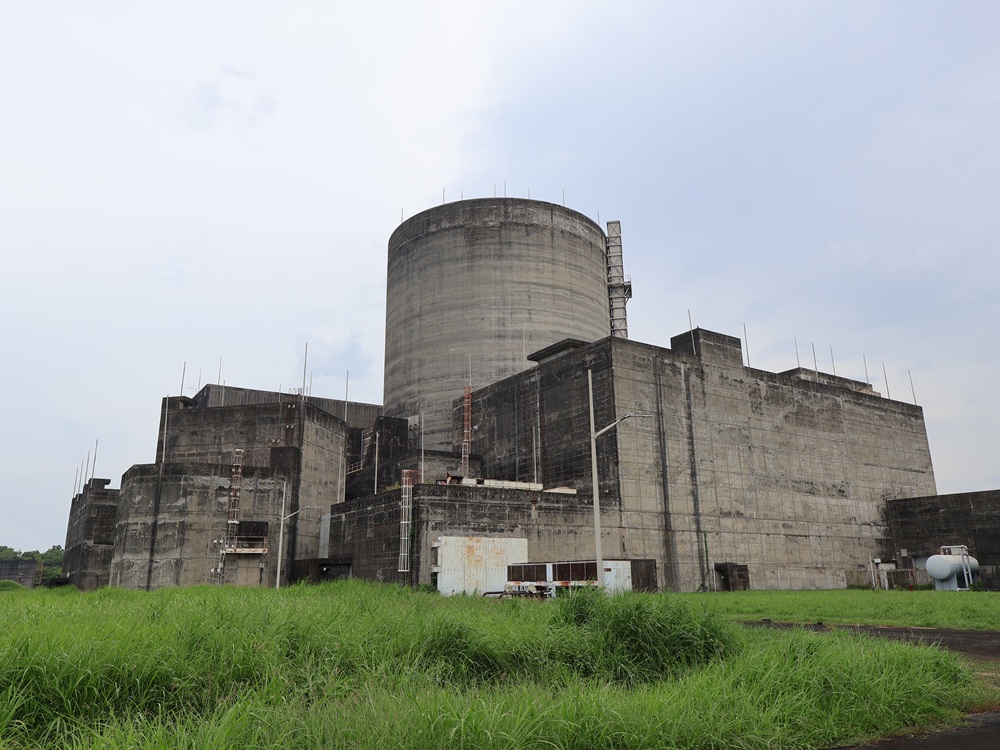
Pangasinan Representative Mark O. Cojuangco is urging President Ferdinand R. Marcos Jr. to revive the mothballed Bataan Nuclear Power Plant (BNPP) as a solution to the country's power shortages and high electricity costs. Cojuangco estimates the BNPP's restoration at $1.5 billion and proposes building new nuclear plants.
Pangasinan 2nd district Representative Mark O. Cojuangco is urging President Ferdinand R. Marcos Jr. to revive the nearly four-decade-old mothballed Bataan Nuclear Power Plant (BNPP) to address the country’s high electricity prices and recurring power supply shortages. Mr. Cojuangco expressed dissatisfaction with the pace of the Marcos administration’s pursuit of nuclear energy, urging the President to prioritize the operation of the BNPP. “I really think it’s moving too slowly,” Mr. Cojuangco told reporters during a media site visit to the power plant on Thursday. He suggested that the President should order its operation and place the asset under a trust, forming a consortium that would make an offer to the government on the cost of commissioning the nuclear plant. Based on his estimate, restoring the single 621-megawatt capacity power plant and making it operational would cost about $1.5 billion, lower than the $2.3-billion estimate announced by the Department of Energy (DoE) in Nov. 2022. These potential costs would be on top of the plant’s original construction cost of up to $2.3 billion when it was completed in 1984. The country finished paying the loans and interest related to the plant in 2007. The lawmaker also said the BNPP could be valued at at least $2 billion once it becomes operational, including the value of its more than 300-hectare site. Mr. Cojuangco proposed that the asset’s value could serve as the government’s 15% equity contribution, while the remaining 85%, amounting to $14 billion, could be financed through a loan from South Korea’s Export-Import Bank (KEXIM) to fund the construction of three new 1,000-megawatt nuclear power plants at the same site. “We would not have to spend a single peso from the GAA (General Appropriations Act). Wouldn’t we want to solve the country’s power problem?” Mr. Cojuangco asked. During his fifth State of the Nation Address (SONA) on July 27, President Marcos called for revisiting nuclear energy production to strengthen energy security and help reduce rising electricity costs. “To push the envelope further, perhaps it is time for us to revisit nuclear energy production. We are already using nuclear energy in the fields of medicine, agriculture, water filtration, and the upcycling of plastic,” Mr. Marcos said during the SONA. Following the SONA, the government announced it has continued work on the country’s nuclear energy program, including preparations to operationalize the Philippine Atomic Energy Regulatory Authority (PhilATOM) and advance preparations under the International Atomic Energy Agency (IAEA) Milestones Approach. Congress has also continued deliberations on House Bill No. 8567, or the proposed Nuclear Energy Sector Integration Act, while House Bill No. 375, which covers civil liability and compensation for nuclear damage, has been approved by the House and transmitted to the Senate. Gayle Certeza, lead convenor of Alpas Pilipinas, a nonprofit advocacy organization that promotes nuclear energy in the country, said activating the BNPP could help reduce electricity prices in the country, which are among the highest in Southeast Asia. The power plant could also help stabilize the country’s power supply, with Luzon, the Visayas and Mindanao experiencing red alert conditions in recent days and months. — Edg Adrian A. Eva
Original source
BusinessWorld Nation