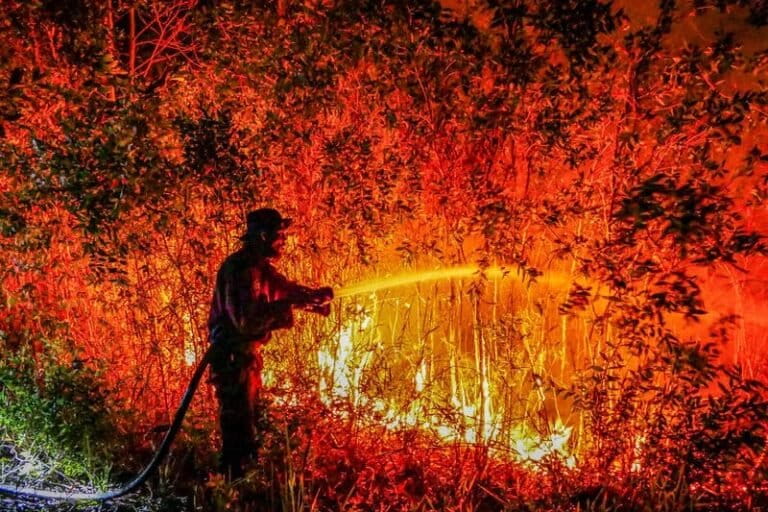
Indonesia Urged to Integrate Landscape Change into Disaster Risk Assessments
Indonesia is grappling with widespread forest fires (karhutla), with numerous hotspots detected in concession areas like plantations and mines. Experts are urging a greater focus on the impact of land-use changes in disaster risk assessments.
Read up to 3 eligible full articles per Japan day (JST) for free
Create a free account to open up to 3 eligible full articles per Japan calendar day (JST). Headlines and summaries remain available across ASEAN 7.
Related articles
- Over 70,000 Indonesian Toddlers Suffer Respiratory Illnesses Due to Forest Fire Haze
Over 70,000 toddlers in Indonesia have contracted acute respiratory infections (ISPA) due to haze from forest fires (Karhutla). House Speaker Puan Maharani has urged the government to provide medical services and cover treatment costs for these children.
- Two Years of Prabowo-Gibran: The Fate of the People and the Environment?
Greenpeace activists unfurled banners on a Jakarta monument to protest the two-year tenure of the Prabowo-Gibran administration, highlighting negative impacts on public welfare and the environment. They criticized the lack of effective measures against the climate crisis, deforestation, and rising living costs.
- Malaysian MP: Indonesia Forest Fire Haze Not an International Conflict
Malaysian Member of Parliament Syed Saddiq has stressed that the haze issue from forest fires in Indonesia is not a conflict between Malaysia and Indonesia. He urged that companies involved in fires should be held accountable regardless of their nationality, advocating for diplomatic and financial pressure through ASEAN cooperation. Former Indonesian Trade Minister Muhammad Lutfi had previously argued that the focus should be on corporate responsibility rather than condemning Indonesia as a whole.
- New Zealand's Climate Report Tests Its Pacific Leadership
New Zealand's latest climate report highlights the growing economic risks of climate change, raising questions about whether government policy can keep pace. The report could impact not only the country's economic resilience but also its credibility with Pacific nations.