Vietnam to Digitalize Grassroots Dispute Resolution with Amended Mediation Law
Technology
2026年8月5日
5
Nhan Dan

General articles are free for 24 hours after publish.

Vietnam to Digitalize Grassroots Dispute Resolution with Amended Mediation Law

Share
AI Summary

Vietnam's National Assembly is deliberating amendments to the grassroots mediation law, aiming to promote digitalization and IT utilization in resolving local disputes. The proposed changes include introducing online mediation and more flexible methods for selecting mediators, aligning the legal framework with contemporary conditions.

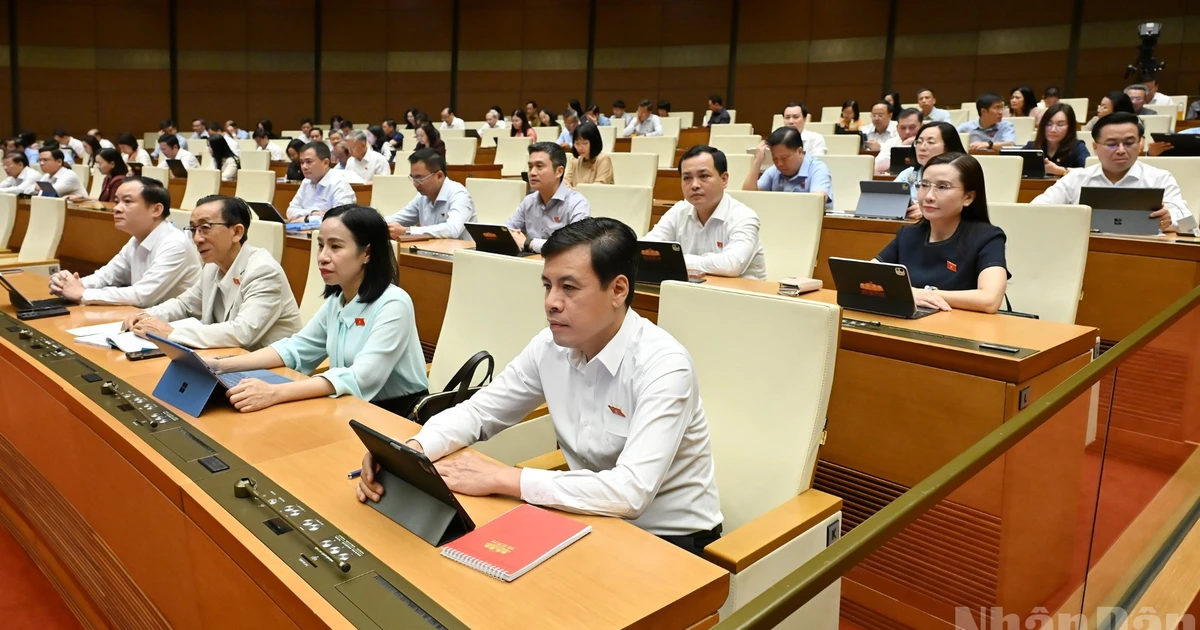
Vietnam's National Assembly is deliberating amendments to the Law on Grassroots Mediation, aiming to bolster the application of digitalization and information and communication technology (IT) in resolving local disputes. The draft law proposes incorporating provisions that encourage the use of digital technology in electing mediators and heads of mediation teams, and allows for online mediation when parties opt for it and meet the stipulated conditions. During the extraordinary session on August 5, the National Assembly heard a proposal from the Minister of Justice and a verification report from the Committee on Culture and Social Affairs. Minister of Justice Hoang Thanh Tung stated that the draft law aims to institutionalize the Party's viewpoints and policies on strengthening out-of-court dispute resolution and Resolution No. 66-NQ/TW of the Politburo on innovating the building and execution of laws to meet the country's development needs in the new era. It also seeks to align with the two-tier local government model, enhance decentralization, and apply IT and digital transformation to grassroots mediation to overcome limitations and inadequacies of the 2013 Law on Grassroots Mediation. The draft law comprises five chapters and 35 articles, focusing on amending and supplementing key contents. These include clarifying the principles of grassroots mediation organization and operation, defining the relationship between grassroots mediation and administrative and criminal sanctions, enhancing flexibility in mediation, and ensuring parties' rights to speak and write. It also aims to refine regulations for a comprehensive and unified legal basis for implementation. Regarding mediators and mediation teams, the draft law continues to perfect provisions on their organization and operation, and the standards for mediators. It modifies the election of mediators to be more flexible and suitable for the arrangement of residential groups. A mechanism for appointing mediators is added for cases where elections fail to meet requirements or cannot be held due to force majeure. Furthermore, some rights of mediators are supplemented to facilitate their tasks and improve the quality of grassroots mediation. The draft law also clarifies the scope of rights and obligations for individuals invited to participate in grassroots mediation. This aims to leverage the roles of village elders, village chiefs, religious dignitaries, reputable community figures, individuals with legal knowledge, expertise, and experience, representatives of socio-political organizations, and other relevant individuals in supporting mediators, thereby enhancing the quality and effectiveness of grassroots mediation. Minister Tung noted that grassroots mediation originates from the spirit of mutual assistance within communities, where face-to-face interaction is prioritized for understanding and high effectiveness. To adapt to current IT development, the draft law incorporates provisions encouraging IT application and digital transformation in grassroots mediation, aligning with practical conditions such as mediator elections and allowing online mediation when chosen by parties and meeting conditions. Nguyen Dac Vinh, Chairman of the National Assembly's Committee on Culture and Social Affairs, expressed the Committee's agreement with the comprehensive revision of the Law on Grassroots Mediation. However, he urged the drafting agency to pay more attention to the development of digital infrastructure resources for operating the online mediation system and training grassroots mediators. He also emphasized the need to consider vulnerable groups such as women, children, victims of domestic violence, people with disabilities, the elderly, the poor, social assistance recipients, and ethnic minorities. The Committee proposed studying specific policies for mediation in ethnic minority and mountainous areas. The Committee also agreed on the necessity of supplementing the appointment mechanism for mediators, particularly to ensure gender and ethnic minority representation. They concurred with the draft law's provisions on mediator recognition, including a recognition period of three years. The Committee recommended establishing appropriate remuneration policies for individuals invited to participate in mediation, including those providing consultation and support to mediators, to attract legal professionals like lawyers and jurists. While generally agreeing with the provisions on the responsibilities of agencies and organizations in grassroots mediation, the Committee suggested that assigning provincial People's Committees the responsibility of compiling mediation materials might lead to inconsistencies across provinces, wasting resources. They proposed that the central state management agency for grassroots mediation should be responsible for ensuring efficiency, cost savings, and national uniformity, with provinces able to supplement based on local conditions if necessary.

0

Original source

Nhan Dan

原文を読む