General articles are free for 24 hours after publish.
Thailand and Cambodia to Hold First UNCLOS Conciliation Meeting on Maritime Boundary
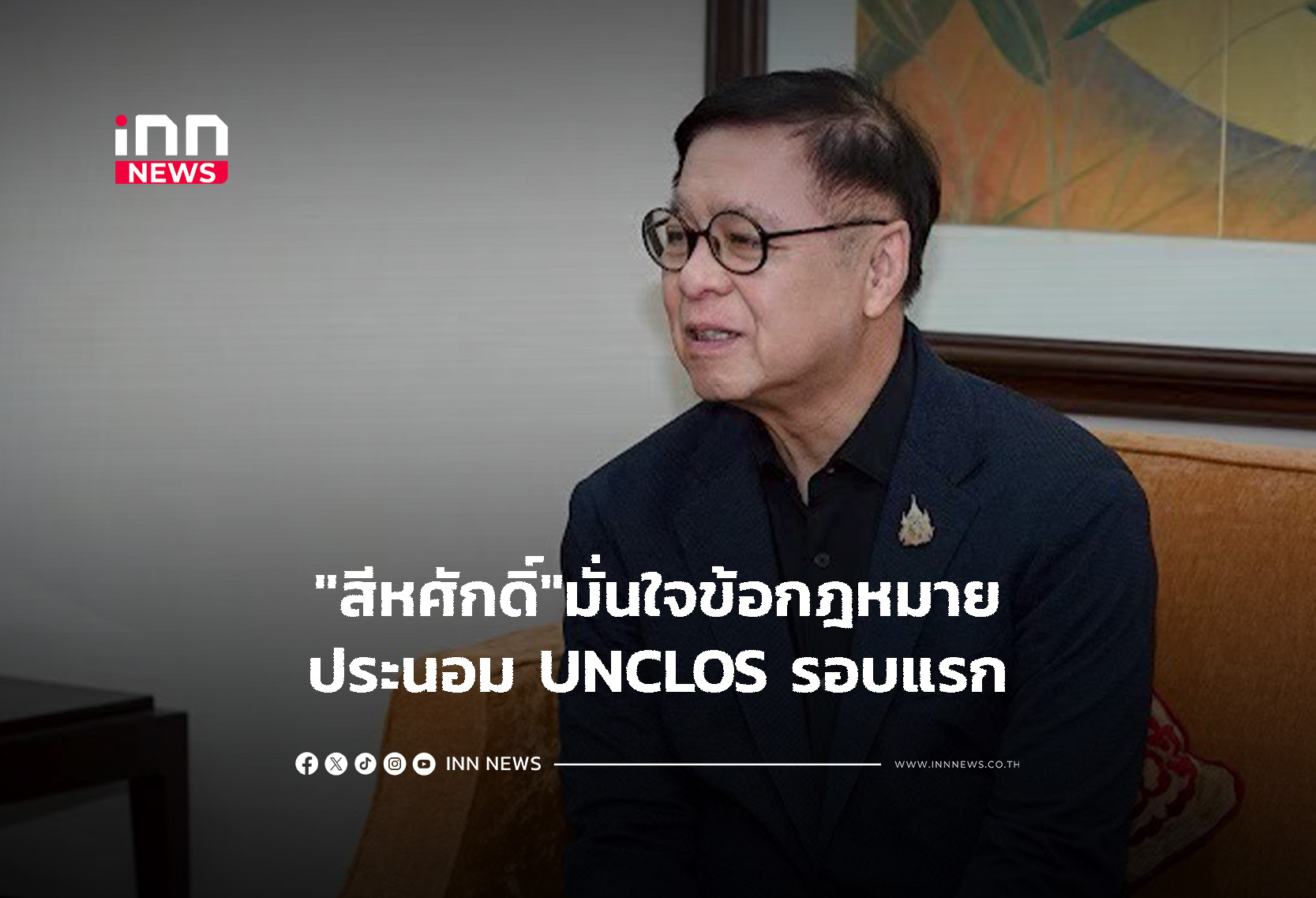
Thailand's Deputy Foreign Minister announced that Thailand and Cambodia will hold their first conciliation committee meeting under the UN Convention on the Law of the Sea (UNCLOS) in Singapore. Thailand expressed confidence in its legal standing under international law, though views Cambodia's participation in conciliation as a "game." The two countries are entering this process after over 20 years of stalled bilateral negotiations.
Deputy Foreign Minister Sihasak Phuangketkaew announced that Thailand and Cambodia will hold their first meeting of the conciliation commission under the UN Convention on the Law of the Sea (UNCLOS) in Singapore from September 14-16. The first official session is scheduled for September 15, where both sides will deliver statements of approximately 15 minutes each, with live broadcasting planned. Sihasak stated that Thai agencies have held multiple internal discussions on how to present their issues. He added that Thailand has engaged foreign legal advisors with expertise in international maritime law, ensuring maximum readiness for the discussions. The Deputy Minister expressed strong confidence in Thailand's legal position under international law regarding claims. He also suggested that Cambodia might view the conciliation process as a "game," but emphasized that Thailand is fully prepared as the process has begun. Sihasak highlighted that Thailand needs to demonstrate that the current situation, leading to this point, arose from the cancellation of MOU44, which was intended to facilitate new bilateral negotiations after over 20 years of stagnation. He also noted that Cambodia only became a party to UNCLOS in March, and that both countries had discussions during the ASEAN Summit in Cebu, Philippines, earlier this year. Sihasak further explained that if bilateral talks fail to progress, other mechanisms under UNCLOS must be considered. He stressed that before resorting to compulsory conciliation, voluntary conciliation is an option, and reiterated that all matters require discussion not only on international law but also on building mutual trust to reach an agreement. If an agreement cannot be reached over time, Thailand and Cambodia will jointly decide on pursuing other mechanisms. While Cambodia has proposed discussions on maritime boundary delimitation, they have also mentioned the need to discuss resource benefit-sharing if an agreement is not reached. However, Thailand believes this should not fall under the scope of compulsory conciliation and therefore maintains that discussions on maritime boundary delimitation must be pursued to the fullest extent. Sihasak concluded by stating that the conciliation process will result in non-binding recommendations, which will nonetheless lead to further discussions between the two countries. He also mentioned Thailand's Ko Kut island, expressing hope that this will lead to clarity on the maritime boundary, thus preventing future doubts. Source: INN News
Original source
INN News