General articles are free for 24 hours after publish.
Vietnam's Highways: Slow Drivers Face Strict Enforcement - 'If You Can't Drive Well, Don't Get On'
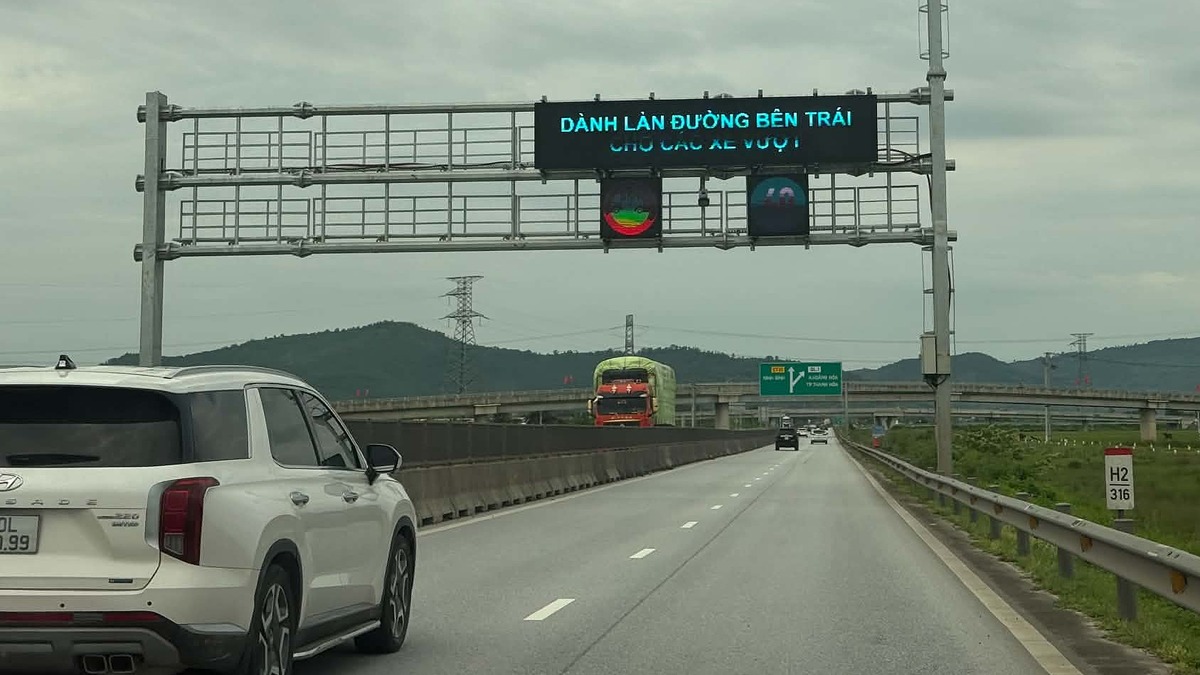
Vietnam's traffic police are cracking down on slow drivers in the left lane of highways. The authorities are urging drivers with poor skills to avoid using expressways.
Vietnam's traffic police are intensifying their crackdown on the violation of driving slowly in the left lane of expressways. The traffic police (CSGT) have indicated a policy of imposing strict penalties for such behavior, with some drivers stating that 'if you can't drive well, you shouldn't get on the highway.' The issue at hand involves drivers who travel below the legal speed limit in the left lane of expressways, obstructing the passage of vehicles behind them. While they cite reasons such as an inability to maintain safe distances or anxiety about changing lanes, experts point to this as a manifestation of 'poor driving skills' and 'selfish driving mentality.' Expressways are inherently designed to optimize traffic flow and improve speed. In developed countries, the left lane is typically reserved for driving at the maximum speed limit or for overtaking. After overtaking, it is customary to promptly return to the right lane when it is safe to do so. However, in Vietnam, there are many drivers who remain in the left lane after overtaking, exhibiting behavior akin to leisurely sightseeing despite being prompted by horns and flashing lights. Experts argue that expressway driving requires quick judgment and decisive actions. If one cannot overtake decisively or maintain a safe distance, it is best not to enter the left lane in the first place. Many drivers, however, choose to move into the left lane and then proceed at a leisurely pace, disregarding the long queues of vehicles behind them honking and flashing their lights for passage. When reminded or threatened with fines, they resort to excuses like 'if I change lanes, I'll get a ticket for this, and if I keep going, I'll get another ticket for something else.' This is not a legal trap, but rather an indication of insufficient driving capability. Many drivers lack sufficient expressway driving experience but are unwilling to admit it. Driving on expressways demands quick judgment and decisive actions. If one cannot overtake decisively and maintain a safe distance, it is best not to enter the left lane in the first place. However, many drivers choose to move into the left lane and then proceed at a leisurely pace, disregarding the long queues of vehicles behind them honking and flashing their lights for passage. When reminded or threatened with fines, they resort to excuses like 'if I change lanes, I'll get a ticket for this, and if I keep going, I'll get another ticket for something else.' This is not a legal trap, but rather an indication of insufficient driving capability. Drivers with poor skills tend to voice opinions and offer many excuses. If one's mindset is not stable and situational handling skills are lacking, it is best to drive on national roads or inner-city streets. There, one is not pressured to drive fast, and stopping or changing lanes is easier. There is no need to contend for a spot on the expressway only to become a 'hindrance,' endangering others, and then complain about fines. The proposal by the Directorate of Road Police to narrow the gap between the minimum and maximum speeds on lane 1 to 20 km/h (e.g., minimum 80, maximum 100, or 100-120) is considered extremely reasonable. It would be even better if the difference were reduced to just 10 km/h. Lane 1 should only be for speeds of 110-120 km/h. If one feels unable to drive at this speed, they are invited to use lane 2, lane 3, or exit to the national road. We pay tolls to use the expressway for high speeds, not to be forced into slow crawls by drivers who are 'weak but want to show off.' When driving on an expressway, one must adhere to the traffic culture specific to this type of road: slow vehicles should use the inner lanes, and the left lane should be reserved for faster vehicles. Let's drive according to the law and safety, not use flimsy excuses to cover up one's mistakes! By Duc Anh
Original source
VnExpress