General articles are free for 24 hours after publish.
Vietnam's Mekong Delta Farmers Face Profit Squeeze Amid Falling Rice Prices and Rising Costs
Rice farmers in Vietnam's Mekong Delta are facing declining profitability and the risk of losses due to rising production costs and falling paddy prices. Despite a good harvest, weak demand in international markets and credit limitations are pressuring farmers' livelihoods.
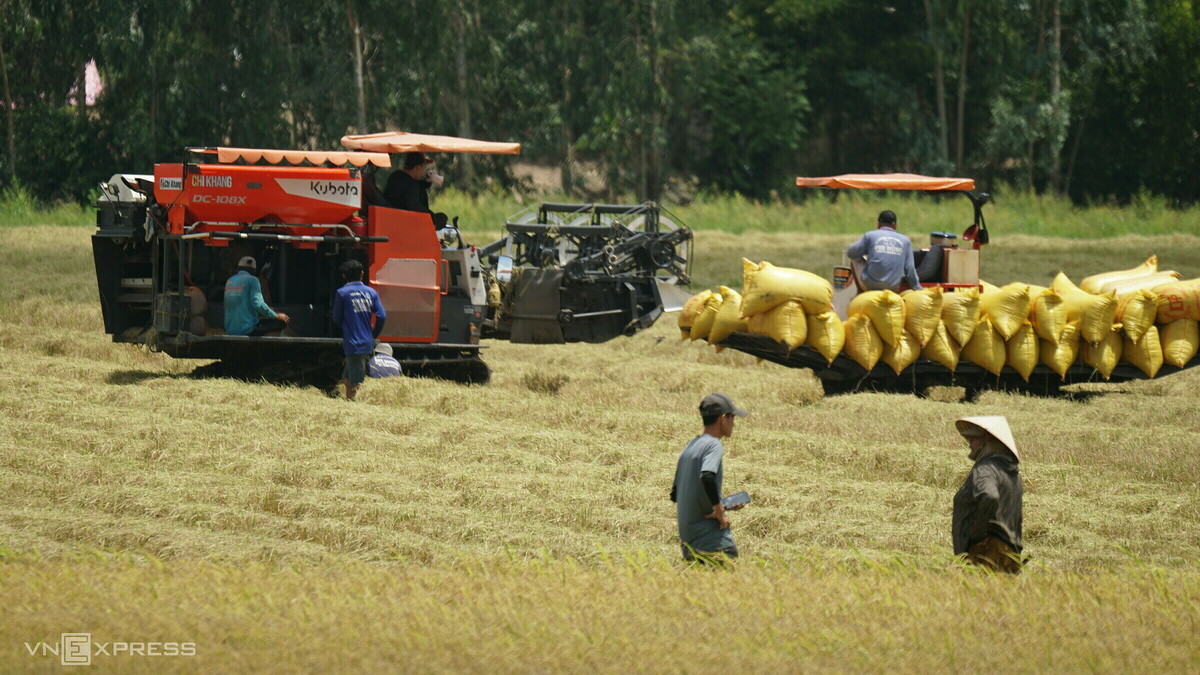
Farmers in Vietnam's Mekong Delta are facing a profit squeeze and the risk of losses due to a sharp decline in paddy prices coupled with rising production costs. Prices have dropped by over VND 1,000 per kilogram in just half a month, while the cost of agricultural inputs such as fertilizers and pesticides has increased by 5-10%. Mr. Nguyen Thanh Loc, who cultivated 3 hectares of ST rice in Hon Dat commune, An Giang province, sold his harvest at VND 6,200 per kilogram, VND 1,300 lower than the contracted price with traders. The rapid price fall within a week has cost him tens of millions of dong, equivalent to the expected profit after three months of cultivation. According to Mr. Loc, this crop incurred higher production costs due to numerous pests and diseases, requiring eight rounds of pesticide application. Meanwhile, the prices of agricultural materials have increased by 5-10% compared to before. Fertilizers are also expensive, with a 50kg bag of DAP costing over VND 1.4 million and nitrogen fertilizer nearing VND 1 million. Mr. Loc's total production cost per hectare is around VND 50 million, a 10-15% increase from previous seasons, while paddy prices continue to fall. "At this price, only skilled farmers can break even; otherwise, they will surely incur losses," Mr. Loc stated. In Dong Thap province, Mr. Le Hoang Nam is awaiting the sale of his 1-hectare OM18 rice crop. Last week, traders offered a deposit of VND 6,800 per kilogram, but now only agree to buy at VND 6,300, citing the sharp drop in rice prices. The significant price decrease also causes delays in harvesting, affecting yields. "If I could sell at the old price, I would have made a profit of VND 2-3 million. But with the current price, the revenue from selling rice only covers the cost of fertilizers and pesticides, not including the labor throughout the season," Mr. Nam said. According to the An Giang Department of Agriculture and Rural Development, the province has harvested over 300,000 hectares of rice, reaching 60% of the sown area, with an estimated average yield of 6.16 tons per hectare. Similarly, Dong Thap has harvested over 150,000 hectares out of more than 200,000 hectares sown. Mr. Nguyen Vinh Trong, Director of Viet Hung Co., Ltd., attributed the sharp decline in rice prices to weak demand in major importing markets such as the Philippines, China, and some African countries. Additionally, banks' restrictions on credit lines have made it difficult for businesses to secure capital for purchasing paddy. As of August, Vietnam exported 6.03 million tons of rice, valued at nearly USD 2.91 billion, a decrease of 5% in volume and 10% in value compared to the same period last year. The average export price reached USD 481.5 per ton, down 5.9%. For the entire year, rice export revenue is projected to be around USD 3.94 billion, a 4% decrease from 2025, mainly due to low average export prices in the early months of the year.
Original source
VnExpress