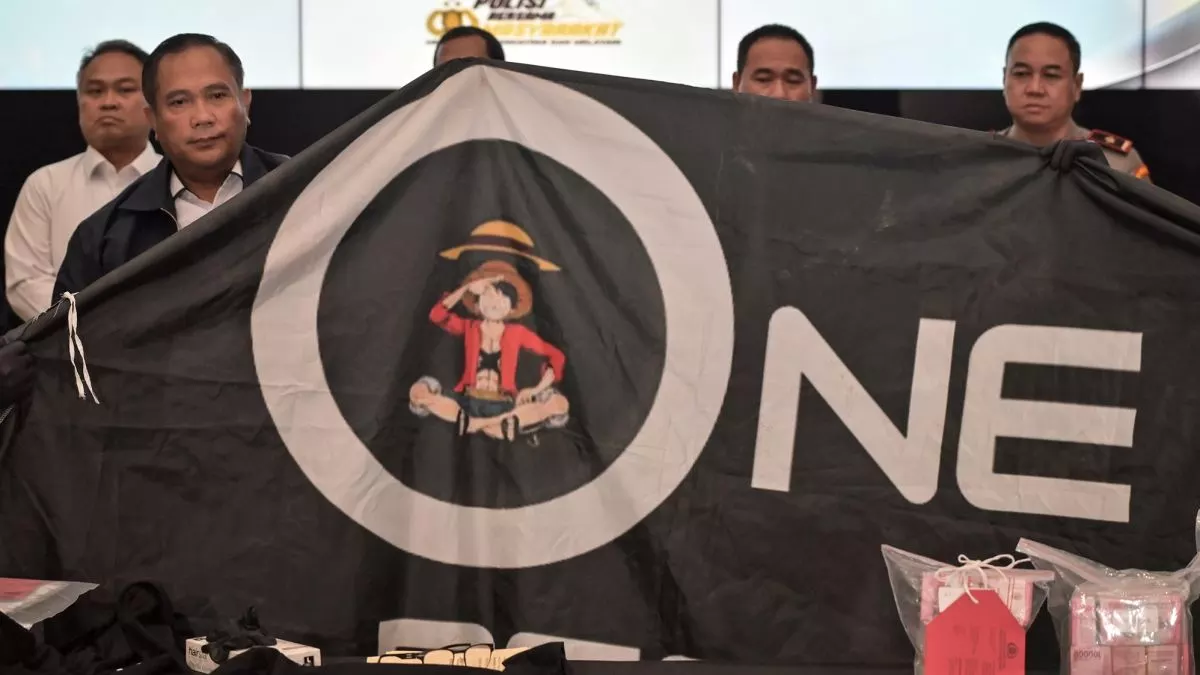
One Piece Flag, 'Three-Finger Salute' Used as Sedition Evidence; Amnesty Warns Against Stigmatization
Amnesty International Indonesia has expressed concern over the use of the One Piece flag and the 'three-finger salute' as evidence in a sedition investigation. The organization argues these symbols represent civil society's protest and criticism of economic and social issues, unrelated to attempts to overthrow the government, warning against unfair stigmatization of civil movements.
This article requires PRO
This article is outside the free access window or is a special report. PRO unlocks it and the full archive.
Related articles
- Indonesia: Mosques and Solar Power Drive Grassroots Economic Transition
In Indonesia, solar power projects based in mosques are driving grassroots economic revitalization and energy transition. This suggests the potential for religious institutions to serve as hubs for sustainable development beyond their spiritual roles.
- Mojokerto Land Office Head Summoned by KPK Over Corruption Allegations
Indonesia's Corruption Eradication Commission (KPK) has summoned the head of the Mojokerto Land Office for questioning regarding corruption allegations. This is part of an investigation into a corruption case related to the Ministry of Agrarian Affairs and Spatial Planning/National Land Agency (ATR/BPN).
- The Perils of 'Flexing': Indonesian Politicians and Wealth Display
In Indonesia, 'flexing'—public figures flaunting wealth on social media—is rampant. Wealth display by politicians, in particular, creates a disconnect with the public, leading to increased criticism. In the past, politicians who made insensitive remarks regarding criticism of parliamentary housing allowances faced looting of their homes.
- The Importance of 'Place' in the Social Media Era: Rethinking Grassroots Movements in Indonesia
While Indonesia has seen numerous youth-led, social media-driven protests, their sustainability and impact face challenges. This article re-evaluates the significance of physical 'places,' arguing that local communities, acting as 'fourth places,' are key to transforming grassroots movements into sustainable change.