HCM City Sees Surge of 'Ultra-Slim Houses' Post-Xuyen Tam Canal Clearance
Society
2026年7月24日
5
VnExpress
Relations
🇻🇳Vietnam🇯🇵Japan

General articles are free for 24 hours after publish.

HCM City Sees Surge of 'Ultra-Slim Houses' Post-Xuyen Tam Canal Clearance

Share
AI Summary

Following land clearance for the Xuyen Tam Canal redevelopment in Ho Chi Minh City, numerous 'ultra-slim houses' less than a meter wide have emerged on remaining plots, forcing residents into cramped living conditions.

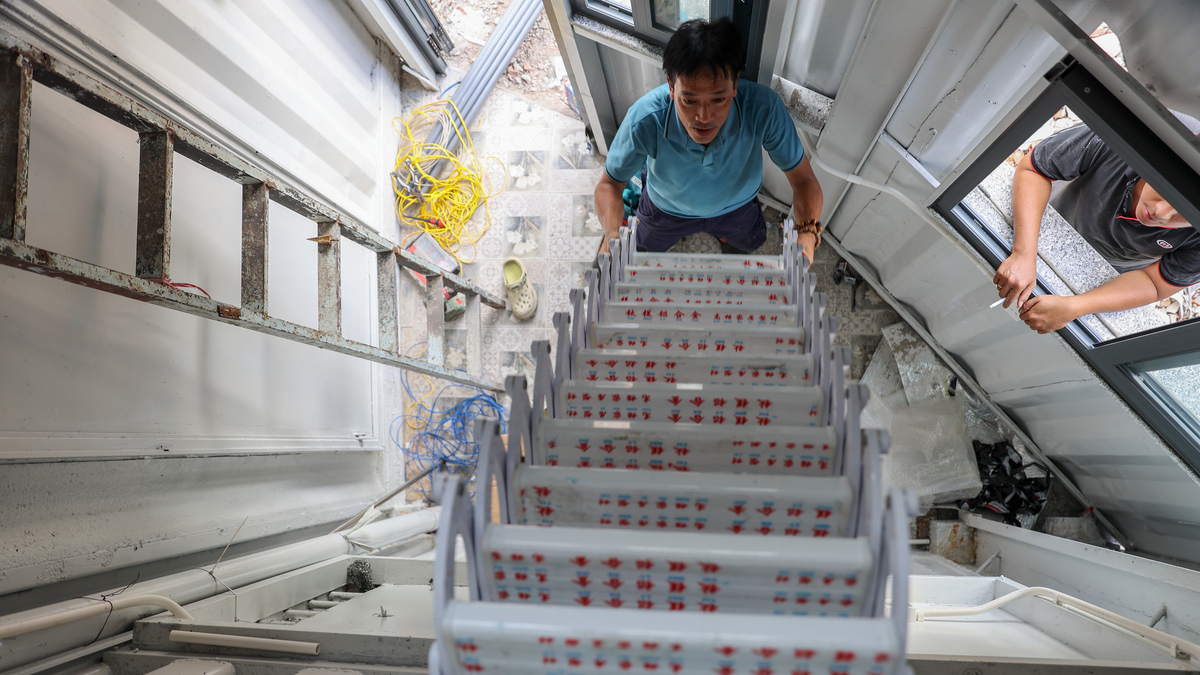
In Ho Chi Minh City, the redevelopment of the Xuyen Tam Canal has led to the construction of numerous 'ultra-slim houses' on the remaining land plots after compulsory land acquisition. These houses, some less than a meter wide, are forcing residents into extremely confined living spaces. As of late July, residents on both sides of the Xuyen Tam Canal have completed the demolition of their homes and the handover of their land. Subsequently, people have begun building new residences on the residual plots. With many households having had most of their land expropriated, long, narrow houses now line the canal banks. The most striking examples are found in alleys off Điện Biên Phủ Street (No. 153) and Vũ Tùng Street (No. 146) in Gia Định Ward, featuring distorted shapes where the narrowest sections are less than a meter wide. The Xuyen Tam Canal redevelopment project spans 6.7 kilometers, including three branches, with a total investment exceeding VND 17 trillion (over $700 million USD). This is a key urban beautification project for Ho Chi Minh City, slated for recommencement at the end of 2025 after more than two decades of stagnation. In Gia Định Ward alone, 49 houses on plots smaller than 9 square meters remain after the clearance. Mr. Lý Hoàng, 47, stands beside his ultra-slim house on Vũ Tùng Street, less than 0.5 meters wide. Previously, his home was 18 meters long with over 100 square meters of living space, housing his family of seven. Lacking land use rights certificates, his family received VND 900 million in compensation, which was divided among siblings. He then renovated the remaining part of his property into a single-story house. Despite the less than 4-square-meter area, it includes a toilet. The staircase is positioned in the narrowest section, and clothes and daily necessities are hung along the walls and doors. The cramped space is constantly stuffy and hot, with Mr. Hoàng primarily living on the lower floor and finding it difficult to fully stretch his legs when sleeping. "It's inconvenient, but it's close to work and saves on rent," he stated. Near Bùi Hữu Nghĩa Bridge, Mr. Tuấn Anh's house, approximately 3 square meters, has a triangular shape with a ground floor and an upper level. He mentioned that the vacant land in front was once the site of his former house, which was over 130 square meters. On the morning of July 23, he hired workers to install a foldable staircase to maximize space. Upon completion, he plans to rent out the property. About 400 meters away, a row of small houses, averaging 10 square meters, have been repurposed for business by residents after renovation. Ms. Ngọc Trang rents a 10-square-meter house for VND 9 million per month to sell food. Inside, there is just enough space for a stove and a glass display cabinet for ingredients. To reach the upper floor, she must go outside and use a ladder leaning against the wall. These ultra-slim houses are nestled within the cleared area, surrounded by unfinished walls and piles of rubble from nearby demolished structures. Upon completion, the Xuyen Tam Canal project is expected to improve traffic, drainage, reduce flooding and pollution, and contribute to the beautification of the urban landscape along the canal. Source: VnExpress

0

Original source

VnExpress

原文を読む