General articles are free for 24 hours after publish.
Cambodia Outlines 3 Key Strategies for Skilled Innovation Ecosystem at Shanghai World Skills Conference
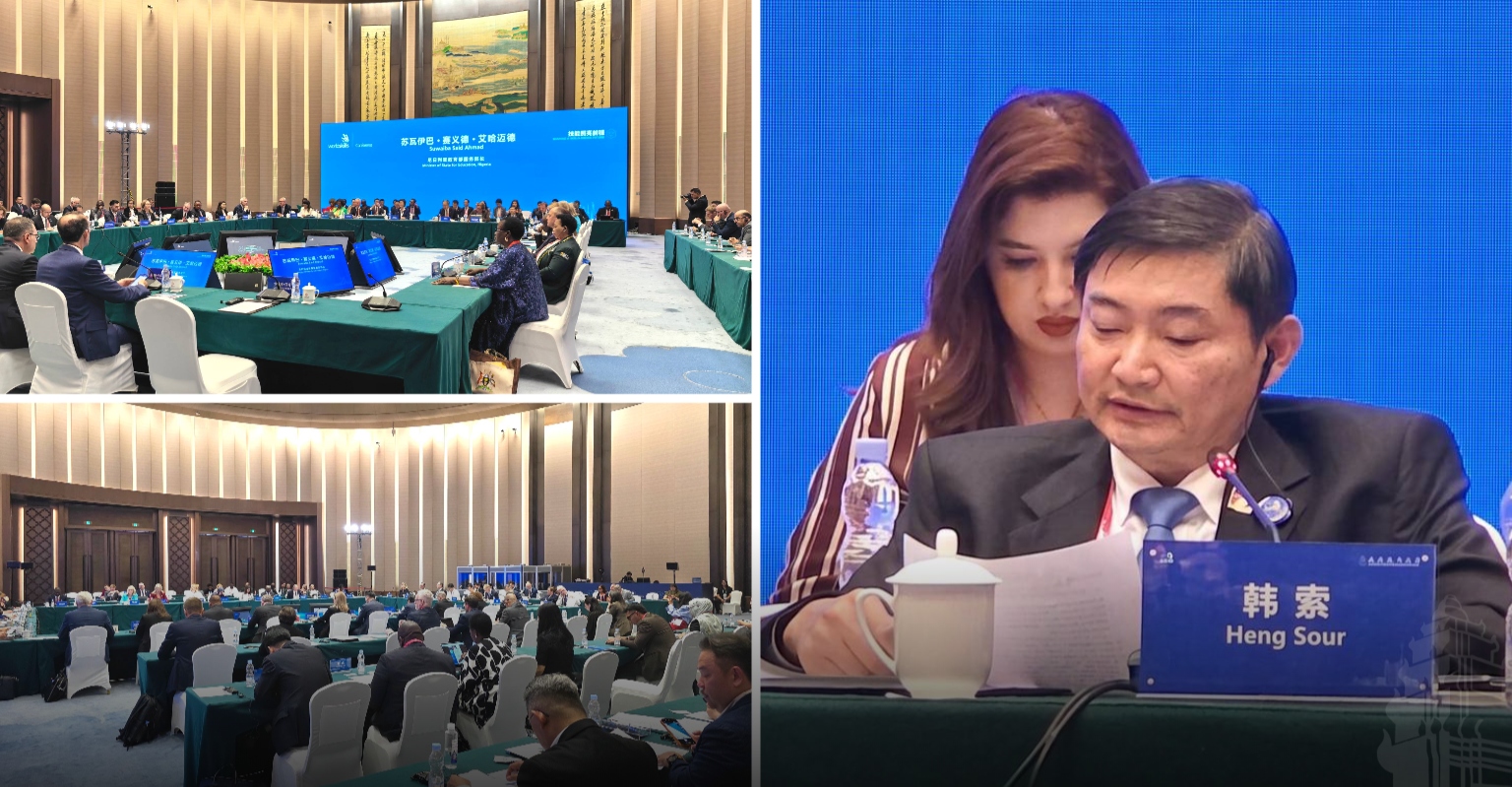
Cambodian Minister of Labour and Vocational Training, Heng Sour, presented three key strategies for building a skilled innovation ecosystem at the World Skills Conference 2026 in Shanghai. The strategies focus on aligning with industrial policies, strengthening multi-stakeholder cooperation, and promoting diversity and inclusivity.
Shanghai – Heng Sour, Minister of Labour and Vocational Training, intervened at the World Skills Conference 2026, held under the theme: "Building a Diverse, Collaborative, and Industry-Responsive Skilled Innovation Ecosystem." The conference took place on the afternoon of September 23, 2026, at the Shanghai World Expo and Convention Center in China, presided over by Wang Xiaoping, Minister of Human Resources and Social Security of the People's Republic of China. The conference runs from September 23-25 as part of the 48th World Skills Competition, with participation from ministers and senior government officials responsible for labour, TVET, skills development, and professional skills development experts worldwide. Addressing the conference, the Minister regarded the forum as a crucial opportunity to discuss and share visions as global partners on building a resilient and future-ready skills ecosystem, as skills are rapidly evolving in line with the swift changes in industry and technology. He stated that building a resilient skilled innovation ecosystem requires a joint commitment from governments, enterprises, training institutions, parents, and employees to forecast and respond to the changing labour demands. In this regard, Heng Sour highlighted three key strategies: First, the "Skills Policy" must be closely integrated with industrial and investment strategies, as well as labour market information. This principle is promoted through the alignment of industrial development policies, sectoral industrial development strategies, national employment and labour policies, and national Technical and Vocational Education and Training (TVET) policies, to determine the direction of industrial development, skill requirements, and available resources for skills development financing. Second, "Cooperation with Stakeholders in Skills Development" should stem from strong leadership and encouragement. Training institutions and enterprises can collaborate to pool resources, share knowledge and skills, and provide training opportunities and work experience in the industrial sector, enabling trainers and trainees to keep pace with advancements in AI, digital technology, and new industrial technologies. Third, "Promoting Diversity and Inclusivity in the Skills Ecosystem." As a developing country with various vulnerable populations, Cambodia has implemented special TVET programs for youth from poor families, ethnic minority groups, persons with disabilities, informal sector workers, and micro, small, and medium enterprise owners, who have different levels of knowledge. Concurrently, pre-skill recognition tests are also specially organized for migrant workers. On the occasion, the Minister also called for strengthened international cooperation on skills development, as collaboration can ensure that skills ecosystems in various countries remain innovative, inclusive, and aligned with the evolving demands of global supply chains.
Original source
Koh Santepheap Khmer