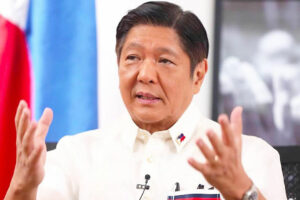
Marcos' Approval and Trust Ratings Slip Amid Graft, Economic Concerns
Politics
2026年7月9日
7
BusinessWorld Nation

Marcos' Approval and Trust Ratings Slip Amid Graft, Economic Concerns

AI サマリー

President Ferdinand R. Marcos, Jr.'s approval and trust ratings declined in June, driven by concerns over corruption, the economy, and political accountability. Worsening economic conditions and inflation are key factors. Combating corruption was identified as a top priority.

By Erika Mae P. Sinaking, Reporter PRESIDENT Ferdinand R. Marcos, Jr.’s approval and trust ratings fell in June as concerns over corruption, the economy and political accountability continued to weigh on public sentiment, according to a survey by PUBLiCUS Asia, Inc. “The President’s ratings have largely plateaued, with approval at 18% and trust at 12%,” the pollster said in a statement on Thursday. “This reflects a fragmented public outlook, where no single dominant issue is driving overall performance.” Mr. Marcos’ approval rating slipped from 19% in the first quarter, while his trust rating eased from 13%. PUBLiCUS Asia said gains from selected government initiatives were offset by persistent concerns over political accountability, proposed Charter amendments and economic conditions. The pollster said the administration’s response to the domestic effects of the Iran war on fuel prices, Mr. Marcos’ opposition to remote Senate voting and the country’s hosting of the 48th Association of Southeast Asian Nations Summit provided only modest support for the President’s standing. Respondents remained divided over the economy despite 2.8% gross domestic product growth in the first quarter. About 10% viewed Mr. Marcos’ economic performance positively, while 9% viewed it negatively. The survey said the country’s economic expansion was overshadowed by inflation, which accelerated from 2.4% in February to 7.2% in April, as well as a 5% unemployment rate and 12.3% underemployment rate. About 65% of registered voters said the Philippine economy is in worse condition than it was a decade ago, a sentiment strongest in Mindanao. At the same time, 42% of households said their own financial situation had improved over the same period. Corruption emerged as the top issue respondents wanted the President to prioritize, cited by 29% of those surveyed. It also ranked as the leading household concern for the coming quarter, with 18% saying corruption in local and national government agencies should receive greater attention. The pollster said dissatisfaction over government accountability remained pronounced, with 14% of respondents citing the failure to jail high-profile personalities nearly a year after the President’s 2025 State of the Nation Address as a major factor behind negative perceptions of the administration. Proposed Charter amendments also weighed on public sentiment, with 13% identifying the issue as a key reason for their unfavorable assessment of the President. Among specific proposals, 59% opposed extending the terms of incumbent officials until 2031, 58% opposed suspending the 2028 elections and 43% opposed raising the minimum age for presidential candidates to 50. The survey also showed a shift in public perceptions of other government institutions and officials. SENATE RATING Acting Senate President Sherwin T. Gatchalian posted the highest ratings among the country’s top officials, recording a 32% approval rating and a 21% trust rating during his first quarter in office. However, the Senate’s institutional approval rating fell to 21%, the lowest in five quarters, which PUBLiCUS attributed to recent highly publicized controversies and declining public confidence. The Bangko Sentral ng Pilipinas and the Department of the Interior and Local Government also posted their lowest approval ratings in at least five quarters at 47% and 30%, respectively. Meanwhile, the Technical Education and Skills Development Authority remained the highest-rated government agency, posting a 63% approval rating. Among senators, Senator Paolo Benigno “Bam” A. Aquino IV remained the most favorably viewed, posting a net favorability rating of 57%, followed by Senator Ana Theresia “Risa” N. Hontiveros-Baraquel at 47% and Senator Francis Pancratius “Kiko” N. Pangilinan at 46%. At the other end of the rankings, Senator Jose “Jinggoy” P. Ejercito Estrada, Jr. posted the highest unfavorable rating at 58%, followed by Senator Ronald “Bato” M. dela Rosa at 56% and Senator Robinhood “Robin” C. Padilla at 51%. Vice-President Sara Duterte-Carpio continued to post stronger numbers than Mr. Marcos, recording a 28% approval rating and a 26% trust rating. PUBLiCUS said her ratings were tempered by negative sentiment surrounding findings involving bank accounts linked to her family and her failure to attend House clarificatory hearings. The survey also found broad support for several policy proposals. About 75% of respondents backed the temporary suspension of excise taxes on liquefied petroleum gas and kerosene, while 74% supported the Anti-Political Dynasty bill. Meanwhile, the Cabinet continued to face a 50% overall disapproval rating for a fourth straight quarter, with dissatisfaction highest in Mindanao at 65% and the National Capital Region at 54%. PUBLiCUS also found that 58% of Filipinos now rely primarily on the internet for political news. GMA Network led television news trust with 41%, while ABS-CBN topped online news trust with 38%. Four in 10 respondents said mainstream media remained neutral and fair. The noncommissioned survey was conducted from June 28 to 30 among 1,509 registered Filipino voters. It has a margin of error of ±3 percentage points.

多角的分析

経済的影響

フィリピン経済は2.8%のGDP成長を記録したものの、インフレ率の急騰(2.4%から7.2%へ)や高い失業率・過少就業率が、国民の生活実感に悪影響を与えている。これは、経済成長の恩恵が一部に偏り、一般国民にまで浸透していない構造的な問題を浮き彫りにしている。過去の経済危機時にも同様の傾向が見られ、政府の経済政策が物価安定や雇用創出に十分に対応できていない可能性が示唆される。投資家にとっては、インフレリスクとそれに伴う消費低迷のリスクを考慮する必要がある。

投資家心理

マルコス大統領の支持率低下と経済への懸念は、フィリピンの投資環境に対する不確実性を高める要因となり得る。特に、汚職への不満は、法治国家としての信頼性やビジネスの透明性への懸念に直結する。インフレとそれに伴う購買力の低下は、消費関連セクターへの投資リスクを高める可能性がある。一方で、政府が推進するインフラ開発やBPO(ビジネス・プロセス・アウトソーシング)産業への支援策は、引き続き投資機会を提供する可能性があるが、政治的安定性と経済政策の一貫性が、今後の投資判断の鍵となるだろう。

社会的影響

フィリピン国民は、経済的な苦境や汚職への不満を抱えながらも、自身の生活状況が改善したと感じる層も一定数存在する。これは、地域間や所得層による格差の大きさを物語っている。特にミンダナオ地域での経済状況への悲観論は、地域開発の遅れや格差の深刻さを示唆している。また、政治的説明責任の欠如や憲法改正案への懸念は、政治への不信感と、国民が将来の政治体制に何を求めているのかという問いを投げかけている。SNSでの情報収集が主流となっている現状は、情報伝達のあり方と、それに対する国民の信頼の変遷を示している。

市民の声

国民は、日々の生活に直結する経済状況、特に物価上昇と雇用不安に強い懸念を抱いている。汚職問題は、政府への信頼を損ねる最大の要因の一つであり、国民は政治家や公務員による不正行為の撲滅を強く求めている。また、憲法改正といった政治体制の根幹に関わる議論に対しては、現職者の任期延長や選挙の延期など、国民の利益に反する可能性のある提案に懐疑的である。インターネットを主要な情報源とする国民は、SNSやオンラインメディアを通じて政治的情報を収集・共有しており、その動向は世論形成に大きな影響を与えていると考えられる。特に、地方や所得の低い層では、経済的な困難がより深刻な問題として認識されている可能性がある。

背景・歴史的文脈

フィリピンでは、長らく汚職問題が国民の不満の温床となってきた。過去の政権においても、経済成長と国民生活の向上は常に課題であり、インフレや雇用問題は繰り返されてきた。マルコス大統領の父であるフェルディナンド・マルコス元大統領時代からの資産隠匿や不正蓄財疑惑は、国民の政治への不信感を根深く残している。近年の政治的二極化や、憲法改正を巡る議論は、国の将来像を巡る国民の分断を浮き彫りにしている。これらの要因が複合的に作用し、現在のマルコス政権への評価に影響を与えている。

原文ソース

BusinessWorld Nation

原文を読む