General articles are free for 24 hours after publish.
Ho Chi Minh City Unveils Underground Metro Plan Linking Tan Son Nhat Airport Terminals
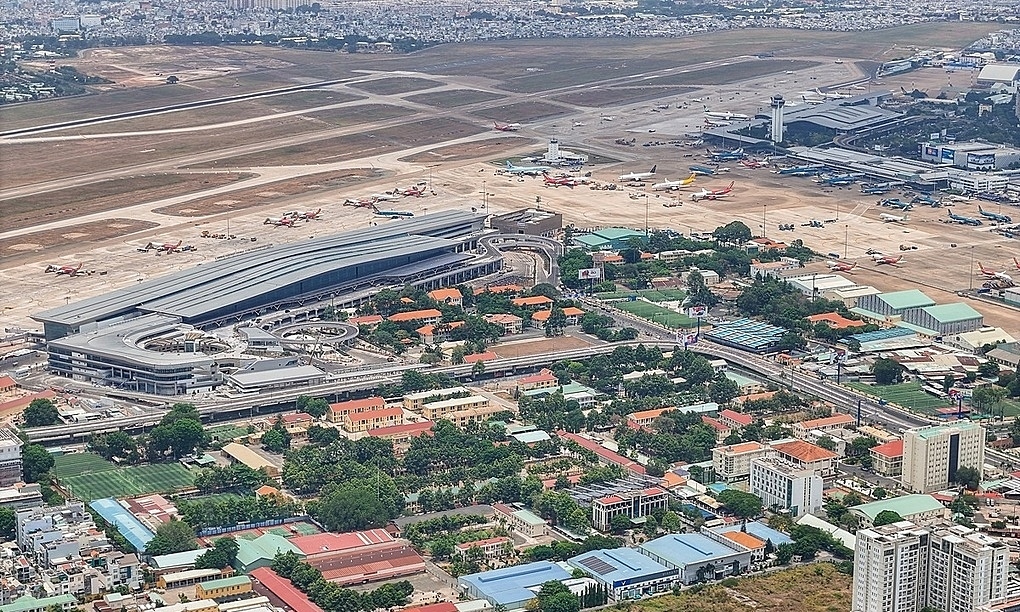
Ho Chi Minh City has announced plans for Metro Line No. 6, designed to connect all three terminals of Tan Son Nhat International Airport. Aiming for completion by 2030, the project is expected to enhance airport accessibility and alleviate road congestion.
Ho Chi Minh City's Urban Railway Management Board has submitted proposals for Metro Line No. 6 to local authorities for review, marking a significant step towards its construction. This line is envisioned as the primary rail link connecting Tan Son Nhat International Airport with eastern HCMC. Once integrated with the Thu Thiem–Long Thanh Railway, it will establish a high-capacity transport corridor between Tan Son Nhat and the forthcoming Long Thanh International Airport, thereby easing pressure on the existing road network. The project is a priority infrastructure investment for the city, with construction slated to commence by the end of this year and completion anticipated by 2030. The feasibility study outlines a nearly 23 km route, with approximately 19 km running underground. The line will feature 13 underground stations and four above-ground stations. Its depot will be located in the Binh Trieu area of former Thu Duc City. Adjustments have been made to the original plans regarding route alignment and station locations to optimize integration with surrounding infrastructure and enhance operational efficiency. Notably, the underground station near Terminal 3 (ST02) of Tan Son Nhat Airport has been repositioned closer to the passenger terminal for improved accessibility. Two previously planned stations, a kilometer apart and inconveniently distant from T3, have been consolidated into a single, more accessible station. This development aims to enable passengers to reach Tan Son Nhat Airport entirely by metro, reducing reliance on road transport. After departing the airport, the line will follow Hong Ha Street, with station ST04 near the Nguyen Thai Son–Nguyen Kiem intersection. It will continue along Pham Van Dong Boulevard, serving areas near the North–South Railway and key intersections. After traversing beneath the Saigon River, the line will return to the Pham Van Dong corridor, heading towards Thu Duc. Station ST12 on Vo Nguyen Giap Boulevard will serve as an interchange, connecting with Metro Line No. 1, the city's only operational metro line. From the Ring Road 2 area, the line will gradually transition to the surface, passing through several key locations before reaching its terminus. Beyond station ST16, the line will bifurcate, with one branch terminating at ST17 near Phu Huu Bridge, and the other connecting to the Thu Thiem–Long Thanh Railway, a 47.7 km line linking HCMC with Long Thanh Airport. Consultants have proposed adopting technical standards similar to those used for Metro Line No. 2. Trains are expected to operate at maximum speeds of 80–110 kph, with an initial fleet of three-car trains, expandable to six cars based on demand growth. Source: VnExpress International
Original source
VnExpress International