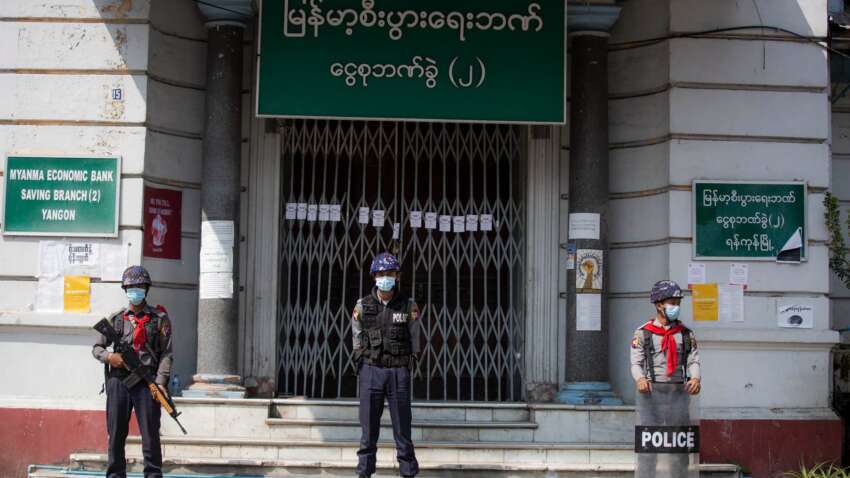
FATF warns Myanmar that stricter measures will be imposed if progress is not shown by October 2026
Yangon, July 16 The Financial Action Task Force (FATF) has warned that Myanmar, which has not yet sufficiently addressed strategic deficiencies in its anti-money laundering and counter-terrorism financing (AML/CFT) syste
This article requires PRO
This article is outside the free access window or is a special report. PRO unlocks it and the full archive.
Related articles
- Ayeyarwady Region to take action against unauthorized use of vacant, fallow, and virgin lands
The Ayeyarwady Region Committee for the Management of Vacant, Fallow, and Virgin Lands has announced that anyone using vacant, fallow, and virgin lands within the Ayeyarwady Region without permission will be prosecuted i
- Dala’s MSY village project loans disbursed
THE Department of Rural Development held a ceremony to disburse revolving funds under the Mya Sein Yaung (MSY) Village Project in Thekkaegwin Village, Dala Township, Yangon Region, yesterday. Dala Township Department of
- Myanmar delegation attended 2nd INNOPROM- Belarus
A Myanmar delegation led by Union Minister for National Planning, Investment and Foreign Economic Relations U Aung Kyaw Hoe and Union Minister for Industry and MSME development Dr Charlie Than, attended the 2nd INNOPROM-
- K8.11B disbursed for MDY earthquake reconstruction loans
A total of K8.11 billion in loans has been disbursed through 12 loans to support reconstruction in areas affected by the Mandalay earthquake, in accordance with the pre- scribed standard oper- ting procedures (SOPs), acc