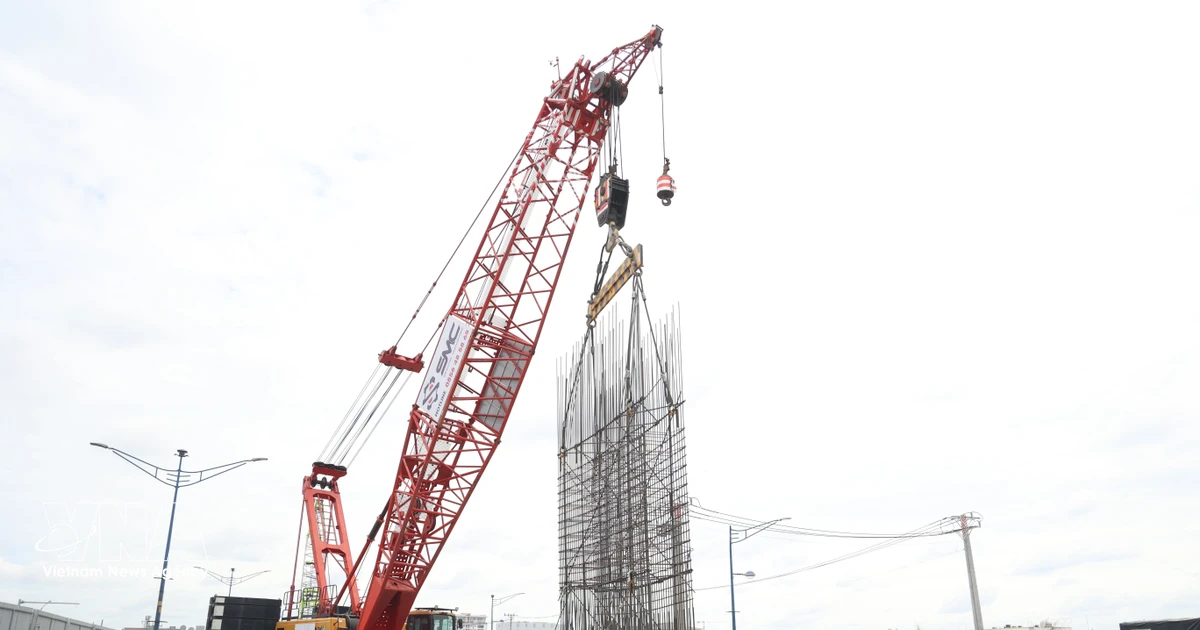
Ho Chi Minh City Begins Construction on Major Section of Metro Line No. 2
Economy
2026年7月2日
5
VietnamPlus English
Relations
🇻🇳Vietnam🇨🇳China🇺🇸United States

Ho Chi Minh City Begins Construction on Major Section of Metro Line No. 2

AI サマリー

Ho Chi Minh City has commenced construction on a key section of Metro Line No. 2. The city aims to attract US$200-300 billion in registered FDI by 2026, with infrastructure development being crucial for economic growth. Vietnam is transitioning from a low-cost manufacturing base to a vital link in global value chains.

Ho Chi Minh City has commenced construction on a key section of Metro Line No. 2 (MRT2), marking a significant step in the southern metropolis's extensive urban transport infrastructure development plan. The city's expanded urban rail network is envisioned to encompass 27 lines spanning 1,024 km, though currently, only two projects are underway. The initiation of Metro Line No. 2 signifies progress in this ambitious plan. Vietnam's economy continues to exhibit robust growth, demonstrating resilience against global turmoil. Policies aimed at attracting high-value manufacturing, research and development, and technology investments are steadily transforming Vietnam from a low-cost manufacturing base into a critical link in global industrial value chains. This infrastructure investment is closely tied to Vietnam's economic growth strategy. The Communist Party of Vietnam has clearly signaled its consistent policy of encouraging the foreign-invested sector as an integral component of the national economy. For the period 2026–2030, Vietnam aims to attract US$200–300 billion in registered FDI, equivalent to US$40–50 billion annually. Disbursed capital is expected to reach US$150–200 billion, or US$30–40 billion per year. To achieve these targets, the Vietnamese government is enforcing mechanisms and policies to pool resources for building and running an ecosystem. This aligns with National Assembly Resolution No. 250/2025/QH15, adopted on December 10, 2025, which aims for sharper global economic integration. As an indicator of economic growth, Vietnam's per capita gross national income (GNI) reached US$4,970 in 2025, surpassing the World Bank's threshold of US$4,636 for upper-middle-income economies, suggesting Vietnam is advancing to a higher economic tier. Furthermore, Vietnam's e-commerce market sustains annual growth of around 20–25%, emerging as one of Southeast Asia’s most dynamic markets. Improving the legal framework, strengthening consumer trust, and fostering a fair competitive environment will be key drivers of Vietnam’s digital economy. In the construction sector, steel production is also forecast to increase, indicating improved domestic production capacity and the growing impact of market management measures. In agriculture, exports of products such as agricultural, aquatic, and forestry goods are performing steadily, contributing to economic diversification. These economic growth and infrastructure development advancements will also impact the lives of Vietnamese citizens. The expansion of the metro network is expected to alleviate urban traffic congestion and reduce travel times, thereby enhancing the quality of life. Increased FDI will also foster job creation and technology transfer, contributing to the overall economic uplift.

多角的分析

経済的影響

ホーチミン市の地下鉄2号線建設開始は、ベトナムが掲げる野心的なFDI誘致目標と、インフラ整備を通じた経済成長戦略の具体化を示している。年間400億~500億ドルのFDI目標は、製造業だけでなく、サービス業や技術分野への投資拡大も示唆しており、経済の多角化を加速させるだろう。S&P Globalが指摘する新規受注の増加と生産高の上昇は、国内経済の底堅さを示しており、インフラ投資がこれをさらに後押しすると考えられる。また、鋼材生産の増加予測は、建設ラッシュと国内製造業の活況を裏付けている。

投資家心理

ベトナムのインフラ投資、特に都市鉄道網の拡充は、長期的な視点を持つ投資家にとって魅力的な機会を提供する。地下鉄2号線の建設は、都市開発とそれに伴う不動産価値の上昇、物流効率の改善をもたらし、関連産業への波及効果が期待できる。FDI目標の高さは、海外からの資本流入を積極的に受け入れる姿勢を示しており、投資環境の改善が進めば、より多くの資本がベトナム市場に流入する可能性がある。ただし、目標達成には法制度の整備や実行能力の向上が不可欠であり、投資家はこれらの進捗を注視する必要がある。

社会的影響

地下鉄2号線の建設は、ホーチミン市の慢性的な交通渋滞の緩和に貢献し、市民の通勤時間を短縮することで生活の質を向上させる可能性が高い。また、FDIの増加は雇用機会の創出に繋がり、特に若年層の所得向上に寄与するだろう。一方で、大規模インフラプロジェクトは、土地収用や環境への影響といった社会的な課題も伴う。これらの課題への丁寧な対応と、地域住民との合意形成が、プロジェクトの円滑な進行と社会的な受容のために不可欠となる。

市民の声

ホーチミン市市民にとって、地下鉄2号線の建設は、将来的な移動の利便性向上への期待をもたらす。長年の課題である交通渋滞が緩和されれば、通勤や移動にかかる時間が大幅に短縮され、生活の質が向上するだろう。また、経済成長とFDIの増加は、より多くの雇用機会と所得向上に繋がる可能性があり、特に若年層にとっては将来への希望となる。しかし、建設期間中の騒音や交通規制、そして将来的な運賃設定など、市民生活に直接影響する側面についても、政府は透明性のある情報提供と丁寧な説明が求められる。

背景・歴史的文脈

ベトナムの一党体制下では、共産党の指導部が経済政策の基本方針を決定する。今回の地下鉄2号線建設着工や、野心的なFDI誘致目標は、党の経済発展戦略の一環として推進されている。ベトナムは、冷戦終結後、ドイモイ(刷新)政策により市場経済を導入し、急速な経済成長を遂げてきた。特に近年は、米中貿易摩擦などを背景に、サプライチェーンの分散化を目指す外国企業にとって、中国に代わる製造拠点として注目されている。この流れを捉えるため、インフラ整備への投資を加速させている。

原文ソース

VietnamPlus English

原文を読む