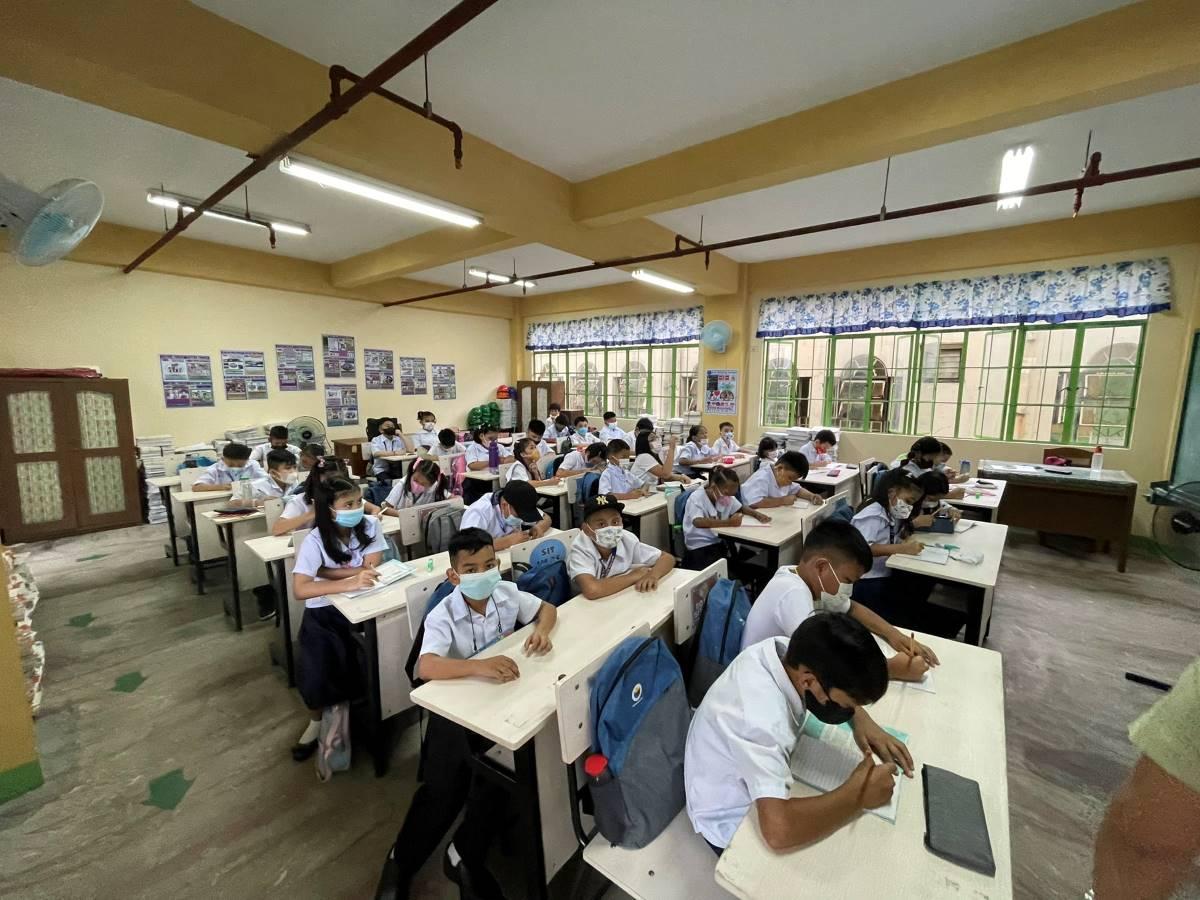
Classroom Shortage Persists in Philippines Despite Record Education Budget
Health
2026年8月4日
4
GMA News Philippines

General articles are free for 24 hours after publish.

Classroom Shortage Persists in Philippines Despite Record Education Budget

Share
AI Summary

Despite a record-high education budget in the Philippines, a persistent classroom shortage remains a major obstacle to improving learning outcomes, according to Philippine Business for Education (PBEd). The country faces a deficit of approximately 165,000 classrooms, with existing facilities also in disrepair.

PBEd: Classroom shortage persists despite record education budget The Philippine Business for Education (PBEd) on Tuesday said the country's classroom shortage remains a major obstacle to improving learning outcomes despite record government spending on education. In its 2026 State of Philippine Education report, PBEd said the Philippines continues to face a backlog of around 165,000 classrooms, while about 120,000 existing classrooms require major repairs or replacement. The group said overcrowded and aging school facilities continue to undermine the quality of teaching and learning, particularly in public schools. Under Republic Act No. 12314, or the 2026 General Appropriations Act, the education sector received a record P1.015 trillion in funding, with the Department of Education (DepEd) accounting for the largest share. PBEd acknowledged the government's increased investments in education, including the record budget and ongoing classroom construction programs, but said infrastructure development has yet to keep pace with demand. "Education reform cannot simply be a program that matures five or 10 years from now. A child gets only one First Grade, only one Sixth Grade, and only one chance to graduate from high school prepared for what comes next," PBEd Chairman Ramon del Rosario Jr. said. The report identified classroom shortages as one of several structural challenges confronting the education sector, alongside weak teacher quality, poor foundational learning, child malnutrition, and the mismatch between education and employment. PBEd called for sustained investments in school infrastructure and long-term reforms that can withstand changes in political leadership, saying consistent implementation is essential to improving learning conditions for Filipino students. Meanwhile, DepEd said 21,900 classrooms have been completed through projects implemented by the Department of Public Works and Highways (DPWH) since the start of the Marcos administration in June 2022. The department said it remains confident that President Ferdinand Marcos Jr.'s classroom construction target is achievable, provided current funding levels are maintained and procurement stays on schedule. According to DepEd, 6,294 classrooms funded under the 2026 national budget are currently under procurement by the DPWH, while another 6,617 classrooms are being built by local government units following the signing of memoranda of agreement and the transfer of funds. As of June 2026, DepEd estimated the nationwide classroom backlog at 143,543, down from 165,443 at the start of the Marcos administration. The department said the estimate continues to be refined as enrollment figures, school inventories, and site conditions are validated. DepEd added that addressing the remaining shortage will require more than constructing additional classrooms. The agency said new school buildings must also be equipped with furniture, water and sanitation facilities, accessibility features, utilities, and digital connectivity to ensure they are ready for immediate use by learners. — MCG, GMA News

0

Original source

GMA News Philippines

原文を読む