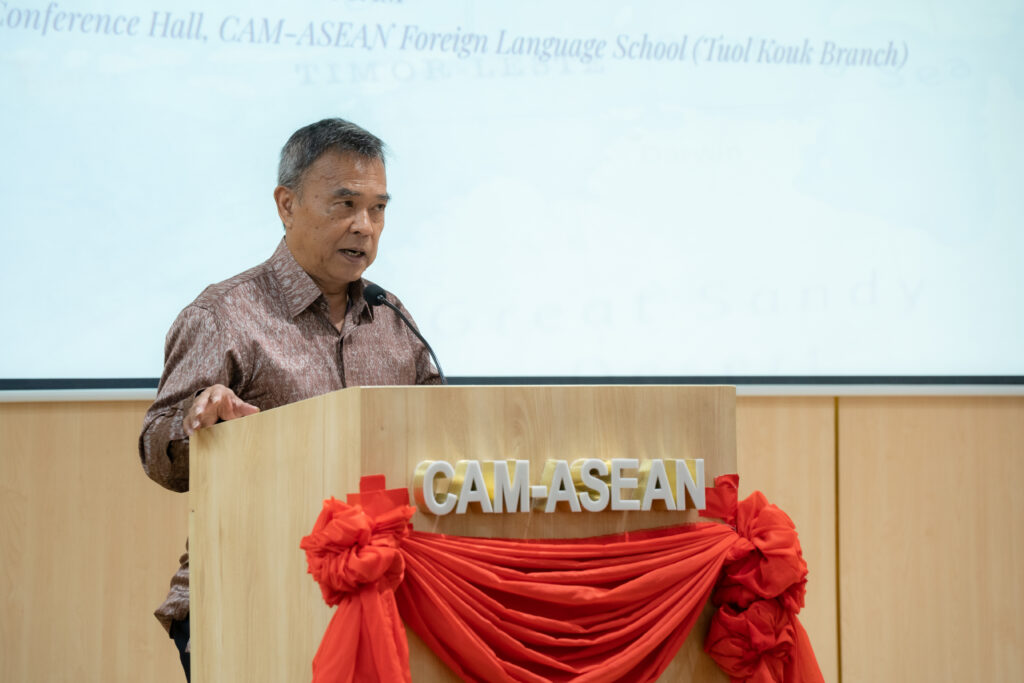
Former Diplomat Advocates UNCLOS for Cambodia-Thailand Maritime Dispute Resolution
Dr. Pou Sothyra, a former Cambodian diplomat, has proposed utilizing conciliation mechanisms under the UN Convention on the Law of the Sea (UNCLOS) to resolve maritime border disputes between Cambodia and Thailand, emphasizing that political will and confidence-building are crucial.
Dr. Pou Sothyra, a former senior diplomat and now a senior advisor at the Center for Cambodian Regional Studies (CCRS), has stated that the conciliation mechanism under the UN Convention on the Law of the Sea (UNCLOS) serves as a pathway to avoid military force between Cambodia and Thailand in resolving overlapping maritime claims. However, he emphasized that the outcome hinges on the political will of both parties to settle disputes peacefully. In an interview with Kampuchea Thmey, Dr. Pou Sothyra highlighted that the most crucial lesson learned from the experience of utilizing the conciliation mechanism under UNCLOS is faith in international rule of law. He asserted that under UNCLOS, all member states, regardless of size, possess equal rights under international law. Therefore, smaller nations can leverage international law as a basis to protect their legitimate rights and interests without relying on their size or strength. He further explained that while "compulsory conciliation" might not result in directly binding decisions, if both parties agree to accept and implement the agreed-upon outcomes, the agreement can be effectively enforced. He considers this a path that can lead to a win-win solution for both sides, provided Cambodia and Thailand demonstrate genuine political will to end their disputes peacefully. Dr. Pou Sothyra underscored the importance of building confidence between the two nations. He stated that Cambodia and Thailand must continue to engage in negotiations, diplomacy, and legal mechanisms to resolve their differences, rather than resorting to military force. He believes the UNCLOS conciliation process can help reduce the risk of military engagement by enabling both parties to focus on legal and diplomatic solutions. Moreover, he affirmed that Cambodia and Thailand's agreement to participate in a joint conciliation process is a significant first step in building trust. However, he clarified that building trust is not a short-term endeavor but requires sincere and open dialogue and negotiation between the two sides. In addition, he pointed out that both parties must adopt a "give and take" spirit and cannot demand all benefits for themselves. Instead, compromise, concessions, and a shared political will are necessary to reach mutually acceptable solutions. Dr. Pou Sothyra specified that for Cambodia, choosing the UNCLOS conciliation mechanism aims to protect national sovereignty, legal rights, and interests, including discussions related to seabed resources. He reiterated that the most critical aspects are maintaining mutual respect, building confidence, and avoiding a return to military solutions, as these are not effective ways to resolve disputes between the two countries.
多角的分析
本件は直接的な経済活動への影響は限定的だが、海洋権益、特に海底資源の開発に関する紛争解決に繋がる可能性があり、長期的な経済開発の不確実性を低減させる効果が期待できる。UNCLOSに基づく平和的解決は、当該海域における資源開発プロジェクトへの投資リスクを軽減し、カンボジア経済の潜在的成長を後押しする要因となりうる。
海洋境界紛争の平和的解決は、投資家にとって重要な安定要因となる。特に、資源開発や海上輸送に関わる投資家は、紛争地域への投資を躊躇する傾向がある。UNCLOSを通じた紛争解決が進展すれば、カンボジア周辺海域への投資意欲が高まり、資本流入の促進に繋がる可能性がある。
カンボジアとタイ間の海洋境界紛争は、両国の国民、特に沿岸地域に居住する漁業関係者やコミュニティに間接的な影響を与えうる。紛争が軍事化すれば、漁業活動の制限や生活基盤への脅威となりうる。UNCLOS調停は、こうした社会的な摩擦や不安を軽減し、地域住民の生活安定に寄与する可能性がある。
プー・ソティラ博士の提言は、カンボジア国民が国際法に基づき、自国の権利と利益を平和的に守ることができるという希望を与える。特に、過去の紛争経験から軍事力行使のリスクを懸念する国民にとって、UNCLOSという法的な枠組みは、国家の安全保障と国民生活の安定を確保するための現実的な道筋として受け止められるだろう。
背景・歴史的文脈
カンボジアとタイの間には、長年にわたり海洋境界線に関する未解決の紛争が存在する。特に、タイランド湾における石油・天然ガスなどの海底資源の潜在的な存在が、両国の主張の複雑さを増している。過去には、両国間で軍事的な緊張が高まった事例もあり、平和的かつ法的な解決策の模索が続けられてきた。UNCLOSは、1982年に採択され、1994年に発効した海洋に関する包括的な国際条約であり、各国が排他的経済水域(EEZ)や大陸棚における権利を主張する際の法的根拠となっている。この条約は、紛争解決のための調停や仲裁手続きも規定しており、カンボジアとタイがこの枠組みを利用することは、国際社会が紛争解決のために推奨するアプローチである。
原文ソース
Kampuchea Thmey Local