General articles are free for 24 hours after publish.
India Navigates Complex Dynamics as BRICS Chair, Balancing China and Russia
As BRICS chair, India faces a delicate balancing act amid growing influence from China and Russia. New Delhi aims to maintain the bloc's relevance to the Global South while preventing its transformation into an anti-Western coalition or an extension of Chinese strategic ambitions.
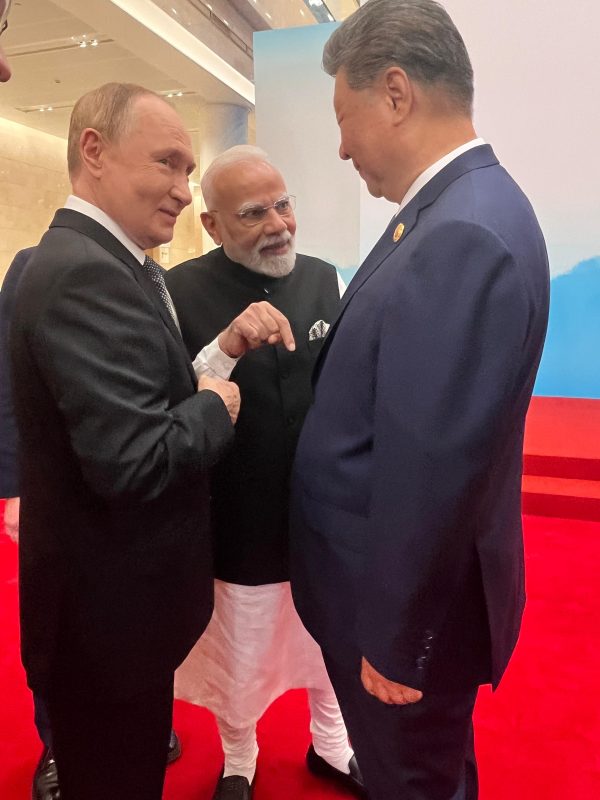
As BRICS chair, India is navigating a complex geopolitical landscape, seeking to balance its relationships with China and Russia while preventing the bloc from becoming a Chinese bandwagon or an explicitly anti-Western coalition. New Delhi aims to keep BRICS relevant to the Global South and advance its own agenda for a more "practical, actionable, development-oriented" group. The upcoming 18th BRICS summit in New Delhi on September 12-13 is expected to feature a bilateral meeting between Indian Prime Minister Narendra Modi and Chinese President Xi Jinping, potentially signaling a thaw in strained ties. This follows recent special representative talks aimed at de-escalating border tensions. Meanwhile, Russian President Vladimir Putin will also attend the summit, though India appears to be prioritizing its engagement with Beijing. Internally, BRICS faces challenges in maintaining cohesion. India has notably stalled initiatives like de-dollarization, championed by China and Russia, while supporting alternative financial institutions such as the New Development Bank (NDB). India's agenda for its chairmanship emphasizes resilience, innovation, cooperation, and sustainability, with a focus on "humanity first" and "people-centric" approaches. However, the unresolved border dispute with China casts a long shadow, leading India to resist initiatives that could legitimize Chinese infrastructure ambitions, such as linkages to the Belt and Road Initiative (BRI). India also opposes a common BRICS currency, wary of Chinese financial dominance, and resists the inclusion of Pakistan, citing its adversarial relationship and the growing China-Pakistan axis. The inclusion of new members like Egypt, Ethiopia, Iran, and the UAE has further fragmented the group, making India cautious about further expansion. Despite these complexities, India's long-standing relationship with Russia, built on defense and energy cooperation, provides a crucial counterbalance within BRICS.
Original source
The Diplomat Indonesia