2027 National Budget to Align with Marcos Administration's Priorities
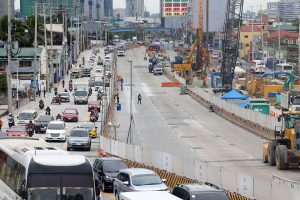
The Philippines is finalizing its proposed 2027 national budget, prioritizing projects that offer public benefits as directed by President Ferdinand R. Marcos Jr. While the official budget amount has not yet been disclosed, it is projected to reach P7.2 trillion.
This article requires PRO
This article is outside the free access window or is a special report. PRO unlocks it and the full archive.
Related articles
- Tacloban employees ask mayor to halt flag ceremony due to extreme heat
Tacloban City employees have urged Mayor Alfred Romualdez to suspend the weekly flag-raising ceremony due to extreme heat caused by El Niño. The employees' union cited health risks associated with outdoor activities in the prevailing high temperatures.
- OVP Ready to Respond to COA Disallowance on Confidential Funds
The Office of the Vice President (OVP) in the Philippines has stated it is prepared to respond through legal and institutional channels to the Commission on Audit's (COA) final disallowance of P72 million in confidential funds disbursed in 2022. The COA noted accountability for refunding falls on approving, authorizing, and certifying officers, as well as recipients.
- Sotto Flags 'Tinikling' Scheme Amid VP Duterte Impeachment Trial
Senator Tito Sotto raised concerns about a potential financial scheme called 'Tinikling,' where unutilized or stale manager's checks are allegedly returned to banks to avoid audits. This surfaced during the impeachment trial of VP Sara Duterte, concerning a P41.7 million manager's check that reportedly remained 'floating' for years.
- Iligan City Launches CSO Academy to Boost Civic Participation
Iligan City has launched a Civil Society Organization (CSO) Academy, a pilot program aimed at strengthening CSOs and promoting their participation in local governance. The initiative is a result of an MOU signed by the city government, the Department of the Interior and Local Government, and the Iligan City People's Council.