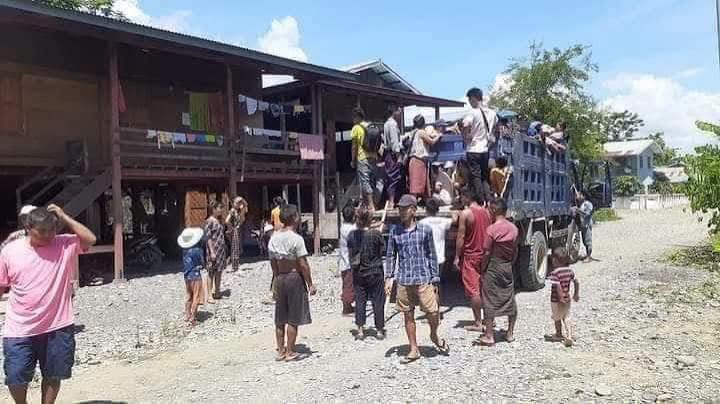
Displaced Persons from Khampat Struggle with Healthcare and Livelihoods in Myanmar’s Kale Town
Hundreds of civilians displaced from Khampat Town and the Kanan village tract, who fled to Kale Town in northwestern Myanmar's Sagaing Region, are facing worsening healthcare crises and severe livelihood hardships. Many
Hundreds of civilians displaced from Khampat Town and the Kanan village tract, who fled to Kale Town in northwestern Myanmar's Sagaing Region, are facing worsening healthcare crises and severe livelihood hardships. Many are falling ill as they adapt to drastic weather changes amid the ongoing monsoon season. Both Khampat and Kanan are located in Tamu Township, near the India-Myanmar border. Since June 7, Myanmar's military junta has launched aggressive offensives along the strategic Kale–Tamu Road, forcing residents from Khampat and approximately 50 surrounding villages to abandon their homes. More than a month after the initial escalation, the vast majority of these displaced persons remain unable to return. The arrival of the monsoon season has sparked a surge in illnesses among the displaced population, creating a critical shortage of medicines and medical care. “Now that the monsoon season has arrived, a significant number of displaced people are falling sick. At least 10 people have required formal hospitalization, and that does not even account for those seeking minor treatments at local private clinics," said a volunteer providing humanitarian aid to Khampat refugees in Kale, speaking on the condition of anonymity due to security concerns. "Khampat is located in a mountainous area and has a cooler climate. The weather in Kale Town is noticeably different and harsher, causing many to fall ill during the transition. They are in urgent need of basic medicines,” the volunteer added. While humanitarian groups have formally documented the arrival of around 130 displaced households—totaling approximately 460 people—in Kale, the actual number of displaced individuals who have sought refuge in the town is believed to be substantially higher. Many are currently sheltering in local Christian churches or with relatives, while others have resorted to renting private accommodations. However, skyrocketing commodity prices and sharply rising rental costs in Kale Town have compounded the hardships for displaced families already struggling to afford food and basic daily expenses. “Food supplies and mosquito nets are the primary necessities right now. Local churches are providing what support they can, but they lack the funding to purchase rice, vegetables, and other provisions in large quantities," the aid volunteer explained. "Rental costs have surged; some families are paying around 300,000 MMK (approximately $65–$70 USD based on current market rates) per month. Those who cannot afford this are cramming three or four families into a single rented house to survive.” Similarly, Khampat residents who fled across the border into neighboring India are also reportedly facing acute shortages of proper shelter, mosquito nets, medicines, and food as the rainy season intensifies. Although the military junta has publicly claimed to have recaptured Khampat and Kanan—both vital hubs along the India–Myanmar No. 1 border trade route—from anti-regime resistance forces, fierce clashes continue to rage on the ground.
多角的分析
ミャンマー北西部サガイン州カーレ町に避難してきたカンパット町およびカナン村区からの数百人の民間人が、悪化する医療危機と深刻な生活苦に直面している。 モンスーン期の気候変動への適応で多くの人が病気になっている。この動きは直接の経済指標ではなくても、行政運営、地域の信頼、公共サービスの質を通じて企業活動や生活コストに波及する可能性があります。
投資家にとっては、個別ニュースの背後にある制度の安定性、情報公開、地域社会の反応が判断材料になります。短期の見出しだけでなく、継続的な変化を見る必要があります。
ミャンマー北西部サガイン州カーレ町に避難してきたカンパット町およびカナン村区からの数百人の民間人が、悪化する医療危機と深刻な生活苦に直面してい…という事実は、ミャンマー北西部サガイン州カーレ町の住民にとって制度の発表ではなく、日々の判断材料になります。軍がどこまで説明し、避難を抱える人に情報が届くかが社会的な焦点です。
市民にとっては、このニュースが安全、雇用、教育、行政サービスなど身近な領域にどうつながるかが焦点です。生活者目線で具体的な影響を追う価値があります。
背景・歴史的文脈
BNI (Burma News International)が伝えたこのニュースは、ミャンマーの行政運営や地域社会の変化を読むための小さなシグナルです。個別の発表や事件でも、制度、生活、対外関係のどこに影響するかを分けて見ることで、ニュースの意味が見えやすくなります。
原文ソース
BNI (Burma News International)