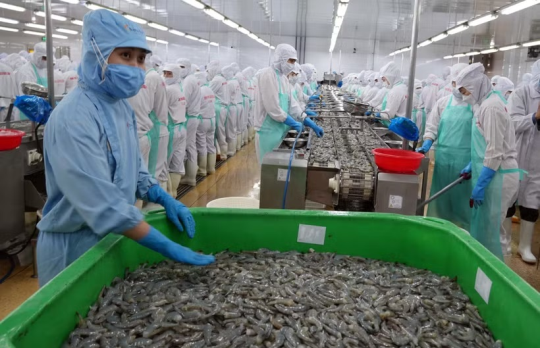
Vietnam's Aquatic Exports Up 12.8% in First Half Driven by China, US Demand
Vietnam's aquatic product exports surged 12.8% year-on-year in the first half of the year, primarily driven by strong demand from China and the US, reflecting recovering market needs. Shrimp and pangasius exports led the growth.
Vietnam's aquatic product exports saw a significant increase of 12.8% in the first half of the year, reaching approximately US$6 billion. This growth was primarily driven by a strong rebound in demand from key markets, particularly China and the United States. June alone marked an impressive performance, with overseas shipments approximating US$1.1 billion, a 21% increase from the same month last year. This surge reflects improving demand across major markets, with exports to China continuing to rise sharply and the US showing clear signs of recovery. Meanwhile, exports to the EU, Japan, and the Middle East remained relatively stable. Shrimp continued to be the top foreign currency earner, generating US$445.9 million in June, up 20.7% year-on-year. Pangasius (tra fish) exports rose 7.7% to US$209.1 million, while other fish products increased by 19.8% to US$198.8 million. Several categories posted even stronger growth, with tuna exports climbing 28% to US$85.9 million, squid and octopus shipments rising 26.5% to US$77.9 million, and exports of crab and other crustaceans jumping 55.1% to US$45.3 million. Shellfish recorded the fastest growth, soaring 77.8% to US$31.3 million. China, including Hong Kong, remained Vietnam's largest market in June, with exports rising 32.2% to US$256.6 million. Shipments to the US increased sharply by 48.3% to US$195.3 million, indicating a return of orders after a period of weak demand. Exports to Japan edged up 0.3%, while those to the Republic of Korea (RoK) and ASEAN grew by 29.5% and 16.5%, respectively. For the first six months of the year, shrimp continued to dominate Vietnam's aquatic exports, earning US$2.3 billion, up 13.6%, and accounting for over 40% of the total value. Growth was mainly driven by robust demand from China, particularly for premium products like black tiger shrimp and lobster. However, exporters continue to face stiff competition in the US from countries like Ecuador and India, alongside compliance costs from anti-dumping duties and import monitoring programs. Pangasius remained the second-largest export item, bringing in US$1.1 billion, up 12.1%, benefiting from stable global demand for affordable whitefish and Vietnam's production advantages. Other fish products also generated US$1.1 billion, up 12%, highlighting the sector's increasingly diversified export structure. Among marine products, squid and octopus exports rose 18.8%, while crab and other crustaceans increased 26.2%, and shellfish exports climbed 33.1%. Tuna was the only major product posting weaker six-month results, with exports slipping 2%. Le Hang, Deputy General Secretary of VASEP, stated that the sector's growth reflects not only recovering consumer demand but also exporters' ability to diversify markets and adjust product portfolios. The association warned that rising logistics costs, including higher international container freight rates and port congestion, remain a major challenge, particularly for routes to the US and EU. Source: KPL Laos News
多角的分析
ベトナムの水産物輸出の好調は、世界的なインフレ下での食料品需要の底堅さを示唆している。特に中国市場の回復は、同国の経済活動再開と消費意欲の表れであり、ラオスのような近隣諸国にとっても、中国への輸出依存度が高い場合、間接的な恩恵をもたらす可能性がある。しかし、米国市場での競争激化や、EUのIUU漁業規制などの貿易障壁は、ベトナムだけでなく、サプライチェーン全体に影響を及ぼす。ラオスは水産資源が限られるため、直接的な影響は小さいが、域内貿易やサプライチェーンの動向を注視する必要がある。
ベトナム水産物セクターの堅調な輸出実績は、同国経済の回復力と輸出競争力を示す好材料である。特に、中国と米国という二大市場での需要回復は、投資家にとって魅力的なシグナルとなる。しかし、物流コストの上昇や、各国の規制強化は、収益性を圧迫するリスク要因として認識すべきである。ラオスにおいては、直接的な投資機会は限定的だが、ベトナム経済の好調は、域内全体の投資環境の改善に寄与する可能性がある。
ベトナムの水産物輸出の増加は、国内の漁業従事者や加工業者の収入向上に寄与する一方で、国際的な需要変動や規制強化が、彼らの生計に直接的な影響を与える可能性がある。特に、米国市場での競争激化やEUの規制は、品質管理やトレーサビリティへの投資を余儀なくさせ、中小規模の事業者は圧迫される恐れがある。ラオスでは、水産物の国内消費が中心であり、輸出主導の成長とは異なる構造を持つが、食料安全保障や持続可能な漁業の観点から、国際的な動向は参考になる。
ベトナムの水産物輸出の増加は、国内の漁業者や加工業者の収入向上に繋がる一方、国際市場の動向が彼らの生活に直接影響を与える。例えば、米国市場での激しい競争やEUの規制強化は、品質管理やトレーサビリティへの投資を余儀なくさせ、小規模事業者の負担を増やす可能性がある。ラオスの市民にとっては、直接的な影響は少ないかもしれないが、食料品価格の国際的な変動や、近隣諸国の経済状況の変化として間接的に感じられる可能性がある。
背景・歴史的文脈
ベトナムの水産物輸出は、長年にわたり同国の重要な外貨獲得源となってきた。特に、エビやティラピアは主要輸出品目であり、中国、米国、EU、日本などが主要市場である。近年、ベトナムは中国の巨大な市場と、米国・EUの高度な品質要求という、二つの異なる市場に対応する必要に迫られている。中国市場は量的な需要が大きい一方、米国・EU市場は品質、トレーサビリティ、持続可能性への要求が厳しく、これらに対応するための技術投資や規制遵守が輸出業者に求められている。また、国際的な物流網の混乱や、地政学的な要因も輸出に影響を与えうる。ラオスは、ベトナムのような大規模な水産物輸出産業を持たないが、域内貿易や、中国・ベトナム経済との連動性という点で、これらの動向を注視する必要がある。
原文ソース
KPL Laos News