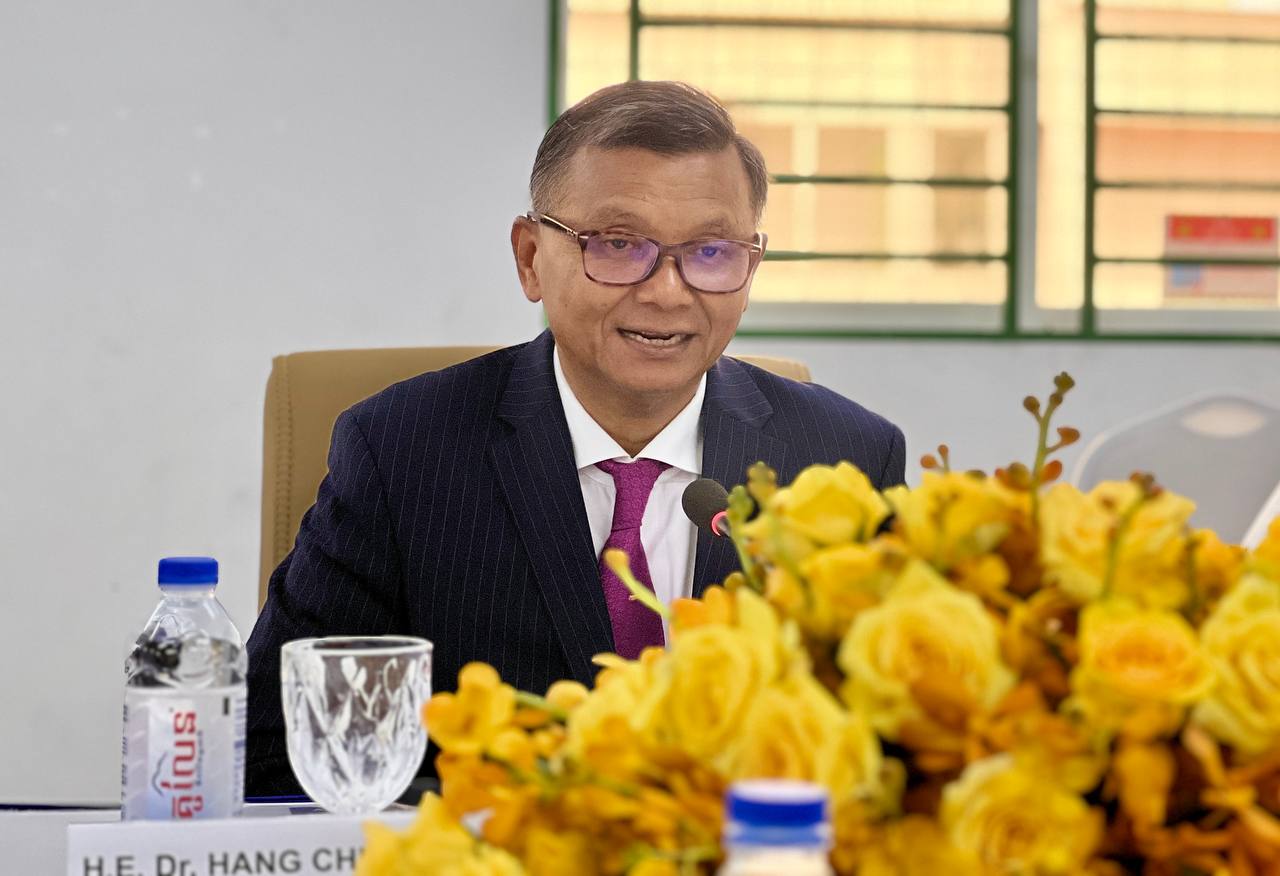
Cambodia's Japanese-Style Education Shows Full Maturity, Minister Affirms
Cambodian Deputy Prime Minister and Minister of Education, Hang Chuon Naron, visited JICLA (Japan International School SICEF Leader Academy), which implements Japanese educational programs. He assessed that the education system has fully matured compared to 10 years ago. The school features trilingual education in Khmer, Japanese, and English, incorporating STEAM education and Japanese inquiry-based learning. The minister highlighted the school's contribution to promoting the Khmer language, Cambodia's national tongue.
Deputy Prime Minister and Minister of Education, Youth and Sport of Cambodia, Hang Chuon Naron, visited the Japan International School SICEF Leader Academy (JICLA) in Phnom Penh on July 13, 2026. He stated that the implementation of Japanese educational programs in Cambodia has fully matured compared to 10 years ago, not only providing high-level education but also contributing to the further strengthening of the Khmer language. According to the minister, while there are currently three Japanese schools in Phnom Penh, JICLA is the only educational institution implementing trilingual education in Khmer, Japanese, and English. He noted with interest the clear use of the Khmer language by students in addition to the foreign languages they learn, with instruction provided by Khmer teachers. This allows students to strengthen their capabilities in their national language and enhance the effectiveness of educational systems such as STEAM education, the SURALA program, and Japanese inquiry-based learning. Regarding the implementation of an educational program that integrates the strengths of both Japanese and Cambodian education systems, Deputy Prime Minister Hang Chuon Naron highly praised JICLA's progress. Although the physical infrastructure is still under expansion, the implementation of the curriculum has shown commendable development, particularly the modern, active, and interactive teaching methods between teachers and students. He emphasized, "I see that the implementation of the Japanese-style curriculum is now fully mature compared to when it started 10 years ago." In response to requests from the school's leadership, the Deputy Prime Minister granted in principle three matters: first, the dispatch of three instructor teachers to facilitate exchange and experience sharing in teaching at JICLA; second, allowing JICLA to issue its own diplomas and providing opportunities for students to enroll in new generation schools; and third, the Ministry of Education, Youth and Sport's recognition of equivalency for both lower secondary and upper secondary diplomas. The visit by the Ministry of Education leadership aimed to review the progress of school management and educational reforms after JICLA became an international school. Through observing practical teaching in STEAM education, personalized learning using the SURALA program, and Japanese inquiry-based learning, it is expected that students will develop ownership of their studies, learn to collaborate, take responsibility, and continuously develop themselves to become human resources with the potential to compete and contribute to the nation's development in the future. Source: CPP Cambodia
多角的分析
日本式教育プログラムの導入と拡大は、カンボジアの人的資本開発への長期的な投資と見なすことができる。STEAM教育や探求学習といった先進的な教育手法は、将来の労働市場で求められるスキルを育成し、経済の多様化と高度化に貢献する可能性がある。特に、3言語教育は国際競争力の向上に繋がり、外資誘致やグローバルビジネス展開における人材基盤を強化するだろう。ただし、教育の質の均質化や、経済格差による教育機会の不均等をどう是正していくかが、持続的な経済発展の鍵となる。
日本式教育機関の拡大は、カンボジアにおける教育分野への投資機会を示唆している。JICLAのような学校が卒業証書の発行権限を得たり、政府の認定を受けたりすることは、教育サービスの信頼性と魅力を高める。これは、教育インフラや教材開発、教員養成プログラムへの投資を検討する海外投資家にとって、ポジティブなシグナルとなる可能性がある。しかし、投資判断においては、現地の教育政策の安定性、カリキュラムの国際的な通用度、そして卒業生の就職市場における評価などを慎重に見極める必要がある。
JICLAがクメール語教育を重視し、生徒が自国の言語で能力を強化している点は、国際的な教育プログラム導入における文化的な調和と国民的アイデンティティの維持という点で重要である。これにより、生徒たちは国際的な視野を持ちつつも、カンボジア人としての誇りを失うことなく成長できる。一方で、このような国際的な教育プログラムへのアクセスは、経済的に余裕のある家庭に限られる傾向があり、教育格差の拡大が懸念される。全てのカンボジアの子供たちが質の高い教育を受けられるような、より包摂的な教育政策が求められる。
JICLAのような高度な教育機関の存在は、プノンペン市民、特に子を持つ親にとって、子供の将来への選択肢を広げるものとなる。3言語教育やSTEAM教育は、子供たちが将来、より良い職に就き、国際社会で活躍できる可能性を高める。しかし、これらの学校の学費は高額であるため、多くの一般市民にとっては手の届かない存在である。市民は、子供たちが質の高い教育を受けられる機会が、経済力によって左右される現状に不安を感じている可能性がある。
背景・歴史的文脈
カンボジアでは、長年にわたり教育システムの近代化と国際化が進められてきた。特に2000年代以降、経済成長に伴い、質の高い教育への需要が高まった。日本は、カンボジアの主要な開発援助国の一つであり、教育分野においても長年の支援実績を持つ。2015年にカンボジア政府が発表した「教育・職業訓練セクター戦略計画2014-2018」では、国際基準に沿った教育の質の向上や、STEAM教育の導入が盛り込まれた。JICLAのような日本式教育機関の設立・発展は、このような政府の政策と、日本からの技術・ノウハウ移転の意向が合致した結果と言える。
原文ソース
CPP Cambodia