General articles are free for 24 hours after publish.
Vietnam Focuses on Enhancing Legal Drafting Personnel Quality
Vietnam's Ministry of Justice is researching criteria and solutions to enhance the expertise, practical skills, and innovative thinking of legal drafting personnel to meet national development goals. The initiative aims for over 50% of key departments to have leaders with legal expertise by 2028, also promoting digitalization and AI integration.
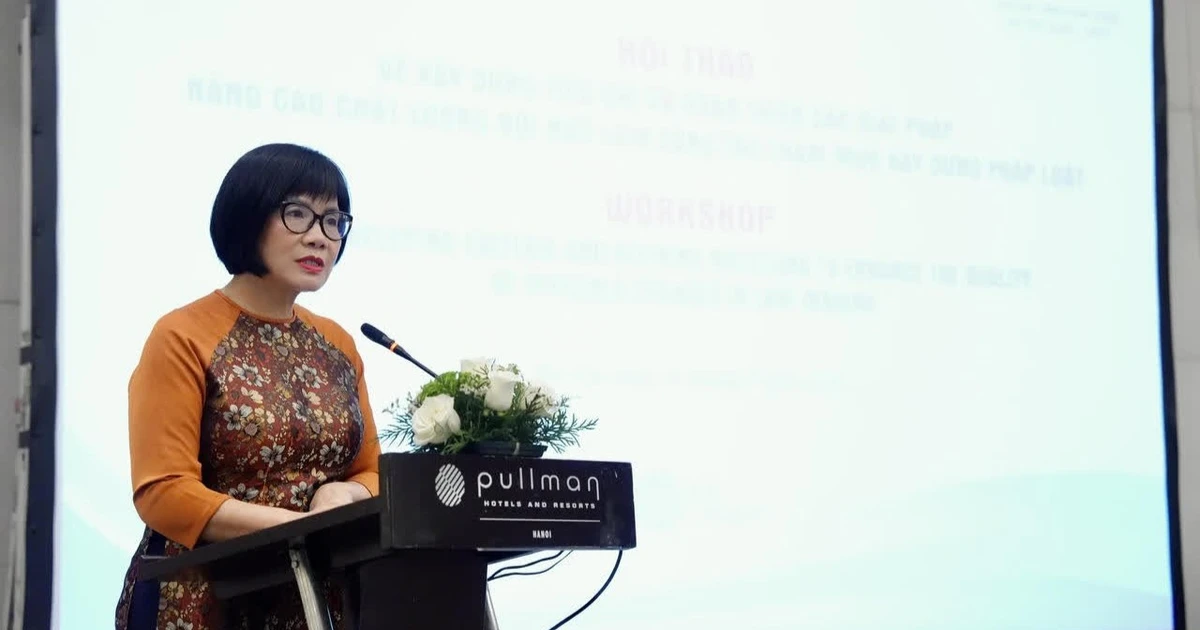
The Ministry of Justice of Vietnam is researching criteria and solutions to enhance the quality of personnel involved in legal drafting, a foundational requirement for innovating institutional development and meeting the country's development needs. This initiative aligns with Resolution 66-NQ/TW of the Politburo, which calls for a strong reform in legal drafting thinking and methods to ensure laws serve as a competitive advantage, unlock resources, and drive rapid and sustainable development. The Ministry emphasizes a shift in mindset from merely having legal personnel to "building a professional team to kiến tạo thể chế" (create institutions). This approach prioritizes developing individuals with firm political will, strong moral character, high professional competence, deep understanding of practical realities, and innovative thinking. It also includes establishing specific mechanisms to identify, attract, train, utilize, and honor talented individuals. The project, "Improving Criteria and Solutions for Enhancing the Quality of Personnel in Legal Drafting and Institutional Development," is being developed within this framework. It inherits relevant content from previous projects while incorporating the new requirements of Resolution 66-NQ/TW and is expected to be submitted to the Prime Minister in September 2026. A notable change is the shift in evaluation criteria from focusing on input conditions to assessing actual capabilities, product quality, and outcomes. Evaluations will be differentiated by specific roles, including legal drafting leaders, heads of legal departments, legal officers, senior legal officers, and chief legal officers. Key targets include ensuring that by 2028, 100% of ministries and ministerial-level agencies have at least one leader with legal expertise. Furthermore, 50% of state management advisory units within these bodies are expected to have leaders with legal expertise or specialized training, with this figure rising to 100% by 2030. Each ministry, sector, and locality aims to cultivate a core group of at least 5 key legal officials by 2028 and 10 by 2030. The initiative also integrates human resource development with digital transformation and artificial intelligence. This involves refining tools for drafting, inspecting, and reviewing legal documents, building electronic databases, and digitizing policy and legal drafting records to improve advisory efficiency and institutional development quality. This effort is crucial for Vietnam's one-party system to enhance governance capacity and sustain economic growth. As the economy rapidly develops, the need for sophisticated legal frameworks to manage increasingly complex socio-economic activities is paramount. In its relations with China, strengthening legal systems is vital for protecting national sovereignty and interests, even as economic ties deepen. Enhancing the quality of legal drafting personnel is a key strategy for Vietnam to address these challenges and bolster its international competitiveness.
Original source
Nhan Dan