General articles are free for 24 hours after publish.
Vietnam Military Medical Academy Reforms Training for 2027 National Medical Licensing Exam
Vietnam's Military Medical Academy is reforming its curriculum to align with the upcoming National Medical Licensing Exam, scheduled to be implemented in 2027. The academy aims to enhance graduate quality and meet international standards through updated teaching methods and digitalization of educational materials.
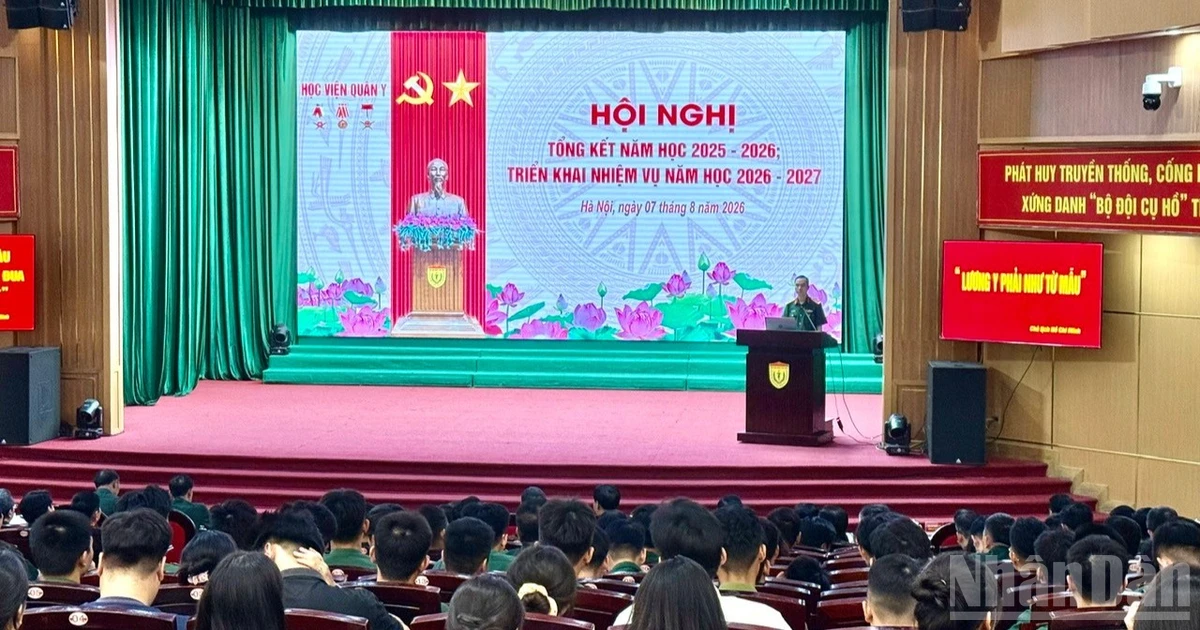
Vietnam's Military Medical Academy is undertaking a significant reform of its educational and training programs in preparation for the upcoming National Medical Licensing Exam, scheduled to be implemented in 2027. The academy aims to enhance the practical medical skills of its graduates and ensure their alignment with international standards. During the year-end conference for the 2025-2026 academic year, held in Hanoi on August 7, the academy reported on its achievements over the past year and outlined its mission plan for the 2026-2027 academic year. The institution currently provides education to approximately 3,000 students, including 31 undergraduate programs and 120 postgraduate programs. Notably, the medical education curriculum is being revised and supplemented to align with the content of the National Medical Licensing Exam that graduates will face. This initiative is a crucial step towards standardizing the qualification process for medical professionals in Vietnam and improving the quality of healthcare services. In the 2025-2026 academic year, nearly 400 military medical students graduated, including those from the 53rd cohort and affiliated programs. Additionally, 38 doctoral candidates completed their thesis defense at the institutional level, 59 master's students defended their theses, 58 students completed their second-level specialization programs, 21 residents completed their training, and 82 students passed their first-level specialization exams. The academy also achieved notable successes in digital transformation, scientific research, and student competitions, including the 2026 Student Scientific Research Conference with 79 projects presented, yielding 8 first prizes, 8 second prizes, 16 third prizes, and 16 consolation prizes. The 25th Youth Creative Technical Sports Festival was also held, and the academy achieved high results in the 2026 Science and Technology Award for Students and the 23rd Youth Science and Technology Conference of the Health Sector. Regarding military recruitment, in the first six months of 2026, the academy conducted rigorous admissions for the 2026-2027 academic year, including outreach and career guidance in Thanh Hoa, Ninh Binh provinces, and Hanoi. Admissions examinations for second-level specialization, first-level specialization, residency, and master's programs were completed, along with the first round of doctoral candidate admissions for 2026. At the conference, delegates discussed and evaluated the implementation of the 2025-2026 academic year, focusing on leadership, guidance, propaganda, instruction, and inspection of units to achieve breakthroughs in military education and training. This includes developing and implementing a talent doctor training program in key specialized fields, innovating teaching methods, developing digital learning materials, and improving the quality of clinical training. Enhancing the quality of student management and discipline, as well as the results of digital transformation in the 2025-2026 academic year, were also discussed, with a focus on building the Military Medical Academy towards a smart institution model. Speaking at the conference, Major General, Associate Professor, Dr. Tran Ngoc Tuan, Deputy Director of the Military Medical Academy, emphasized that in the 2025-2026 academic year, the academy thoroughly grasped the resolutions and directives of the Party, the Central Military Commission, and the Ministry of National Defense. The academy focused on leadership and direction to comprehensively complete all set objectives and tasks, with many tasks being accomplished with distinction. Key achievements include the timely and safe execution of the educational and training plan with guaranteed quality, rigorous admissions processes, and effective maintenance of quality control and assurance in education and training. Continuous improvement in scientific research and medical examination and treatment was also highlighted. Emphasizing the special significance of the 2026-2027 academic year as the year of the first National Medical Licensing Exam in 2027, Major General Tran Ngoc Tuan urged all agencies and units to strictly adhere to directives and resolutions on education and training. He stressed the need to supplement and adjust learning outcomes, detailed course outlines, and lecture content to align with the 128 core professional knowledge items issued by the National Medical Council, ensuring that training programs are compatible with the requirements of the licensing exam from 2027 onwards. The academy must also effectively implement the admissions plan, methodological work plan, and develop regulations and curricula according to the plan to serve training activities. Reviewing training programs and preparing for the medical licensing exam is identified as the top priority task. There will be a strong emphasis on innovating teaching methods with a student-centered approach, increasing problem-based learning, clinical case studies, simulation, and bedside practice. The quality of question banks for final exams and graduation tests, based on a cognitive scale, will be enhanced. The quality of the faculty will be improved in terms of professional competence, medical ethics, pedagogical skills, and especially their ability to apply digital technology in teaching, creating e-lectures, and managing digital learning resources.
Original source
Nhan Dan