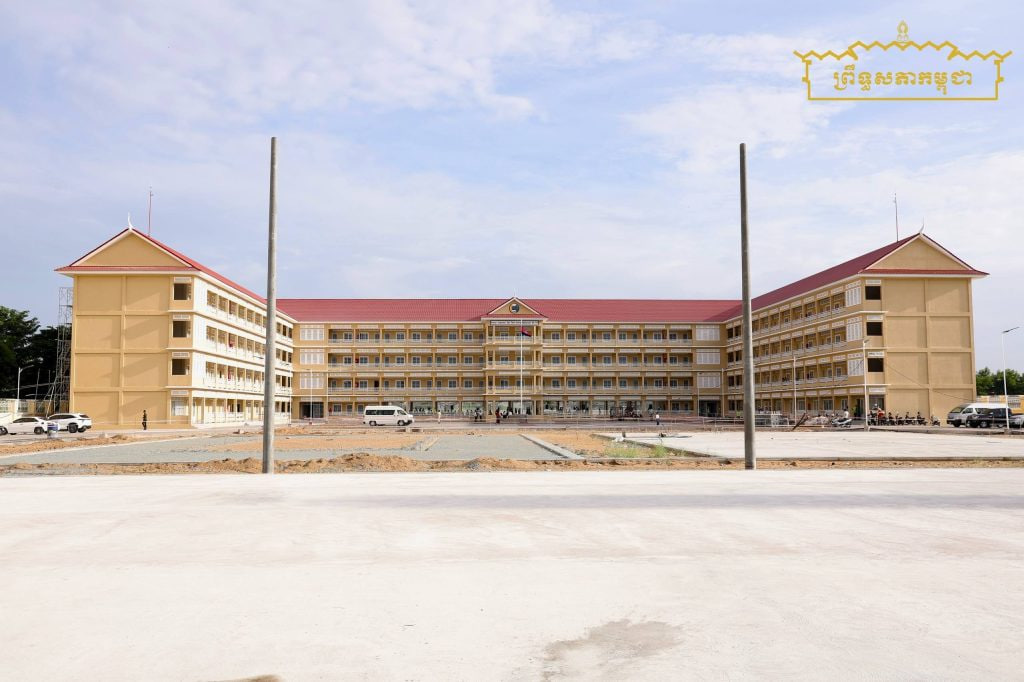
New Dormitory Construction Progresses to Support Disadvantaged Female Students in Cambodia
Construction of a new dormitory, funded by Prime Minister Hun Sen, is underway in Cambodia to provide educational opportunities for disadvantaged female students. Currently 70% complete and slated for completion in December 2026, the facility aims to support students facing financial difficulties in pursuing higher education in Phnom Penh.
This article requires PRO
This article is outside the free access window or is a special report. PRO unlocks it and the full archive.
Related articles
- Cambodia Continues Priority Investment in Education Sector, Aiming for High-Quality Public Service Delivery
Cambodian Prime Minister Hun Manet has affirmed continued priority investment in the education sector at the start of the new academic year. The government is pushing reforms to transform schools into efficient and transparent public service providers, aiming to improve student learning outcomes.
- Bridging Cambodia's Education-Employment Gap: SkillUp Cambodia Focuses on Practical Skills
Cambodia faces a significant gap between higher education and employment, with many graduates lacking practical skills. SkillUp Cambodia aims to bridge this divide by providing disadvantaged students with essential training in English, digital literacy, and soft skills, ultimately boosting their employability and contributing to national development.
- Banteay Meanchey Governor Urges Students to Focus on Studies, Shun Drugs for Brighter Future
Banteay Meanchey Provincial Governor Um Ratry urged students to study hard and stay away from drugs and other vices during the new academic year's opening ceremony, emphasizing their importance for a better future.
- Cambodia Faces Estimated 3,000-4,000 Undiagnosed HIV Cases
Despite international praise for its HIV/AIDS prevention efforts, Cambodia estimates 3,000 to 4,000 undiagnosed HIV infections. Data from Q2 2026 shows over 72,460 patients undergoing treatment, with 1,235 new registrations. New infections among high-risk groups account for about 80% of the annual total.