General articles are free for 24 hours after publish.
Thai House Debates Over 14 Hours on Southern Conflict Solutions and EC Report
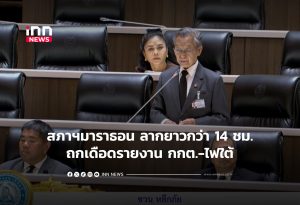
The Thai House of Representatives engaged in an intense debate lasting over 14 hours, discussing solutions for the southern border region's unrest and the Election Commission's report. The southern issue was referred to the National Security Committee, with criticisms raised about past policy failures exacerbating the conflict.
The Thai House of Representatives held a marathon session lasting over 14 hours, engaging in heated debates on solutions for the southern border region's unrest and the Election Commission's report. Discussions on the southern issue spanned over five hours, from 5:40 PM to 10:40 PM. Following this, a debate ensued regarding which committee should further deliberate the matter: the Legal Affairs, Justice, and Human Rights Committee, chaired by MP Rangsiman Rome, or the National Security, Thai Border Affairs, National Strategy, and Reform Committee, chaired by MP Montien Songpraphai. The opposition favored sending it to both committees, while the government coalition preferred the National Security Committee. Ultimately, under Article 88 of the regulations, the Deputy Speaker, Mr. Lertchai Phanthachaiyakul, referred the issue to the National Security Committee for deliberation within 90 days, before adjourning the session at 11:25 PM. The day's session, beginning at 9:00 AM, included discussions on public grievances raised by MPs, followed by various questions to the government. These covered the delay in proposing subsidies for basic education expenses at learning centers under the National Education Act B.E. 2542, measures to address rice prices and enhance Thai rice in the future, and the acceleration of budget approval for the renovation and repair of electric water pumping stations and their water supply systems. Subsequently, the House was set to deliberate urgent matters, including a draft bill on the Protection of Victims of Domestic Violence, proposed by the Cabinet. Another draft bill on the same subject, proposed by Ms. Waraporn Chaemsanit along with 23,989 eligible voters, was also pending. Regarding the southern conflict resolution, Lieutenant Commander Kittipong Piyawanono (People's Party) emphasized the need for more effective intelligence operations. He noted that the Internal Security Operations Command (ISOC) has 49,735 personnel and nearly 5 billion baht in budget approved for 2027, but the allocation of personnel and intelligence work remains unclear. He argued that ISOC Region 4 Forward, despite ample resources, must fundamentally review its intelligence operations. Recommendations included optimizing personnel deployment based on risk periods and areas, assessing the skills of intelligence personnel, integrating intelligence communities with AI technology, and enhancing proactive deterrence measures with pre-defined responses. According to a National Security Council (NSC) report, the conflict in the southern provinces stems from cultural issues, government structures, and individual actors, with violence being a consequence. The NSC proposed addressing the issue across six dimensions: social, educational, economic, administrative, foreign affairs, and resources, stressing the need for improved intelligence to prevent incidents and structural solutions to eliminate the root causes. The debate on the urgent motion to study sustainable solutions for the southern region was postponed from September 3rd, following multiple security incidents in late August. During the discussion, former Prime Minister Chuan Leekpai (Democrat Party) drew lessons from past policy errors, stating that over 7,000 lives have been lost since January 4, 2004. He traced the escalation back to the 2001 Hat Yai train station bombing and a subsequent policy to neutralize 18 key figures, which led to extrajudicial killings and the emergence of new militant groups like RKK. He also highlighted the importance of His Majesty King Bhumibol Adulyadej's "Understand, Access, Develop" approach and questioned the government's true understanding of this principle, as it was mentioned in the government's policy but met with an unprepared response when questioned. Furthermore, Mr. Chuan refuted criticisms from Deputy Prime Minister and Transport Minister Pipat Ratchakitprakarn, asserting his focus as Prime Minister was national development and equitable distribution of resources. He urged the Prime Minister to caution his cabinet ministers against using official duties to sow division. Mr. Chuan concluded by urging the government to clearly define the southern issue as either an internal or international problem. If internal, he stated, Thailand should rely on its own capabilities. He also proposed reviving cooperation under the Indonesia-Malaysia-Thailand Growth Triangle (IMT-GT) initiative to foster sustainable peace and prosperity in the southern border region. Information source: INN News
Original source
INN News