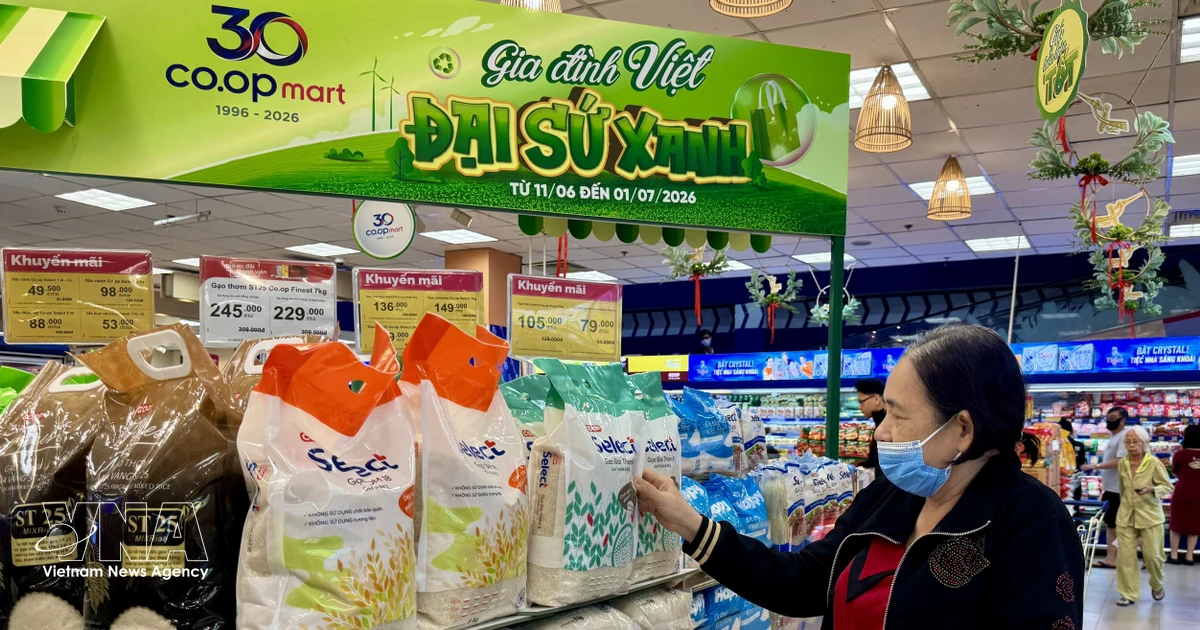
Vietnam's Economy Driven by Robust Domestic Consumption
Vietnam's total retail sales of consumer goods and service revenues surged 11.2% year-on-year in the first half of 2026, reaching an estimated 3.18 quadrillion VND. This robust domestic consumption continues to be a key driver of economic growth, supported by government initiatives to boost the domestic market.
Vietnam's total retail sales of consumer goods and service revenues rose 11.2% year-on-year in the first five months of 2026, reaching an estimated 3.18 quadrillion VND (120.7 billion USD), underscoring the robust domestic consumption that continues to drive economic growth, support job creation, and boost household incomes. Total retail sales of goods and consumer service revenue reached an estimated 3.18 quadrillion VND (120.7 billion USD) during the January–May period, up 11.2% year-on-year. Domestic consumption is being regarded as one of the key drivers for sustaining economic growth. Following the Government’s Resolution No. 88/NQ-CP on promoting the domestic market and stimulating consumption, many retailers have accelerated the expansion of distribution systems, invested in technology and improved supply chains. Including additional registered capital, total capital flowing into the market reached nearly 3.1 quadrillion VND, marking an 11.3% year-on-year increase. Overall, total trade turnover in the first six months of 2026 stood at 549.69 billion USD, up 27.1% compared with the same period last year, of which exports rose 21% and imports increased 33.4%. As of June 30, total registered FDI, including newly registered capital, additional capital for existing projects and foreign investors' capital contributions and share purchases, rose 61% year-on-year to 34.65 billion USD. Releasing the second-quarter and first-half socio-economic report, NSO Director General Nguyen Thi Huong said June’s CPI was still up 3.21% from December 2025 and 4.69% higher than a year earlier. According to the Da Nang Statistics Office, total social investment exceeded 50.98 trillion VND (about 1.94 billion USD) in the first six months, up 31.5% from the same period last year. The strong growth reflects investors' confidence in the city's business environment, as well as the effectiveness of its investment promotion policies and efforts to accelerate project implementation. Services remained the key growth driver, expanding 8.89% in the first six months and accounting for 54% of GRDP while contributing 56% of overall growth. Transport recorded the strongest performance with growth of 13.68%, followed by trade at 8.4% and finance at 8.21%. Meanwhile, the real estate sector continued to face difficulties. Supporting industries are no longer simply auxiliary manufacturing sectors. They have become the foundation for enhancing industrial self-reliance, increasing localisation, improving competitiveness and enabling businesses to integrate more deeply into regional and global supply chains. Releasing the country's socio-economic data for the second quarter and the first half of the year on July 3, NSO Director Nguyen Thi Huong said Vietnam sustained positive growth across most industries and sectors despite a challenging international economic environment. Samsung plans to invest an additional 1 billion USD in Vietnam this year as it advances medium- and long-term expansion plans across electronics, display manufacturing and electro-mechanics. Accordingly, the price of E5 RON92 petrol is capped at 19,730 VND (0.75 USD) per litre, down 1,055 VND, while E10 RON95-III is priced at no more than 20,415 VND per litre, down 788 VND. Copyright, VietnamPlus, Vietnam News Agency (VNA) Editor-in-chief, Mr. Tran Tien Duan.
多角的分析
ベトナム経済は、政府の国内消費刺激策とグローバルサプライチェーンへの統合強化が奏功し、堅調な成長を維持している。特にサービス部門の拡大は顕著であり、運輸、貿易、金融が牽引している。一方で、不動産セクターの低迷は、国内経済の構造的な課題を示唆している。FDIの増加は、ベトナムの製造業ハブとしての地位強化と、国際的な競争力向上への期待を示している。しかし、インフレ率の上昇(6月CPIは前年同月比4.69%増)は、持続的な成長における潜在的なリスク要因となる可能性がある。
ベトナムの堅調な国内消費とFDIの急増は、投資家にとって魅力的な兆候である。特に、サービス部門、運輸、テクノロジー関連分野への投資機会が見込まれる。サムスン電子の追加投資計画は、ハイテク製造業におけるベトナムの重要性を再確認させる。ただし、不動産セクターの不振やインフレ圧力は、投資判断において慎重なリスク評価を必要とする。政府の投資促進策とインフラ開発への継続的な注力は、長期的な投資環境の安定化に寄与すると考えられる。
国内消費の拡大は、国民の購買力向上と生活水準の改善を示唆している。政府の消費刺激策は、小売業者の拡大を促し、雇用創出に貢献している。しかし、不動産セクターの低迷は、関連産業や雇用に影響を与える可能性があり、一部の国民生活に不安をもたらすことも考えられる。また、インフレ率の上昇は、特に低所得者層の家計を圧迫する懸念がある。ベトナムZ世代の視点では、SNSなどを通じた最新の消費トレンドへの関心が高まる一方で、物価上昇への懸念も共有されるだろう。
ベトナム国民にとって、小売売上高とサービス収入の増加は、生活水準の向上と経済の安定を示唆する明るい兆候である。特に、政府の国内市場振興策は、消費者の選択肢を広げ、より良い商品やサービスへのアクセスを容易にしている。しかし、インフレ率の上昇、特に食料品や生活必需品の値上がりは、家計を圧迫する可能性がある。地方の住民にとっては、都市部のような消費機会の増加は限定的であり、地域間の経済格差が依然として課題となるだろう。
背景・歴史的文脈
ベトナム経済は、1986年のドイモイ(刷新)政策以降、市場経済化を進め、特に製造業と輸出に依存した成長モデルを追求してきた。しかし、近年はグローバルサプライチェーンの再編や地政学リスクの高まりを受け、国内消費の重要性が増している。政府は、国内市場の活性化を経済成長の新たな柱と位置づけ、消費促進策を強化。これは、一党体制下での経済成長の持続可能性を高め、国民生活の安定を図るための戦略の一環である。また、対中関係においては、経済的な結びつきを維持しつつも、サプライチェーンの多様化や国内産業の強化を通じて、経済的自立度を高める動きが見られる。
原文ソース
VietnamPlus English