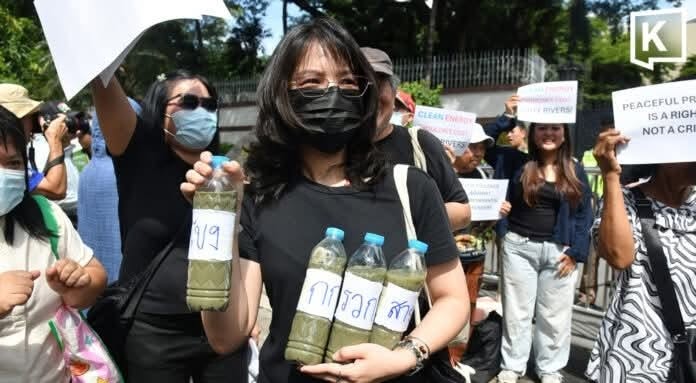
Thai citizens protest in front of the Chinese Embassy in Bangkok against the poisoning of river water. China says it will closely monitor water pollution
The Irrawaddy Times July 9th It is reported that Thai citizens protested in front of the Chinese Embassy in Bangkok yesterday, July 8, regarding the pollution of rivers and streams in Thailand and Thailand due to illegal
This article requires PRO
This article is outside the free access window or is a special report. PRO unlocks it and the full archive.
Related articles
- Botahtaung Pagoda to host 9,000 oil lights on Thadingyut full moon
ACCORDING to U Thein Su, a member of the board of trustees of the Botahtaung Pagoda, a 9,000-oil-light offering ceremony will be held at the pagoda in Botahtaung Township, Yangon Region, on the night of the Thadingyut fu
- Myanmar Citizens Face Passport Renewal Restrictions in Thailand Under New Junta Policy
Myanmar nationals who are holding passports originally issued in eight major regional cities can no longer renew them at junta-controlled diplomatic missions in Thailand, according to service agencies and diplomatic sour
- Agricultural Loans to Be Expanded: MADB issued an announcement on agricultural loans
The Myanma Agricultural Development Bank (MADB) under the Ministry of Planning and Finance issued an announcement on 5 October regarding the expansion of agricultural loans for farmers growing double-crops. According to
- Myanmar Embassy in Malaysia to temporarily suspend consular services
The Myanmar Embassy in Malaysia has announced that it will temporarily suspend consular services for four days due to maintenance work on the servers and systems that operate for consular affairs. The announcement also s