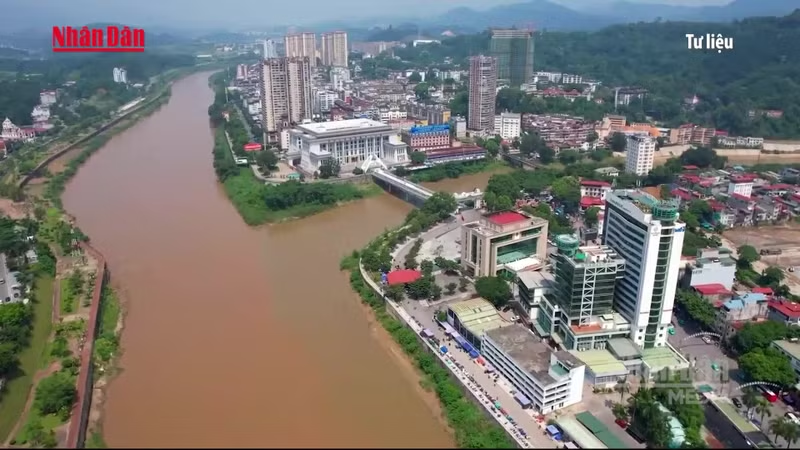
Lao Cai Province Accelerates Disaster Response Measures Amidst Typhoon No. 1's Aftermath
Amidst the threat of heavy rain, flash floods, and landslides from Typhoon No. 1's remnants, the People's Committee of Lao Cai Province has issued an urgent directive for disaster response measures to ensure the safety of lives and property.
This article requires PRO
This article is outside the free access window or is a special report. PRO unlocks it and the full archive.
Related articles
- EU Deforestation Regulation Sets New Standards for Vietnam's Coffee Growing Areas
The European Union's Deforestation Regulation (EUDR) is imposing new demands on Vietnam's coffee industry, requiring not just traceability but also data on growing areas, cultivation methods, and the link between production and resource protection.
- Southern Vietnam Braces for Heavy Rains and High Tides, Flood Warnings Issued
Southern Vietnam, particularly Ho Chi Minh City, is forecast to experience heavy rainfall for several days due to a tropical convergence zone. This is compounded by high tides at the beginning of the lunar September, raising concerns about widespread flooding.
- Vietnam's Central Region Braces for Heavy Rainfall, Flood and Landslide Warnings Issued
Vietnam's central region is forecast to experience heavy rainfall until around October 10-11, with particularly intense downpours expected from southern Quang Tri province to Da Nang city. Residents are urged to be vigilant against urban flooding and potential landslides and flash floods in mountainous areas.
- Central Vietnam Braces for Widespread Heavy Rainfall, Alert Level Raised
Central Vietnam is experiencing widespread heavy rainfall, with some areas expected to exceed 600mm. Flood and landslide risks in Hue and Da Nang cities have been raised to 'Level 2', prompting heightened vigilance from authorities.