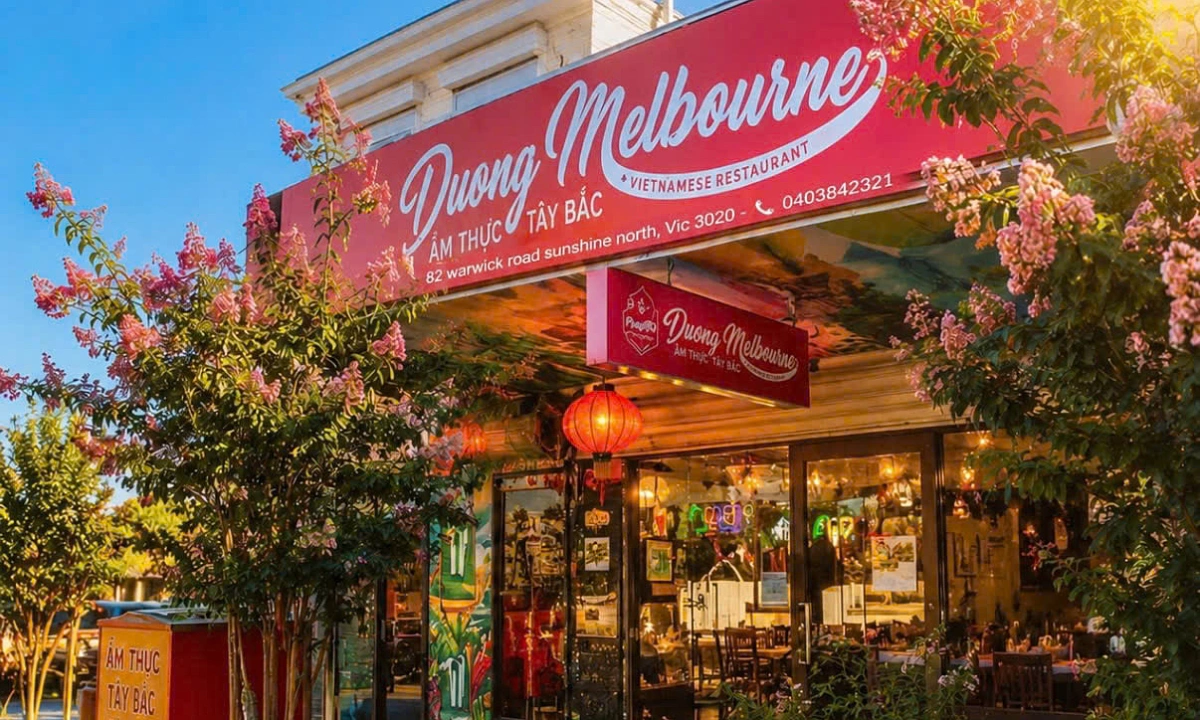
Vietnamese Northwest Flavors Find Home in Australian Restaurant
Duong Melbourne in Australia is introducing the unique cuisine of Vietnam's northwestern highlands to local diners. Owner Nguyen Quynh Lam, driven by a passion to share her hometown's flavors abroad, has overcome ingredient sourcing challenges to achieve success.
Duong Melbourne in Australia is introducing the unique cuisine of Vietnam's northwestern highlands to local diners. Owner Nguyen Quynh Lam, driven by a passion to share her hometown's flavors abroad, has overcome ingredient sourcing challenges to achieve success. The restaurant's "grilled fish with cham cheo (herb dipping salt)" is a northwestern dish considered exotic even within Vietnam, eliciting surprise from Australian locals who describe the flavors as unlike anything they've encountered before. Lam left Vietnam for Melbourne in 2014. While pho and banh mi were readily available, her childhood favorites from Son La province, such as "grilled meat with cham cheo," were absent. "Dishes that feel ordinary back home gain significance when you can't find them anywhere overseas," she notes. In 2017, she opened a small eatery with about 10 tables. "I was unsure if guests would embrace dishes they had never heard of," she admits, "but I believe every regional Vietnamese cuisine has its own value and deserves to be shared with the world." While experienced in the food industry, ingredient sourcing presented the biggest hurdle. Spices like mac khen (wild pepper) and hat doi (magnolia seed) had to be air-freighted from northern Vietnam, incurring high costs due to import duties, storage, and quarantine regulations. Seasonal scarcity also forced menu adjustments; for instance, their hoa ban (mountain ebony blossom) salad is only available early in the year. "I prioritize quality and flavor over selling at any cost," Lam emphasizes. Over a decade, the eatery has expanded into a 500-square-meter restaurant with 12 staff and 200 covers. The interior is decorated with brocade textiles and bamboo and rattan elements, inspired by the northwestern highlands. On special occasions, staff don traditional Thai or Hmong attire to welcome guests. The restaurant typically serves 150-200 customers daily, a number that doubles on weekends and holidays. Approximately 30% of diners are Caucasian, with the remainder being Vietnamese and other Asians. The menu features around 30 dishes, with the "Tay Bac grilled platter" (pork, beef, chicken, or fish served with cham cheo sauce) being a standout. Fried fish, nem nam (fermented pork with rice powder), and hotpot are also popular. Guests trying spices like mac khen and cham cheo for the first time often express curiosity. "Some people ask about this type of pepper, saying the aroma is unlike anything they know," Lam shares. The kitchen can also adjust spice levels upon request while preserving the dish's core flavors. After their meals, diners are often seen discussing their experience. Some overseas Vietnamese are moved to reminisce about their time back home. "Some guests say the food reminds them of family meals from years ago. For me, that means more than any business success," Lam states. She plans to open a coffee shop and Vietnamese dessert place in Melbourne alongside the restaurant. "I want a place where guests can sit a little longer after their meal," she adds. Information source: VnExpress International
多角的分析
ベトナムの地方料理が海外で成功を収める事例は、ベトナム経済の多様化と国際化の進展を示す好例である。特に、特定の地域に根差した食文化は、付加価値の高いニッチ市場を形成しうる。ラム氏が直面した食材調達のコスト増は、ベトナム国内のサプライチェーンの未発達や、国際物流における課題を示唆している。しかし、これを乗り越えて成功したことは、ベトナムの農産物や加工食品の輸出ポテンシャル、特に高級食材や地方特産品への需要の高まりを示唆している。これは、ベトナムが単なる製造拠点から、文化や食の輸出元としての地位を確立していく可能性を示唆している。
この事例は、ベトナムの食文化の多様性が、海外での新たなビジネスチャンスを生み出す可能性を示している。投資家にとって、ラム氏のような起業家精神を持つ個人が、地方の食文化をグローバル市場に展開する際の成功モデルとなりうる。特に、ベトナム国内のサプライチェーンの改善や、農産物・加工食品の輸出支援策が進めば、同様のビジネスへの投資機会は増加するだろう。ただし、食材の調達コストや季節性といったリスク要因も考慮する必要がある。
ラム氏のレストランは、ベトナムの地方文化、特に北西部高地の文化を海外に紹介する役割を果たしている。これは、ベトナム国内の多様な民族文化が、国際社会に認知される機会を増やすことに貢献する。また、海外在住ベトナム人にとっては、故郷の味を通じてアイデンティティを確認し、懐かしさを感じる場となっている。一方で、地方の伝統的な食文化を維持・継承していくためには、食材の安定供給や、それを支える地域経済の発展が重要となる。ラム氏の経験は、地方の食文化がグローバルな舞台で評価されることで、地域経済の活性化に繋がる可能性を示唆している。
メルボルンに住むベトナム出身のラム氏が、故郷の北西部地方の珍しい料理をオーストラリアで提供していることは、多くのベトナム国民にとって誇らしいニュースである。特に、故郷の味を海外で再現しようとする情熱は、多くの共感を呼ぶだろう。彼女が直面した食材調達の困難は、ベトナム国内の物流や品質管理の課題を浮き彫りにするかもしれないが、それを乗り越えて成功したことは、ベトナムの食文化の豊かさと、それを世界に広める可能性を示している。これは、ベトナムの若者たちが、故郷の文化を大切にしつつ、グローバルな舞台で活躍する勇気を与えるだろう。
背景・歴史的文脈
ベトナムは、歴史的に多様な民族文化を持つ国であり、北部山岳地帯には独自の食文化が根付いている。しかし、これらの地方料理は、フォーやバインミーといった全国的に知られる料理に比べ、国際的にはあまり知られていない。近年、ベトナム政府は文化遺産の保護・振興に力を入れており、地方の食文化もその一環として注目され始めている。ラム氏の事例は、民間レベルでの文化発信が、ベトナムの国際的なプレゼンスを高める可能性を示唆している。また、ベトナムの一党体制下では、文化政策も国家主導で行われることが多いが、このような民間主導の文化発信は、多様な視点をもたらすものとして注目される。
原文ソース
VnExpress International