General articles are free for 24 hours after publish.
Border Schools Illuminate Vietnam's Frontier Regions
Boarding schools established in Vietnam's border regions are expanding educational opportunities for local residents, igniting hope for the future. This initiative is part of the nation's long-standing strategy of 'improving literacy' and 'national development'.
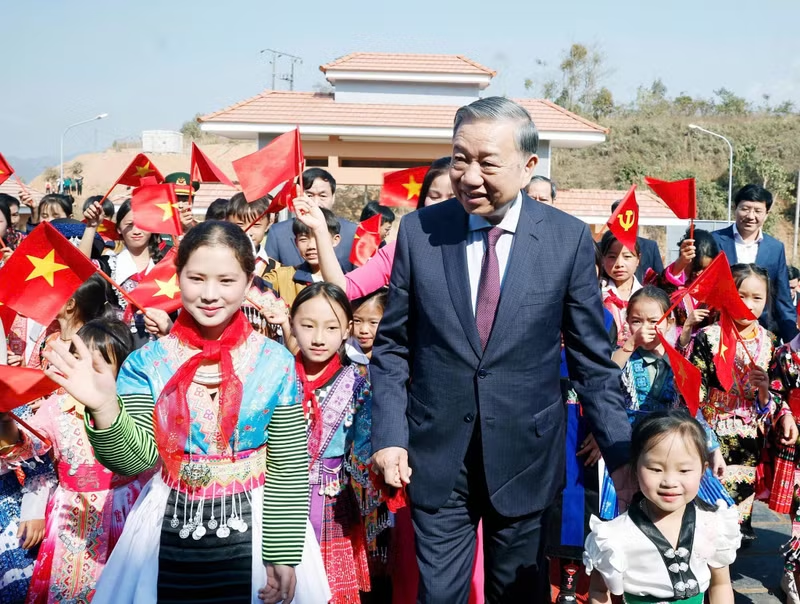
Boarding schools established in Vietnam's border regions are expanding educational opportunities for local residents, particularly children, and igniting hope for the future. This initiative is a crucial part of the country's educational strategy, stemming from the revolutionary goal of 'eradicating illiteracy' championed by President Ho Chi Minh since the nation's founding. Even amidst the critical situation of famine and foreign invasion immediately after the establishment of the Democratic Republic of Vietnam in 1945, President Ho Chi Minh identified the eradication of 'the enemy of ignorance' as one of the most urgent tasks. This spirit continues to form the cornerstone of Vietnam's educational policy today, 81 years later. Specifically, the inter-level boarding schools (covering primary, lower secondary, and upper secondary education) established in border areas like Lai Chau province provide a venue for delivering quality education to children facing geographical and economic challenges. These schools contribute not only by imparting knowledge but also to the broader strategic goal of nurturing talent that will drive regional development and national unity. At the opening ceremony for the 2026-2027 academic year, Prime Minister Le Minh Hung emphasized the critical importance of establishing and operating these schools. This underscores the Vietnamese Communist Party and the government's positioning of education as a foundation for the nation's sustainable growth and security. Under Vietnam's one-party system, education is considered a vital tool for disseminating socialist values and fostering national cohesion. The development of educational infrastructure in border areas also holds strategic significance in strengthening the central government's influence in remote regions and countering potential external influences. Amidst continuous economic growth, investment in education serves as a source for further economic development by enhancing human capital. Source: Nhan Dan
Original source
Nhan Dan