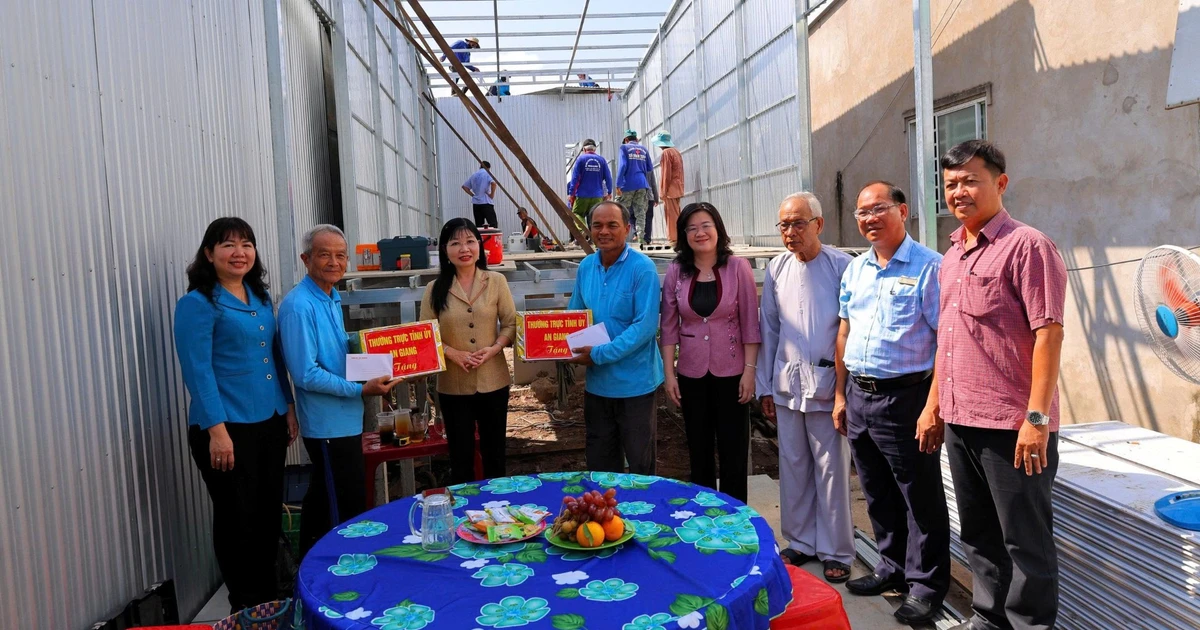
Southern Vietnam Charity Group Builds Hundreds of Homes for the Poor
Society
2026年7月5日
5
Nhan Dan

Southern Vietnam Charity Group Builds Hundreds of Homes for the Poor

AI サマリー

A Buddhist charity group in An Giang Province, southern Vietnam, has built 638 homes for the poor and low-income individuals, with a total investment of approximately 17.8 billion VND (around $700,000 USD). The initiative highlights community solidarity and support.

In An Giang Province, southern Vietnam, charitable activities providing housing for the poor and low-income individuals are flourishing. Notably, the charity house construction group under the Hoa Hao Buddhist Sangha in Cai Dau town, Chau Phu district, has become a shining example, building hundreds of homes over decades and spreading warm support throughout the community. In early July, Mr. Nguyen Thanh Phuong, a low-income resident of Chau Phu district, expressed his deep emotion as he moved into a new, spacious home, leaving behind a dwelling plagued by leaks and drafts for many years. "With a new home, my family will strive to work hard, support our children's education, and gradually escape poverty," Mr. Phuong shared. His joy is echoed by hundreds of other families in difficult circumstances who have been supported by this charitable group over the years. Established in 2012 with 13 core members, the group initially focused on building wooden houses. As their work gained recognition, it garnered widespread support from residents, philanthropists, and followers of the Hoa Hao Buddhist Sangha. Today, the group has grown to over 70 members, contributing in various ways, including financial donations, material contributions, and labor. Beyond house construction, members actively participate in improving rural infrastructure, such as building roads and bridges, providing school supplies for underprivileged students, and assisting families in need, thereby contributing to local social welfare efforts. Mr. Nguyen Van Tham, the group's leader, stated, "By studying and following Uncle Ho's teachings, our members support those in difficult circumstances with concrete actions. Each house built embodies the warmth and affection of the people." In recent years, the group has shifted to constructing homes with galvanized steel frames and roofs, ensuring durability and long-term usability. This initiative is consistently supported by the Chau Phu District People's Committee, the Vietnam Fatherland Front Committee of the district, and benefactors both locally and from afar. To date, the charity group has built 638 "Unity Houses" for the poor, near-poor, and families facing special difficulties, both within and outside the district, with a total investment of approximately 17.8 billion VND (around $700,000 USD). This is recognized as an exemplary implementation of the national movement to "Eliminate Temporary and Dilapidated Housing Nationwide." These houses not only stabilize residents' living conditions and enable them to focus on production but also boost their motivation to improve their lives, contributing to the beautification of rural landscapes. This reflects the Vietnamese tradition of "loving others as oneself."

多角的分析

経済的影響

このニュースは、ベトナムにおける社会福祉活動の経済的側面を示している。慈善団体による家屋建設は、直接的には貧困層の生活水準向上に貢献するが、長期的に見れば、安定した住居が労働生産性の向上や教育機会の拡大につながり、地域経済全体の活性化に寄与する可能性がある。また、寄付やボランティア活動は、地域住民の経済的・精神的な連帯感を醸成し、地域経済のレジリエンスを高める一因ともなりうる。建設資材の調達や労働力の提供といった経済活動も伴うため、地域内での資金循環を促す効果も期待できる。

投資家心理

投資家にとって、この種の社会福祉活動は直接的な投資機会ではないが、ベトナムの社会安定性や地域コミュニティの強靭性を示す指標となりうる。貧困層の生活改善は、将来的な国内消費の拡大や、より広範な経済活動への参加を促す土壌を育む。また、企業がCSR(企業の社会的責任)活動の一環としてこのような地域支援に関与することで、ブランドイメージの向上や地域社会との良好な関係構築につながり、長期的な事業展開におけるリスク低減に寄与する可能性がある。特に、CSR活動に積極的な企業は、ベトナム市場での信頼を得やすい。

社会的影響

このニュースは、ベトナム社会における互助精神と地域コミュニティの強さを浮き彫りにしている。アンザン省の慈善グループは、仏教の教えと伝統的な美徳に基づき、困難な状況にある人々へ具体的な支援を提供している。家屋の提供は、単に物理的なシェルターを提供するだけでなく、人々に尊厳と希望を与え、社会的な孤立を防ぐ役割を果たす。また、地域住民や支援者の参加は、社会的な結束を強化し、地域社会全体の連帯感を高める。これは、ベトナム共産党が推進する「全民団結」の精神とも呼応するものであり、社会の安定と発展に不可欠な要素である。

市民の声

アンザン省の貧困層や低所得層の市民にとって、この慈善活動は生活の基盤を安定させる直接的な恩恵をもたらす。長年の住居問題が解決されることで、安心して生活し、生計を立て、子供の教育に専念できるようになる。これは、貧困の連鎖を断ち切り、より良い未来を築くための重要な一歩となる。また、地域住民がボランティアとして活動に参加することで、地域への貢献意識が高まり、コミュニティの一員としての誇りを感じることができる。これは、市民一人ひとりが社会の構成員として主体的に関わる機会を提供する。

背景・歴史的文脈

ベトナムでは、ホー・チ・ミン主席の指導の下、1954年のジュネーブ協定以降、南北分断を経て1975年のベトナム統一に至るまで、長年にわたり戦争と復興が続いた。統一後、経済は計画経済から市場経済へと移行し、1986年のドイモイ(刷新)政策により、経済成長が加速した。しかし、急速な経済発展の裏で、貧富の格差拡大や地域間格差が課題となっている。政府は、貧困削減を国家目標の一つとして掲げ、「貧困・飢餓撲滅運動」や「全国民による仮設住宅・雨漏り住宅解消」といったスローガンを推進し、社会福祉の向上に努めている。仏教和合教団のような宗教団体や、地域住民による自発的な慈善活動は、こうした政府の取り組みを補完し、ベトナム社会における相互扶助の伝統を体現するものとして、重要な役割を果たしている。

原文ソース

Nhan Dan

原文を読む