Taal Volcano: Scientists Keep Close Watch Despite Minor Eruptions
Diplomacy
2026年7月17日
5
Interaksyon Politics

General articles are free for 24 hours after publish.

Taal Volcano: Scientists Keep Close Watch Despite Minor Eruptions

Share
AI Summary

Despite a minor eruption two weeks ago, scientists continue to closely monitor Taal Volcano in the Philippines. Its unique eruption styles, driven by water-magma interaction, offer crucial clues for future activity predictions.

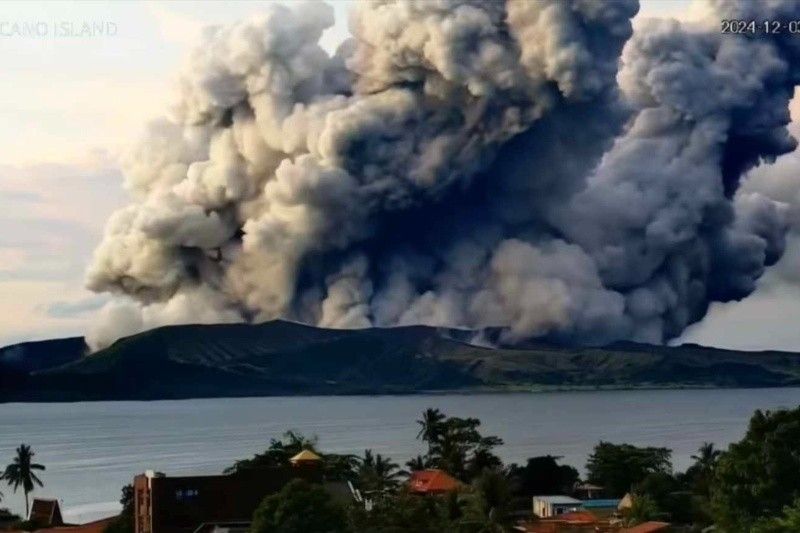
Two weeks ago, the Philippine Institute of Volcanology and Seismology (PHIVOLCS) recorded three distinct, short-lived explosions at Taal Volcano within a span of less than five minutes. The eruption sent a column of ash and steam up to 1.2km into the air, causing minimal disruption. The volcano remains at Alert Level 1, indicating "low-level unrest," with a smaller eruption logged over the weekend. Despite these relatively minor events, scientists are keeping a close watch. Even small eruptions can reveal important clues about volcanic behavior and why continuous monitoring is crucial. Taal Volcano lies in Batangas Province, about 60km south of Manila, situated on Volcano Island within Taal Lake. It is one of the Philippines' 24 active volcanoes and is designated as one of the world's 16 Decade Volcanoes. These are volcanoes with a history of large, destructive eruptions and significant risk to nearby populations. Others include Mount Etna in Italy and Mount Rainier in the United States. Taal has a long history of much larger eruptions. In January 2020, it sent ash plumes more than 15km into the atmosphere, forcing the evacuation of hundreds of thousands of people, disrupting air travel, and blanketing much of Luzon in ash. The 2020 eruption was Taal’s largest since 1977, and scientists have found evidence of many more eruptions going back 670,000 years. Even larger eruptions of Taal, such as one in 1754, buried and displaced towns. This history underscores why even relatively small bursts of activity from Taal receive such close scientific attention. Since Taal’s main explosive eruption in 2020, it has been intermittently producing minor eruptions. Since the beginning of 2026, PHIVOLCS has recorded 18 isolated eruptive events at Taal. However, they haven’t been the typical eruptions many might picture, like rivers of lava or towering ash clouds. Instead, some eruptions occur due to water interacting with hot rock or magma beneath the surface, producing explosive bursts of steam. Seven of Taal’s eruptions this year have been "phreatic" eruptions: essentially steam explosions. These occur when groundwater or lake water is heated so rapidly by hot rock or magma that it flashes into steam, breaking apart the surrounding rock. Little or no new magma reaches the surface during this type of eruption. The other 11 have been "phreatomagmatic" eruptions. These occur when rising magma comes into direct contact with water. The rapid expansion of steam shatters both the magma and the surrounding rock into fine ash, making these eruptions generally more energetic than phreatic explosions. Taal is especially prone to phreatic and phreatomagmatic eruptions because its active crater contains a lake. Water is therefore readily available to interact with rising magma, making steam-driven explosions a characteristic part of the volcano’s behavior. Whether an eruption is phreatic or phreatomagmatic provides important clues about what is happening beneath the volcano. It helps volcanologists understand how the volcanic system is evolving and whether volcanic hazards may be changing. Taal is just one of the Philippines’ many active volcanoes. The country sits on the Pacific Ring of Fire, a belt of volcanoes surrounding much of the Pacific Ocean where several tectonic plates converge. Although volcanologists cannot predict exactly when a volcano will erupt, careful monitoring can provide early warning that a volcanic system is changing. Scientists monitor the frequency and intensity of earthquakes, use satellites and GPS instruments to detect subtle ground deformation, measure volcanic gas emissions such as sulfur dioxide and carbon dioxide, and track changes in crater lake temperature and chemistry. Together, these observations help determine whether magma is rising, pressure is building, or the level of volcanic hazard is changing. However, some styles of volcanic activity, particularly phreatic eruptions, are extremely difficult to detect and predict as they are not always associated with large volumes of magma rising to the surface. This challenge is highlighted by the 2019 Whakaari White Island eruption in Aotearoa New Zealand. Since this tragedy, which caused several deaths and severe burn injuries to tourists visiting the island, volcanologists have been working actively to more readily identify the warning signs of an imminent phreatic or "hydrothermal" eruption. The recent eruption of Taal caused little disruption, but it provided another valuable piece of the ongoing puzzle where scientists try to understand these complex magmatic systems. For volcanologists, each small eruption offers additional clues, helping improve future hazard assessments and better prepare communities living around them.

0

Original source

Interaksyon Politics

原文を読む