Vietnam Streamlines Political Apparatus in Major Overhaul
Politics
2026年7月8日
5
VnExpress

Vietnam Streamlines Political Apparatus in Major Overhaul

AI サマリー

Vietnam is undergoing a significant restructuring of its political apparatus nationwide, aiming to enhance efficiency and effectiveness. Over the past year, approximately 35% of organizational units under the Party, State, and Fatherland Front have been reduced.

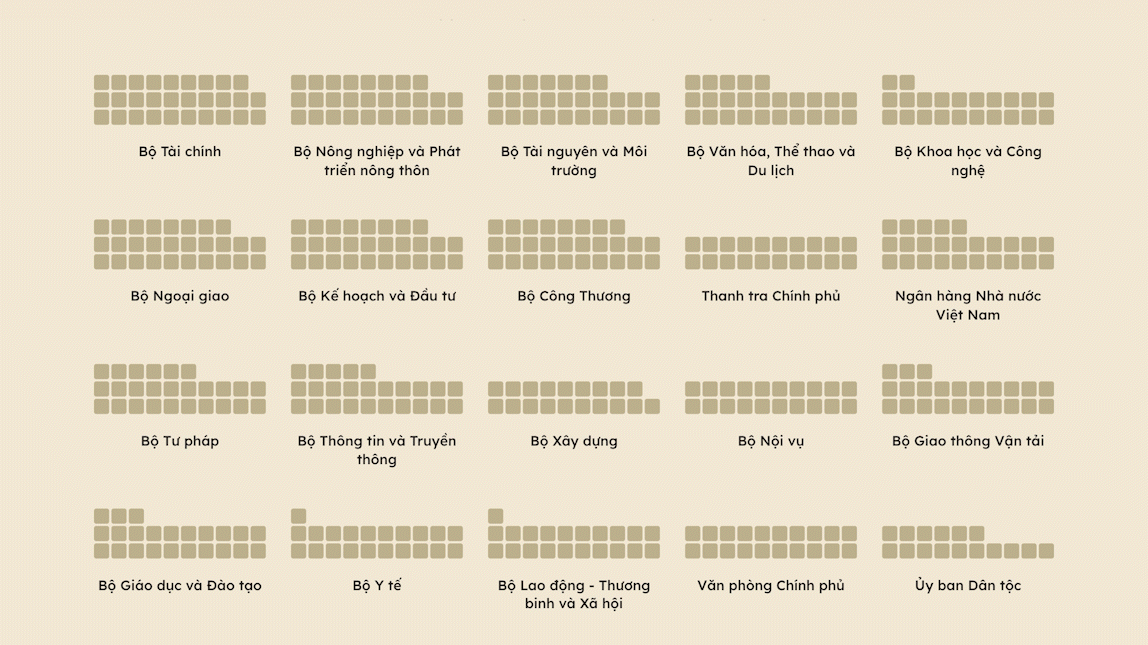
Vietnam is undertaking a significant overhaul of its political apparatus, from the central government down to local levels, with the aim of streamlining operations and enhancing efficiency. This initiative, which began in late 2024 under the directive of General Secretary and President Tô Lâm, prioritizes "Streamlined - Compact - Strong - High-Functioning - High-Effectiveness - High-Efficiency." Over the past year, the number of organizational units directly under the central government across the Party, State, and the Vietnam Fatherland Front has decreased by approximately 35%, marking the most substantial change in decades, according to data from the Party Central Committee. The Party's central agencies, considered the "strategic brain" of the system, have led the way with a 25% reduction in department-level units and over 35% in section-level units, along with nearly 39% of public non-business units. Within the State apparatus, the Government's structure has been reduced by 23%, while the National Assembly Office has shrunk from 35 to 17 units. The Fatherland Front and political-social organizations have merged six advisory and support agencies into a single entity: the Vietnam Fatherland Front Committee. Data from central and local agencies compiled by VnExpress reveals structural changes down to the bureau and department levels within agencies under the Party, the President's office, the National Assembly, the Government (excluding the Ministries of Public Security and National Defense due to their special nature), the People's Supreme Court, the People's Supreme Procuracy, and the Fatherland Front. Specifically, the Government has undergone the most extensive restructuring. The President's office, already compact, saw minimal changes, losing only the Emulation and Awards Department and eliminating section-level offices by March 2025. The National Assembly, as of February 2025, now comprises nine committees, a reduction of four through mergers. Two public non-business units, the Legislative Research Institute and National Assembly Television, have ceased operations. The National Assembly Office itself reduced its units from 35 to 17 and cut 37 section-level units. The Government's structure has been significantly streamlined, with a reduction of 13 general departments, 505 bureaus, 235 departments, 3,377 sub-departments, and 82 public non-business units. Two "super-ministries" have been formed: the Ministry of Finance (35 units) and the Ministry of Agriculture and Rural Development (30 units), both resulting from the merger of previously separate ministries. This streamlining has reduced their respective units by 37% and 45%. In the judicial system, the People's Supreme Court and People's Supreme Procuracy will transition from a three-tiered structure (central, provincial, district) to a new model of "central, provincial, and regional" by July 1, 2025, effectively abolishing district-level courts and procuracies. Three High Courts of Appeal will be established in Hanoi, Da Nang, and Ho Chi Minh City to handle appeals from provincial-level courts. This nationwide restructuring reflects the Vietnamese government's commitment to enhancing administrative efficiency, eliminating redundancies, and optimizing resource allocation in line with its ongoing economic development and modernization goals.

多角的分析

経済的影響

ベトナム政府は、行政機構の効率化を通じて、経済成長の基盤強化を図っている。組織のスリム化は、重複する行政コストの削減、意思決定プロセスの迅速化、そして資源配分の最適化に繋がる可能性がある。特に、政府機関の統合や部署削減は、官僚主義の軽減とサービス提供の迅速化を期待させる。しかし、過度な人員削減や機能統合は、かえって行政サービスの低下や、新たな非効率を生むリスクも孕んでいる。過去の事例では、組織再編後の初期段階で混乱が生じることも少なくないため、その運用が経済活動に与える影響は注視が必要である。

投資家心理

今回の政治機構の再編は、ベトナムの投資環境にとって間接的ながらも重要な意味を持つ。行政手続きの効率化や意思決定の迅速化が進めば、投資家にとってのビジネスリスクが低減される可能性がある。特に、新規事業の許認可や各種申請手続きがスムーズになることは、外国直接投資(FDI)の誘致にプラスに働くことが期待される。一方で、組織再編に伴う一時的な混乱や、新たな規制・手続きの導入など、予期せぬ障害が発生する可能性も否定できない。投資家は、改革の進捗状況と、それが実際のビジネスプロセスに与える影響を慎重に見極める必要がある。

社会的影響

政治機構の再編は、国民生活にも影響を及ぼす可能性がある。行政サービスの窓口が統合されたり、手続きが変更されたりすることで、市民は一時的に混乱を経験するかもしれない。特に、地方レベルでの組織統合や、県レベルの司法機関廃止などは、地域住民の行政サービスへのアクセスに変化をもたらす可能性がある。また、公務員の配置転換や削減は、雇用市場にも影響を与える。ベトナム政府は、これらの社会的な影響を最小限に抑えつつ、国民への丁寧な情報提供と、円滑な移行プロセスを確保することが求められる。例えば、ハノイ市やホーチミン市といった大都市では、行政手続きのデジタル化が進むことで、国民の利便性が向上する可能性もあるが、地方や高齢者層への配慮も不可欠となる。

市民の声

今回の政治機構再編は、国民が行政サービスを受ける際の窓口や手続きに変化をもたらす可能性がある。例えば、これまで複数の部署に分かれていた申請が、統合された部署で一括して処理されるようになるかもしれない。しかし、組織変更の初期段階では、担当部署の変更や手続きの混乱が生じ、国民が不便を感じることも考えられる。特に、地方に住む人々や、ITリテラシーが高くない人々にとっては、新たな制度への適応が課題となるだろう。ベトナム政府は、国民への十分な周知と、円滑な移行を支援するための体制整備が重要となる。例えば、ハノイ市やホーチミン市では、行政サービスのオンライン化が進んでいるが、地方都市や農村部では、対面でのサポート体制の維持・強化が求められる。

背景・歴史的文脈

ベトナムにおける政治機構の組織再編は、過去にも何度か行われてきた。特に、1986年のドイモイ(刷新)政策以降、市場経済化と並行して、行政改革も進められてきた。しかし、一党体制下では、官僚機構の肥大化や重複、非効率性が長年の課題とされてきた。今回の組織再編は、2021年の第13回共産党大会以降、党指導部が掲げる「強力で、精巧で、高度に効率的な公務員組織」の構築を目指す動きの一環である。特に、汚職撲滅運動と連動し、公務員の質と効率性を高めることで、党の指導力と統治能力の強化を図る狙いが根底にあると考えられる。

原文ソース

VnExpress

原文を読む